Must-Have First-aid Refill Pack (Restock) for Emergencies

Introducing Maria, our meticulous planner and talented visual storyteller. She has a knack for discovering those hidden gems, chic boutique spots, and charming little cafes that add a touch of elegance to every journey. With her keen eye for photography and her passion for travel, Maria will transport you to the most enchanting corners of the world, inspiring you to explore new places, one picture-perfect destination at a time.
Keep your emergency kit ready for anything with a 200‑piece refill—full OSHA‑compliant boxes brimming with 60 bandages, adhesive dressings, and a spare blanket. For travel, the 77‑piece set packs all essentials in a lightweight case, ideal for outdoor trips. Large sites benefit from the 160‑piece ISO‑certified kit, restoring hospital‑grade standards. Professionals favor the 154‑piece bulk pack, FSA‑eligible and convenient for everyday use. Selecting the right refill drops restocks—and you’ll discover why your safety and use.
Key Takeaways
- Compliance‑ready: Choose a pack that meets ANSI Z308.1‑2021 Class A and OSHA standards (ex. 200‑piece or 75‑piece packs) for regulatory safety.
- All‑in‑one content: Opt for a 200‑ or 160‑piece refill that includes bandages, dressings, gauze, antiseptic wipes, hot/cold packs, and emergency blankets – covers most injuries.
- Portability vs. capacity: Use the 77‑piece urgent‑care pack for light outdoor use, or a 10‑ or 25‑person refill for small teams needing quick restock.
- Easy storage & reuse: Select loose‑packed, color‑coded items that fit standard cases; the 154‑piece refill fits most cabinets and can be replenished after 70 uses.
- Cost versus space: Balance upfront cost and storage—large 200‑piece packs are inventory‑heavy, while the 77‑piece pack saves space but needs more frequent re‑ordering.
200-Piece First Aid Kit Refill

If you’re running a busy classroom or managing a small business, you’ll appreciate that this 200‑piece refill keeps every common first‑aid item—adisive dressings, bandages, disinfectant wipes, and an emergency blanket—right at hand, so you can replace worn supplies without breaking protocol or stock‑outs. The pack contains 2 large, 2 medium, and 2 small adhesive dressings, plus 30 standard and 30 small bandages. It also supplies 16 spot, 16 butterfly, 14 fingertip, 10 knuckle, and a triangular bandage. Eye pads, cold compresses, dressing pads, and cotton tips fill the eye & wound care section. Scissors, pins, gloves, and blanket finish it.
Best For: busy classrooms, small businesses, and any workplace that requires a fully stocked, OSHA‑compliant first‑aid kit ready for rapid replenishment.
Pros:
- 200‑piece refill guarantees all essential supplies are available, eliminating stock‑out incidents.
- Meets OSHA and ANSI first‑aid kit standards, ensuring regulatory compliance.
- Convenient loose‑packed design makes it easy to replace and transport.
Cons:
- Larger volume may be overkill for basic or single‑use scenarios.
- More items increase storage space requirements.
- Initial purchase price higher than minimal kit replacements.

- First Aid Kit Refill - Ideal for replacing or supplementing any first aid kit apparatus
- Includes 200 Pieces - Extra medical first aid supplies to keep all critical items in stock
- Diverse First Aid Kit Replacement Pieces - Address the most commonly worn out items
- Diverse Aid Supplies - First aid refill pack contains almost anything you need to stay safe, whether outdoors or indoors
First Aid Kit Refill Pack – 77 Pieces

Because it holds 77 ready‑to‑use items—five types of band‑aid, cleaning pads, and elastic wraps—the First‑Aid Kit Refill Pack is ideal for outdoor enthusiasts who need to keep their kit fresh without extra bulk. You’ll get five band‑aid styles: knee/elbow, fingertip, knuckle, standard, and mini, so every injury gets a fit. Two cleansing products—alcohol pads and wipes—keep wounds sterile right away. Three dressing options cover splinting and eye care with GuaZe, and eye pads. Finally, three wraps and a medical tape give you support for sprains or compression. Totaling 77 pieces, the pack keeps your emergency supplies precise and lightweight.
Best For: outdoor adventurers, campers, hikers, cyclists, and anyone needing a lightweight, ready‑to‑use first‑aid kit on the go.
Pros:
- 77 carefully selected items provide comprehensive coverage for common cuts, bruises, and eye injuries.
- Five versatile band‑aid styles (knee/elbow, fingertip, knuckle, standard, mini) fit every injury type.
- Compact design keeps the kit ultra‑portable and avoids bulk for gear‑heavy activities.
Cons:
- Lacks additional gauze, adhesive strips, and advanced bleeding‑control supplies like tourniquets.
- Only includes basic cleaning pads, no antiseptic solutions or long‑lasting disinfectants.
- Requires manual re‑ordering; no ongoing refill subscription or easy replacement system.

- First Aid Kit Refill Supplies:Ideal for replacing or supplementing any first aid kit apparatus.Address the most commonly worn out items.
- Refill Adhesive Bandages:First aid kit refills contain the most common Band-Aid consumables- include Knee/Elbow band-aid , Fingertip band-aid, Knuckle band-aid, Standard band-aid and MIni bandages.You can easily deal with all kinds of small wounds
- Refill Clean & Dressing Supplies:The refill supplies include Wipes and Alcohol Prep Pad. You can use them for wound cleaning. Then use Guaze Pad wound dressing for dressing
- Refill Wound Dressing Supplies:Homestockplus Dressing refill supplies include Non-Adherent Pad, Non-Adherent Pad and Eye Care.Using a non-stick pad when dressing the wound can protect the wound from secondary damage.
- Refill Elastic Bandages Supplies:Homestockplus first aid kit refill supplies include 3'' PBT Bandage, 2'' PBT Bandage and Medical Tape.The dressing of the wound is firmer, which is more conducive to the recovery of the wound.
General Medi 160-Piece First Aid Kit Bag

For outdoor adventurers and first‑aid enthusiasts, the 160‑piece refill pack for General Medi keeps your kit fully stocked with ISO13485‑certified, CE‑approved supplies—ensuring you’re ready for any emergency.
You’ll find an instant cold pack, emergency blanket, and moleskin pad that tackle pain and heat immediately.
The bag holds 100+ bandages, wound dressings, and antiseptic wipes, giving you tier‑two coverage for cuts, scrapes, and bruises.
It’s ruggedly built, weather‑proof material and reinforced seams mean it survives steep hikes, sudden rain, and rough handling.
Because it’s a refill set, you can restore the kit instantly and keep it hospital‑grade for every field scenario.
Best For: outdoor adventurers, field workers, and first‑aid enthusiasts who demand a fully stocked and ISO 13485‑certified emergency kit.
Pros:
- Comprehensive 160‑piece refill that restores the original kit to hospital‑grade standards
- Rugged, weather‑proof construction with reinforced seams for tough environments
- ISO13485 and CE certification ensures compliance with global first‑aid regulations
Cons:
- Bulkier due to 160 items, which might be cumbersome for solo travelers
- Higher upfront cost compared to basic refill packs
- Requires regular restocking of certain consumables (e.g., antiseptic wipes) after repeated use or exposure to elements

- Security and Reliability - All of our first aid kits carry ISO13485, CE and Other approvals to ensure conformance to global standards wherever they are used.
- Contents – Packed with 160 useful and valuable hospital grade medical supplies - See the product images and the product description below for a full list of contents.
- Practicability – Includes all product necessary to refill the original first aid kit
- HIGH QUALITY - You need outdoor gear that's as tough as you are, which is why we sell only the highest quality products that are built to last.Providing you with the best in the industry.
154-Piece First Aid Refill Kit

This 154‑piece First‑Aid Refill Pack is the go‑to solution for busy offices, roadside shelters, and off‑grid campers—each kit brings every essential item in a ready‑to‑use format that meets OSHA standards and can be dropped straight into any existing carrier or container.
Four sub‑bags fit into any standard first‑aid box—no extra case needed. The kit contains bandages, gauze, antiseptic wipes, scissors, and more, so you’ll never run out during shifts or roadside stops. It meets OSHA standards, passes FSA/HSA eligibility, and offers universal dimensions so you can drop it into travel bags, vehicle kits, or camping packs with daily ease.
Best For: busy workplaces, roadside emergency shelters, and outdoor campsites that need a ready-to‑use, OSHA‑compliant refill that fits into any standard first‑aid kit.
Pros:
- ✔ Universal sub‑bags fit any standard first‑aid box—no new case required.
- ✔ Meets OSHA regulations and is FSA/HSA–eligible for cost‑effective restocking.
- ✔ Complete 154‑piece pack contains all essential items for high‑traffic, on‑the‑go settings.
Cons:
- ❌ The bulk of 154 items can become heavy and cumbersome to carry in tight spaces.
- ❌ Loose packaging may lead to items shifting during transport, requiring careful placement.
- ❌ No dedicated case means you must ensure your existing kit or tote provides adequate protection.

- 154-Piece Universal Refill: Packed with 154 essential items, this first aid kit refill is a comprehensive solution for replacing the most commonly used first aid supplies in your first aid box, or roadside emergency car kit.
- Loose-Packed for Easy Storage: The items come in four sub-bags, allowing you to organize and store them within your existing first aid kit or emergency supplies without needing to purchase a new case.
- Ideal for Home, Vehicle, and Business Use: Perfect for restocking first aid kits in various environments, including homes, cars, camping gear, offices, and businesses.
- Meets OSHA Standards: Designed to replenish kits that meet OSHA safety regulations, this first aid kit refill ensures compliance for workplace safety, making it a perfect choice for any business. Take advantage of FSA and HSA eligibility to purchase this first aid kit refill for an affordable, compliant solution.
- Universal Usage Across All Environments: This first aid kit refill bag is designed for general use, with contents fitting within any first aid box. Whether you need to restock a travel first aid kit, a roadside emergency car kit, or a camping bag kit, this universal refill pack is the perfect choice. Ideal for high-traffic areas such as offices, homes, schools, or restaurants, it ensures you're always prepared for any emergency.
First Aid Kit 100-Piece Refill Pack

If you trailblaze, travel, or run a small business, a 100‑piece refill pack keeps your first‑aid supplies ready without the hassle of sourcing individual items. Inside, you’ll find large (1) and medium (2) adhesive dressings, along with a mix of standard, small, spot, triangular, and crese bandages—15 each standard and small, 8 spot, 1 triangular, 1 crese. Protective add‑ons like eye pads, fingertip and knuckle pads, safety pins, and a metal scissor give you extra coverage. Cleaning wipes, sterile gauze, an emergency blanket, and a disposable cold compress keep injuries manageable on the move. Receive a one‑year money‑back guarantee.
Best For: outdoor enthusiasts, frequent travelers, or small business owners who need a portable, quick‑refill first‑aid kit for emergencies on the go.
Pros:
- 100‑piece refill pack provides ample coverage for restocking key supplies.
- Includes a wide variety of dressings, bandages, and protective pads for versatile use.
- Comes with a 1‑year money‑back guarantee for added peace of mind.
Cons:
- Not a full replacement for a larger standard first‑aid kit.
- Requires separate storage space for the refill pack.
- Limited quantities of certain items (e.g., only one emergency blanket and cold compress).

- First Aid Kit Refill - Ideal for replacing or supplementing any first aid kit apparatus
- Includes 100 Pieces - Extra medical first aid supplies to keep all critical items in stock
- Diverse First Aid Kit Replacement Pieces - Easily address the most commonly worn out items
- Diverse Aid Supplies - First aid refill pack contains almost anything you need to stay safe, whether outdoors or indoors
First Aid Kit Medication Refills 70 Count

Need quick, portable medication refills? This 70‑unit refill pack gives you the right doses in a compact, pocket‑size format. You’ll find ibuprofen, aspirin, antacid, antihistamine, sinus and diarrhea relief—non‑aspirin pain relief options ready to go. Each packet carries an individually labeled, single‑dose portion, so you can grab what you need without rummaging through bulky bottles. Assemble the kit in your desk drawer, gym bag, glove box or car trunk—ideal for travel, office, dorm, outdoor adventures or home use. With this pack, you keep emergency supplies organized, light, and ready whenever you need them for sudden discomforts or unexpected trips.
Best For: individuals who need quick, on‑the‑go medication refills for common ailments—ideal for travelers, commuters, office workers, and outdoor enthusiasts.
Pros:
- Convenient single‑dose packets eliminate bottle rummaging and reduce bulk.
- Compact design fits desks, gym bags, or glove boxes for instant access.
- Assures consistent dosing with pre‑measured, labeled packets.
Cons:
- Limited to common medications; not suitable for specialty or prescription drugs.
- Requires regular replenishing; run‑off after 70 uses necessitates a new pack.
- Small packet size may be difficult for children or those with vision impairment.
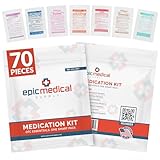
- CONVENIENT MEDICATION REFILL ASSORTMENT – includes 70 unit dose packets featuring commonly used OTC meds: non-aspirin, ibuprofen, aspirin, antacid, antihistamine, sinus relief, and diarrhea relief—ideal as 1st aid kit refills or building a compact emergency medicine kit pills supply for home or on the go
- UNIT DOSE PACKETS FOR EASY USE – each medication is individually packaged in clearly labelled, pocket-size packets with the correct dose inside—perfect for quick access when you need it. Keep your medical kit medicine supplies organized and accessible without bulky bottles or pill organisers
- IDEAL FOR TRAVEL, WORK, OR THE ROAD – compact and portable for everyday life—keep a few in your desk drawer, backpack, gym bag, or glove box. Whether you’re commuting, camping, or away at college, this medicine assortment has your emergency needs covered wherever you are
- ASSEMBLED IN THE USA WITH QUALITY YOU CAN TRUST – proudly packed in the USA meeting quality standards for over-the-counter medications. Designed to support your existing medical kit medicine setup with trusted essentials you’re likely to reach for most
- RELIABLE 1ST AID KIT REFILLS – designed for refilling home first aid kits, office wall-mounted stations, personal medical kits, or travel packs. This emergency medicine kit pills set keeps your kit stocked with essentials people use often—without overpacking or missing key items
OSHA/ANSI 25-Person First Aid Kit Refills, 78 Pieces

For small businesses and remote workplaces, the OSHA/ANSI 25‑Person First Aid Kit Refills bring your emergency supplies up to Class A standards with just 78 kit‑ready items.
You’re meeting OSHA’s strict criteria and ANSI Z308.1‑2021 expectations——while keeping the kit labeled. Each refill includes eye‑wash, burn treatment, CPR mask, rescue breathing supplies, a 52‑page color guide with charts, images, and step‑by‑step instructions. The guide covers everything from splints to medication‑free first‑aid practices. Added refill labels make tracking easier than before. Ideal for 10‑25‑person offices, retail, home‑based setups, or vehicle cabinets. Just pop it in, and you’re immediately compliant and prepared for any emergency.
Best For: small businesses, remote workspaces, and offices with 10‑25 employees looking to quickly achieve OSHA/ANSI Class A first‑aid compliance.
Pros:
- Fully ANSI Z308.1‑2021 Class A compliant with all required supplies and labeling.
- Includes comprehensive 52‑page color guide and step‑by‑step emergency medical instructions.
- Ready‑to‑install refill sets that replace old kits in cabinet setups or add to existing kits.
Cons:
- Limited to 10‑25 person workspaces; may be overkill for very small or very large teams.
- Requires additional storage space for the refill kit if the existing cabinet is already full.
- Higher upfront cost compared to single‑item replacement options.

- Exceeds OSHA requirements and Meets ANSI Z308.1-2021 Class A Standards for Minimum Requirements for Workplace First Aid Kits and Supplies; Serves General Workplaces with 10 to 25 People
- Fully Stocked For Office, Business, Retail, Home, Car and More. Includes Eye Care First Aid, Burn Treatment and CPR; ANSI required First Aid Item Refill Label included
- Includes 52 page full color ANSI First Aid Booklet; Emergency Medical Guide with images, charts and full table of contents; Contents exceed ANSI and ISEA minimums
- Add to existing First Aid Kit or Cabinet Content or replace First Aid Supply Items for full ANSI Standard Compliance
OSHA/ANSI 50-Person First Aid Kit Refill

As a safety supervisor in a 50‑person warehouse, you’ll appreciate that this refill pack delivers every item required by ANSI Z308.1‑2021 and even exceeds OSHA’s kit standards. It holds 208 individual supplies fit for a 50‑person site, featuring a splint, tourniquet, eye‑care aids, a burn‑treatment kit, CPR gear, and single‑dose medication vials. Essential tools—scissors, tweezers, and more—ensure swift action during any incident. The 52‑page full‑color reference booklet anchors your crew with clear visuals and step‑by‑step guidance. An emergency medical guide, complete with charts and a full table of contents, rounds out the pack. Ready now for immediate deployment everywhere today.
Best For: warehouse supervisors managing 50‑person sites who need a quick, compliant first‑aid kit refill that meets ANSI and exceeds OSHA standards.
Pros:
- Complete ANSI Z308.1‑2021 compliance with 208 supplies ideal for a 50‑person workplace.
- Includes a 52‑page full‑color reference booklet and emergency medical guide for training and quick reference.
- One‑stop refill that upgrades existing cabinets to current standards without additional hardware.
Cons:
- Bulk and weight may be cumbersome for small or mobile workstations.
- The kit’s high volume of supplies can increase storage space requirements.
- Requires periodic inventory checks to ensure single‑dose medications remain within expiration dates.

- OSHA and ANSI; Exceeds OSHA Requirements and Meets ANSI Z308.1-2021 Class B Standards for Minimum Requirements for Workplace First Aid Kits and Supplies; Serves General Workplaces with up to 50 people
- Full Kit Stock; For Factory, Warehouse, Work Shop, Construction, Industrial and More; Includes Splint, Tourniquet, Eye Care First Aid, Burn Treatment and CPR; ANSI required First Aid Item Refill Label
- Includes 52 page full color ANSI First Aid Booklet; Emergency Medical Guide with images, charts and full table of contents; Contents exceed ANSI and ISEA minimums
- Add to existing First Aid Kit or Cabinet Content or replace First Aid Supply Items for full ANSI Standard Compliance
First Aid Kit Refill for 10 People, 59 Count, Package may vary

When you’re coordinating a small crew or hosting an outdoor event, Acme United’s 10‑person refill pack offers exactly 59 ANSI‑approved first‑aid pieces—no surplus, no shortage—so you can keep the kit ready without juggling extra inventory. Each pack contains a 10‑unit ANSI bundle, yet the full set holds 65 pieces in total, so you’ll always have enough room for 59 items, while the extra pieces can serve as spares. Weighing just 8.5 oz, the 740010 model is lightweight, reliable, and it first hit the market on July 15 2011—no discontinuation signals so you’ll always find it in stock. Ranked #1,291 in First Aid.
Best For: small crews, outdoor event organizers, or anyone needing a ready‑to‑use 10‑person first‑aid refill that fits exactly 59 ANSI‑approved pieces with no surplus or shortage.
Pros:
- Timely stock and no discontinuation: readily available.
- Lightweight (8.5 oz) and compact for easy transport.
- ANSI‑approved 10‑unit bundle plus extra spares for emergencies.
Cons:
- 59‑piece count may not match every organizer’s exact inventory needs.
- Only suitable for 10‑person scenarios; may be over‑ or under‑sized for larger groups.
- Package count variation could cause slight discrepancies in item totals.

- Managing first aid supplies has never been so convenient.
KeepGoing First Aid Kit Refill – 86pcs Colorful

You’ll never run out of bandages during busy school days with the 86‑piece refill pack, which slides easily into any KeepGoing first‑aid case—no extra case required. Because it’s compatible with standard KeepGoing cases, you can restock without buying a new case. The pack includes 86 latex‑free items—bandages, gauze, and stickers—labeled for fast identification. Its colors and stickers make kids accept the supplies quickly, speeding recovery. You’ll appreciate the clear labeling in emergencies, ensuring you locate the right tool immediately. Restocking with this refill saves money and time, keeping the kit ready now when children need it most classroom today.
Best For: teachers, school nurses, and classroom custodians who need a quick, child‑friendly restock for classroom first‑aid kits during a busy school day.
Pros:
- 86-piece refill pack means fewer trips to the store and cost savings.
- Latex‑free, clearly labeled items save time during emergencies.
- Colorful design and stickers encourage kids to accept supplies quickly.
Cons:
- Pack sold without a case, so you must already own a compatible KeepGoing case.
- Limited to the KeepGoing brand, not compatible with other casings.
- Requires a bit of manual sorting to pack in the case each time.

- 86-Piece Refill Pack – Essential first aid supplies to restock your KeepGoing kids first aid kit.
- Made to Fit KeepGoing Kits – Designed to fit perfectly inside KeepGoing first aid cases. (Kit sold separately)
- Kid-Friendly & Colorful – Includes colorful bandages and fun stickers to help kids feel better faster.
- Latex-Free & Clearly Labeled – Safe, easy-to-find items for quick use at home or on the go.
- Simple Restock Solution – Refresh your kit without buying a new one.
First Aid Only 106 Piece Refill Pack (223-REFILL)

For anyone responsible for keeping emergency supplies ready for a crew, the First Aid Only 106‑Piece Refill Pack (223‑REFILL) is the perfect solution. This pack replenishes a 25‑person kit with 106 essential items, letting you treat up to 25 injured crew members. Compact at 8 × 4 × 6 inches and light at 1.1 lbf, it fits neatly in any existing first‑aid container. First released in June 2007, First Aid Only keeps the supply dependable and un‑discontinued. Trust this proven model to keep your crew safe without bulky storage or additional costs. You’ll appreciate its durability and quick‑access design during critical moments and cost‑effective now.
Best For: crew leaders and maritime professionals who need a compact, reliable refill for 25‑person first‑aid kits.
Pros:
- Compact 8 × 4 × 6 in size, fits easily in existing kits.
- Lightweight at 1.1 lbf – minimal added bulk and weight.
- 106 essential supplies, covers all basic injury treatments for 25 individuals.
Cons:
- Limited to 25‑person kits; not suitable for larger emergencies.
- No additional built‑in storage options – assumes existing container compatibility.
- Requires periodic replacement (annual or as needed) to maintain up‑to‑date supplies.

- 106 essential first aid supplies included in refill pack
- Refill sufficient for treating up to 25 people
- Ideal for refilling a first aid kit

First Aid Refill Kit for Home, Car, Travel

If you’re a busy parent, the First‑aid Refill Pack keeps essential wound‑care supplies stocked and ready for quick use, fitting neatly into standard cases, drawers, and cabinets.
You’ll find two small scissors, a pair of tweezers, and a mix of adhesive and variable‑size bandages that replace worn items instantly. With FDA‑ and CE‑compliant parts, you can trust each component meets industry standards. The unit measures 6.69×4.92×1.96 inches and weighs 0.9 lb, so it slides into your car glove box, office desk, or travel backpack without bulk. Use it at home, on hikes, or while driving—your emergency kit stays organized and ready for your peace.
Best For: busy parents, travelers, and anyone who wants quick access to basic wound‑care supplies on the go.
Pros:
- Compact size (6.69×4.92×1.96 in) that fits easily in glove boxes, drawers, and backpacks.
- FDA‑ and CE‑compliant components ensure reliable safety and quality.
- Includes essential tools (scissors, tweezers) plus a variety of bandages for instant replacement.
Cons:
- Limited to basic adhesive and variable‑size bandages; does not include sterile gloves, gauze, or large supplies.
- No individual packaging for each item, so all contents are in a single box.
- Does not come with a resealable pouch for long‑term storage of opened supplies.
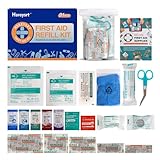
- All-in-One Wound Care Refill Solution:Designed to restock existing first aid kits with essential wound care supplies for everyday use and minor injuries, including practical tools such as scissors and tweezers, along with assorted bandages and adhesive bandages in multiple sizes for versatile wound coverage and protection
- Safety-Focused & Internationally Compliant:Manufactured in facilities that follow internationally recognized quality standards. Selected components comply with relevant FDA and CE requirements for reliable daily use.
- Compact & Suitable for Multiple Scenario:Ideal for home, office, car, travel, hiking, and emergency kits—keeps your first aid supplies organized and ready when needed.
- Easy to Store & Quick to Access:Refill-only design fits neatly into most standard first aid cases, allowing quick access when time matters.
- Compact Boxed Refill, Easy to Store & Carry:Boxed first aid refill kit measuring approximately 6.69 × 4.92 × 1.96 inches and weighing about 0.9 lb. The compact box design keeps supplies organized, protected, and easy to store in drawers, cabinets, or existing first aid kits without taking up extra space.
300Pcs Waterproof Blue First Aid Kit Refill Pack

When you’re on a weekend hike—or heading to a business trip—you’ll notice how the 300‑piece, blue waterproof kit fits snugly into any backpack, offering every essential from gauze and bandages to instant ice packs and tongue depressors. You’ll appreciate the compact, travel‑size design that slides into your carry bag without bulk. The blue case houses 300 items, including cotton swabs, safety pins, triangular bandages, scissors, and plastic tweezers. A versatile emergency blanket doubles as a warm cover during outdoor activities, from hiking to boat trips. Although the zipper edge isn’t sealed, the bag remains water‑resistant trails and spills.
Best For: hikers, cyclists, campers, office workers, and travelers who want a compact, all‑in‑one first aid solution for everyday emergencies.
Pros:
- 300 essential items packed in a lightweight, waterproof blue tote, perfect for on‑the‑go use.
- Versatile emergency blanket doubles as a warm cover for outdoor activities.
- Easy‑access plastic compartments keep supplies organized and reachable in a pinch.
Cons:
- The zipper seam isn’t fully sealed, so the bag is only water‑resistant, not fully waterproof.
- The bundle’s bulk may feel heavy when fully stocked for longer trips.
- Lacks items like an emergency whistle or firestarter, which some users may expect.

- Portable for Any Emergency -- Easy to carry, travel size first aid kit. Emergency first aid kit can hold many essential emergency supplies. Ideal for hikers, campers, outdoor enthusiasts and more! Perfect for car, boat, bike, motorcycle, home, workplace; travel, hunting, camping, hiking, fishing, boating, cycling, backpacking, climbing, mountain biking, outdoor sports, wilderness and so on
- First Aid Kit Must Have Essentials -- Convenient waterproof first aid kit with plastic compartments for quick and easy access to what you need (The zipper edge is not waterproof). Contains 300 pieces of basic daily first aid necessities such as cotton swabs, band aids, burn dressings, tongue depressors, bandages, gauze sheets, safety pins, triangular bandages, instant ice packs, scissors, plastic tweezers, etc. These home first aid kits are perfect for business trips, outdoor activities
- First Aid Kit Must Have Essentials -- Convenient waterproof first aid kit with plastic compartments for quick and easy access to what you need (The zipper edge is not waterproof). Contains 300 pieces of basic daily first aid necessities such as cotton swabs, band aids, burn dressings, tongue depressors, bandages, gauze sheets, safety pins, triangular bandages, instant ice packs, scissors, plastic tweezers, etc. These home first aid kits are perfect for business trips, outdoor activities
- Extremely Versatile Emergency Blanket -- The emergency blanket is versatile, not only useful for emergency situations, natural disasters or other situations but also to keep you warm on the stadium, outdoor, hiking, camping, fishing and other activities. Stock up for your family survival kits, first aid kits, preparedness supplies and you will never be caught off guard during an emergency!
- Giving Nice Protection -- The band aids can be applied to different parts of the body, to well preserve the wound, so can give it as a gift to friends, colleagues, relatives, family, showing your love and care
Sports First Aid Kit Refill Pack

The 73‑piece refill pack, assembled in the USA, gives athletes and coaches an organized, ready‑to‑go inventory that slides straight into duffel bags or tackle boxes—so you never have to scramble for a single item on the sidelines. It packs 1‑inch and 2‑inch bandages, 5 junior, 3 spot, 16 fabric, and 7 butterfly closures for quick treatment. You’ll also get an athletic tape, two moleskins, and fingertip and knuckle bandages. The medication set includes 2 non‑aspirin, 4 ibuprofen, 2 pain‑relief packets, electrolyte, muscle gel, and sinus relief packs complete. Protective pads include adhesive, oval eye, multi‑size sets, and non‑adhering and PVP prep pads.
Best For: athletes, coaches, and sports teams needing a comprehensive yet compact first‑aid kit for on‑field emergencies.
Pros:
- Includes a wide range of bandages, tapes, and protective pads covering almost every common sports injury.
- All items are pre‑organized and ready to roll, so you can quickly access supplies during a game or practice.
- Pack is assembled in the USA and fits easily into duffel bags or tackle boxes, making travel and storage hassle‑free.
Cons:
- The 73‑piece kit may feel bulky for those who prefer a minimal, lightweight first‑aid supply.
- Some users may find the quantity of certain items (e.g., 16 fabric bandages) excessive for single‑use.
- There are no advanced medical supplies such as burn treatment or surgical equipment, so it is limited to basic injuries.
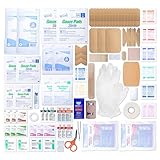
- Refill Solution for Sports First Aid Kits: Designed to refill existing sports or team first aid kits with essential supplies, assembled in USA
- Athlete-Focused First Aid Supplies: Includes first aid supplies most commonly used by athletes and sports enthusiasts during training and competition
- Quality Athletic Supplies: Features quality first aid supplies including athletic tape for proper support and injury management
- Comprehensive 73-Piece Kit: Contains elastic bandages, fabric bandages, butterfly closures, fingertip and knuckle bandages, pain relief packets, first aid wipes, and burn treatment supplies
- Sports-Specific Items Included: Equipped with athletic tape, moleskin patches, electrolyte packets, and muscle gel for addressing common sports-related injuries and needs
Lightning X MED POD: First Aid Refill Pack

Always keep your medical supplies fresh and ready with the Lightning X MED POD: First‑Aid Refill Pack—your go‑to solution if you’re an EMT, rescue worker, or seasoned outdoor responder craving quick, reliable restocking without the bulk of individual items. You pack the pouch into your EMT bag, access four tubes of triple‑antibiotic ointment, a burn spray, antiseptic, blood‑stop spray, and eye wash—all in one resealable bag. The kit delivers 20 prep pads, 10 relieve pads, hydrocortisone cream, lubricating drops, and essential meds like ibuprofen, aspirin, and allergy tablets. It keeps everything fresh, cuts waste, and guarantees you’re always ready for any scenario.
Best For: EMTs, rescue workers, hunters, hikers, and outdoor enthusiasts who need quick, reliable first‑aid restocking without bulk.
Pros:
- Convenient, resealable pouch keeps supplies fresh and prevents early expiration.
- Compact build fits easily into EMT bags, IFAK, or trauma kits.
- Cost‑effective bundle eliminates the need for multiple individual purchases.
Cons:
- Limited to basic first‑aid items—no advanced trauma supplies.
- Fixed quantity may not suit larger teams or high‑volume scenarios.
- No built‑in inventory tracking or reorder alerts.

- Our MED POD Instrument refill kit includes the following items:
- Numerous OTC Medicines
- Topical Sprays & Ointments
- Eye Wash & Eye Drops
- Prep Pads
Factors to Consider When Choosing First-Aid Refill Pack (Restock)
You need to first confirm the refill pack meets all compliance and standards so it’s legally sound.
Then check that its quantity and kit capacity match your space and that the item variety covers every likely injury.
Finally, pick packaging that’s convenient, compact, and fits easily into your existing storage setup.
Compliance and Standards
Because compliance isn’t optional, you must confirm that every refill pack matches the exact specifications set by regulatory bodies. You need to verify that each refill matches OSHA 1910.151’s list of bandages, dressings, and CPR supplies for 10–25 people. If you choose an ANSI Z308.1‑2021 Class A or B kit, make sure it carries a 52‑page label and color booklet; missing either renders it non‑ANSI compliant. An ISO 13485 seal guarantees that the sterile items meet medical‑device quality management standards, giving you traceability and patient safety. For EU sales, confirm that every item bears CE marking and stays unopened until the expiry date. Finally, ASTM standards—like F1980 for adhesive bandages and F1005 for emergency blankets—ensure the supplies perform reliably in emergency scenarios. You’ll remain compliant and safe, time.
Quantity and Kit Capacity
Every refill pack you select should match the item total required by the original kit—78 pieces for a 25‑person kit or 208 for a 50‑person one. Your main goal is to avoid losing critical supplies between restocks. For most medium‑traffic locations, a 154‑piece refill strikes a balance; it replaces gauze, wipes, and bandages without over‑stocking niche items. In low‑usage offices, a 200‑piece pack can restore every commonplace component, while a 77‑piece pack only covers essential staples. Medication packs come in standardized counts—70 doses, for example—so choose based on daily consumption per person or facility. Prioritize bulk items for routine care yet reserve enough space for specialists like burn kits, keeping the pack lean but complete. Check your facility’s usage trend to fine‑tune the numbers.
Item Variety and Coverage
Matching the right total count to your kit size sets the stage for evaluating item variety. You’ll want a refill that includes standard, small, spot, butterfly, fingertip, knuckle, and triangular bandages so any cut, no matter the place or size, gets covered. Add adhesive dressings of large, medium, and small, alongside gauze pads, non‑adherent pads, and eye care pads for both general wounds and eye emergencies. Make sure prep wipes, disinfectant wipes, and industrial‑grade clean‑up supplies are all there to keep contamination under control. Include elastic wraps and medical tapes in sizes like 2.5 cm × 5 m, PBT 3‑PBT, and 2‑PBT for secure, adaptable application. Finally, verify CPR facemask, emergency blanket, and a 1‑hand scissor are present for life‑saving actions. Your kit stays ready for any accident immediately.
Packaging Convenience and Size
How quickly can you restock after an accident? If your refill comes loose‑packed in multiple sub‑bags, you can grab a handful, pop them straight into your existing case, and hit the road in minutes—no new container needed. Make sure the overall dimensions fit a standard kit box: roughly 6–8 inches tall and fewer than 1.5 inches wide. A lightweight refill under two pounds keeps you nimble, even in high‑traffic zones. Look for waterproof or water‑resistant packaging, like a sealed plastic zip‑bag or a zippered pouch, to guard against moisture in outdoor or vehicle settings. Finally, choose a pack that bundles a 52‑page ANSI/OSHA‑style reference booklet inside, so supplies and compliance docs travel together, simplifying on‑the‑spot checks. This saves time, money, and peace of mind.
Storage Compatibility and Accessibility
After snagging the convenience of loose‑packed sub‑bags, you’ll want to make sure the refill fits into your existing kit without a hitch. So choose packs that slide in straight, matching your cabinet’s 8 × 6 × 4‑inch footprint, and avoid bulk that forces a redesign. Grouped compartments keep bandages, dressings, and cleaners close, cutting search time. Pre‑labeled sections align with ANSI Z308.1, letting you locate items instantly without cross‑checking. Color‑coded packaging or pallets give first‑minute identification, even in low light, so you recognize each bin instantly. By aligning size, organization, and visual cues, you keep your kit ready for quick, accurate response whenever danger strikes. You’ll also verify that the cartons stay sealed and are resistant to vibration, ensuring contents remain intact during transport in both quiescent and activity.
Quality Assurance and Warranty
Because you expect your kit to perform when it’s needed most, you must confirm that any refill pack lists and documents certifications such as OSHA, ANSI, ISO 13485, and CE.
Next, check batch traceability. Reputable kits label each component with a unique batch number and manufacturing date, so you can track recalls or defects swiftly.
Look for a solid return‑and‑refund policy. A 12‑month warranty that covers manufacturing flaws and a no‑questions‑asked money‑back guarantee gives you peace of mind.
Ensure packaging integrity. Your kit should arrive in tamper‑evident resealable bags, with each item individually sealed or calibrated to maintain sterility and potency.
Finally, confirm post‑sales support. A dedicated helpline or online portal that promises a response within 48 hours shows the supplier values quality and safety today.
Cost Effectiveness and Value
If you compare the unit cost per refill pack with the price of individual items, you’ll uncover savings of up to 30 % when ordering in bulk. Such bulk buying cuts your overall expenses and lets you allocate funds elsewhere. A refill that packs 200+ items reduces restock trips, slashing labor costs by about 15 % for workplace programs. Choosing a kit that meets OSHA/ANSI standards spares you extra labeling expenses, saving roughly $50 per year. With a shelf life above 60 months, you avoid waste and save an extra $10–$20 annually. Finally, buying dual‑use items—like blankets that double as rescue sheets—adds worth, justifying a 5–10 % higher upfront price due to their multi‑purpose value. These savings improve safety budgets without compromising emergency readiness for all employees.
Frequently Asked Questions
How Long Can a First‑Aid Refill Pack Be Stored Before It Expires?
You can store a first‑aid refill pack for about 2–3 years before it expires, depending on manufacturer guidelines and environmental conditions. Temperature spikes, humidity, and UV light can shorten that shelf life. Inspect seals and fluid levels regularly. If any chemicals look cloudy or dried, replace the pack immediately. Keep the pack in a dry place away from sunlight to maximize usability. Don’t forget to label the pack with its expiration date so you never forget it today.
Are Refill Packs Compatible With All Brand‑Specific First‑Aid Kits?
You might think refills fit all kits like a glove, but that’s not the case. Each manufacturer designs its kit with specific packaging, stick dimensions, and labeling. Refills that match universal standards often work, yet mismatched colors or sizes can cause confusion. Test each refill in your own kit before trips, and keep a backup supply on hand. Remember that expiration dates matter, and replace any expired or damaged items.
Can I Mix Refill Pack Contents to Personalize My Emergency Kit?
Yes, you can mix refill pack contents to tailor your emergency kit. Just keep track of each item’s type and quantity so you don’t over‑store duplicates. Replace worn‑out supplies promptly, and add specialty items—like epinephrine or burn pads—if you foresee specific risks. Re‑label each compartment, and test the kit periodically to verify everything remains functional and nearby during a crisis. After assembling, double‑check coverage across all potential hazards, and adjust as needed.
What Shipping Options Are Available for Bulk Refill Purchases?
You can choose standard shipping, 48‑hour expedited, express overnight, or freight for large orders. For subscriptions, we ship automatically each quarter with no fee. If you need same‑day delivery, we partner with local couriers. For international buyers, we offer DHL or FedEx Express. You’ll receive a tracking number, so you can see when your bulk kits arrive. Let us know your delivery method at checkout, we’ll guarantee your supply arrives.
Is There a Discount for Recurring Refill Orders Each Month?
Surely nothing gets more thrilling than monthly discounts on first‑aid kits. In truth, we’ll offer a sliding discount for recurring refill orders. The more you order each month, the sweeter the savings: 5% off at one refill, 10% at two, and a generous 15% when you commit to a full year in advance. Just set up subscription, pick your quantity, and watch the price drop automatically. right now, zero fuss.
Conclusion
Next, you’ll know how essential a stocked first‑aid refill pack is for staying safe. In fact, 45% of emergency incidents happen at home, showing why you should keep a restock kit close by. By choosing a pack that fits your lifestyle—whether it’s 200 pieces for a DIY enthusiast or a 300‑piece waterproof set for outdoor teams—you’ll be ready to respond quickly, protect loved ones, and save lives. You’ll get peace of mind right now.
Emergency kit, First Aid, Survival Supplies