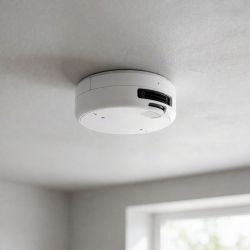
Compact Smoke Alarm (Battery) Safety Must‑Haves for Every Home

Introducing Maria, our meticulous planner and talented visual storyteller. She has a knack for discovering those hidden gems, chic boutique spots, and charming little cafes that add a touch of elegance to every journey. With her keen eye for photography and her passion for travel, Maria will transport you to the most enchanting corners of the world, inspiring you to explore new places, one picture-perfect destination at a time.
Use a battery‑powered, 4‑inch photoelectric alarm—like Kidde’s 10SDR—to cut kitchen false alarms and wake sleepers with its 85‑dB siren. Look for UL 217‑certified models that include a test/mute button, instant hush feature, and 10‑year lithium battery life for maintenance. Mount it on a shelf or use the magnetic pad for installation. These safety must‑haves protect your home while keeping false alarms low. Next, you’ll learn how to choose the perfect unit for your kitchen and bedrooms.
Key Takeaways
Unordered Bullet List of 5 Key Points
- Choose a photoelectric detector to minimize kitchen steam false alarms and ensure reliable smolder‑fire detection.
- Ensure the unit uses a long‑life battery (CR123A or 2 AA) with a 10‑year warranty and an easy end‑of‑life alarm.
- Opt for a magnetic or twist‑and‑click bracket to avoid wiring, simplify placement and maintain tight mounting.
- Verify 85‑dB siren and LED status indicators, plus hush/silence buttons for immediate control during false alarms.
- Perform monthly tests and replace batteries every six months to guarantee continuous, life‑saving performance.
Kidde Smoke Detector, 4-Inch Compact, AA Battery Powered, 10SDR

If you’re looking for a smoke detector that blends into the ceiling, doesn’t scream at every sizzle, and runs on nothing but two AA batteries, Kidde’s 4‑inch 10SDR is the pick for you. You can mount it with the twist‑and‑click bracket, so no wiring hassles appear. The photoelectric sensor keeps kitchen fires from triggering false alarms. The 85‑dB siren blares when danger hits, and an LED blinks every minute to prove it’s alive. The hush button silences false alarms instantly. Remember to test it monthly, replace batteries six months, and let the end‑of‑life beep at year ten alert you.
Best For: households that need a low‑maintenance, battery‑powered smoke detector that blends into the ceiling while minimizing false kitchen alarms.
Pros:
- Photoelectric sensor reduces false alarms from cooking.
- 85‑dB audible alarm and blinking LED provide reliable status confirmation.
- 10‑year limited warranty and simple twist‑and‑click mounting.
Cons:
- Small 4‑inch size may reduce visibility.
- Lacks network connectivity or high‑sensitivity CDI options.
- Requires battery replacement every 6 months to maintain optimal performance.

- SMOKE DETECTION: Model 10SDR detects smoke with over 25% faster smoke detection*; sounds a loud 85-decibel alarm with red LED light for clear visual warnings; compact design suitable for homes
- AA BATTERY OPERATION & WARRANTY: Powered by two AA batteries (included) for easy, no-wiring setup; backed by 10-year limited warranty** that starts from date of purchase
- REDUCED FALSE ALARMS: Uses advanced sensing technology that helps distinguish between real smoke and everyday cooking or steam; helps reduce false alarms while maintaining quick, accurate detection when smoke is present
- TESTED FOR RELIABILITY & COMPLIANCE: Rigorously tested to meet UL 217 10th Edition and FCC standards; helps ensure compliance with recognized safety requirements and consistent performance in residential environments
- BUILT FOR HOMEOWNERS AND PROFESSIONALS: Designed for those who prioritize dependable, code-compliant detection; supports safety goals for homeowners, property managers, contractors, and professionals seeking long-term home safety assurance

Heiman 10-Year Photoelectric Smoke Detector UL 217 Certified

Because it runs on a single CR123A battery for a full decade and meets UL 217’s 10th‑edition safety standard, the Heiman 10‑Year photoelectric detector is the best choice for you—you need low‑maintenance, high‑performance false‑alarm‑suppressing alarms that fit interiors. German Red Dot awarded for its 2.76‑in. square design, its dual‑beam sensors detect fires better than ionization units. Wire‑free mounting with magnetic pads and a test/silence button simplify upkeep. The unit emits 85 dB at 10 ft; LEDs show status, fault, or low power. ABS+PC housing, UL 94 V‑0 rated, works up to 100 °F, 95 %RH, in homes and kitchens. Package includes 10‑year CR123A cell, pads, disassembly pin.
Best For: apprehending occupants who need a long‑lasting, wire‑free smoke detector that is reliable, low‑maintenance, and adept at handling subtle, smoldering fires.
Pros:
- Decade‑long CR123A battery life eliminates routine replacement.
- Dual‑beam photoelectric sensors provide high sensitivity to faint smoke.
- Magnetic adhesive pads and single‑touch test/silence button simplify installation and upkeep.
Cons:
- Requires a non‑standard CR123A lithium battery which may be less readily available than AAA or A batteries.
- Unit size (2.76 in. square) may feel bulky for minimal‑profile installations.
- No passive smoke detector variants; only photoelectric mode available.

- UL 217 10th Ed. Certified & Red Dot Awarded — Meets the UL 217 10th Edition safety standard – the newest and most rigorous smoke alarm requirement in North America. Its compact, purpose-built design earned the Red Dot Design Award in Germany, combining dependable protection with a clean, modern look that fits seamlessly into today’s homes.
- Advanced Dual-Photoelectric Detection — Equipped with next-generation dual-beam photoelectric sensors, this battery-powered smoke detector precisely identifies smoke particle size and density for enhanced accuracy. It provides greater precision and reliability than traditional ionization fire alarms, offering exceptional sensitivity to faint smoke and slow, smoldering fires while intelligently minimizing false alarms caused by steam or cooking. Ideal for reliable home smoke detectors.
- Easy to Install & One-Touch Control — No wiring required. Mount this smoke detector quickly with screws or magnetic adhesive pads. The dedicated Test/Silence button makes weekly testing simple and allows you to silence nuisance or low-battery beeps for up to 12 hours. An 85 dB buzzer (at 10 ft) and LED indicators deliver clear fault and low-power alerts to keep you informed.
- Compact Design & Wide Application — The slim, unobtrusive profile blends into any room or RV. Ideal for homes, apartments, bedrooms, kitchens, garages, hotels, and travel, it provides comprehensive fire protection for every floor – including finished attics and basements – as well as all sleeping areas. Enjoy reliable safety wherever life takes you.
- 10-Year Battery & Fire-Resistant Housing — Powered by a 10-year CR123A lithium battery (included), this smoke alarm delivers reliable protection even during power outages. Its flame-retardant ABS+PC housing (UL94 V-0 rated) resists high temperatures and corrosion, helping it withstand heat and slow fire spread for long-term safety.
First Alert Smoke Alarm Battery-Operated SMI100

You’ll find the First Alert SMI100 ideal for busy kitchens, as its advanced ionization sensor slashes cooking‑related alerts while still meeting new industry standards. This 5.4 × 5.4 × 1.9‑inch, 11.2‑ounce unit runs on a front‑access 9 V alkaline battery—one is already in the package. You can test the alarm anytime with the test/silence button, and the end‑of‑life warning will alert you when batteries need changing. Released in September 2023, it ships ready to mount, and its small footprint fits neatly on a countertop or wall. First‑Alert’s warranty and Amazon’s 30‑day return guarantee give you extra peace of mind. Keep it charged for safety.
Best For: busy home cooks and families seeking a compact, low‑nuisance smoke detector that can be mounted on a countertop or wall.
Pros:
- Advanced ionization sensor dramatically cuts cooking‑related false alarms.
- Fully integrated 9 V battery with front‑access compartment simplifies installation.
- End‑of‑life warning alerts the user when battery replacement is needed.
Cons:
- Must replace the 9 V battery manually every year or two.
- No photoelectric sensor, limiting detection of certain fire types.
- Lacks wireless connectivity or remote monitoring features.

- First Alert's Precision Detection advanced sensing technology complies with new industry standards to reduce cooking nuisance alarms and provides early warning in the event of a home fire emergency.
- Battery-operated alarm allows for easy installation and maintenance
- Front access battery compartment makes for easy battery replacements
- End-of-life warning lets you know when it’s time to replace the alarm
- Test/silence button for efficient testing to ensure alarm is working properly
Heiman 10-Year Battery Smoke Detector 3-Pack

The Heiman 10‑Year Battery Smoke Detector delivers a decade of uninterrupted fire protection with its built‑in lithium battery. UL 217 10th Edition certifies its safety, and the Red Dot Award highlights its sleek design. Its dual‑beam photoelectric sensors detect smoldering flames with precision, while smart filtering prevents false alarms from cooking steam. Installing is effortless—magnetic adhesive pads or screws let you’re mount anywhere, even on ceilings or walls, and the test/silence button keeps you’re in control. Lightweight and compact, the 2.76″×2.76″×1.46″ unit fits kitchens, attics, RVs, or hotels, operating up to 95 % RH and 100 °F plus an 85 dB buzzer and LED status indicators.
Best For: Homeowners and renters who want reliable, low‑maintenance smoke detection for kitchens, bedrooms, RVs, and hotels.
Pros:
- 10‑year lithium battery and UL 217 10th Edition certification for long‑term safety.
- Dual‑beam photoelectric sensors with smart filtering keep false alarms from cooking steam to a minimum.
- Magnetic adhesive pads or screw mounting give flexible placement on ceilings or walls.
Cons:
- No hardwired backup; relies entirely on the battery until the 10‑year end‑of‑life.
- Lacks integration with smart home systems or wireless alerts.
- Requires manual replacement of the battery after a decade, as no recharge option is available.

- UL 217 10th Ed. Certified & Red Dot Awarded — Meets the UL 217 10th Edition safety standard – the newest and most rigorous smoke alarm requirement in North America. but it is not UL Listed or officially UL certified, and may not qualify for local COO building inspections. Its compact, purpose-built design earned the Red Dot Design Award in Germany, combining dependable protection with a clean, modern look that fits seamlessly into today’s homes.
- Advanced Dual-Photoelectric Detection — Equipped with next-generation dual-beam photoelectric sensors, this battery-powered smoke detector precisely identifies smoke particle size and density for enhanced accuracy. It provides greater precision and reliability than traditional ionization smoke alarms, offering exceptional sensitivity to faint smoke and slow, smoldering fires while intelligently minimizing false alarms caused by steam or cooking. Ideal for reliable home smoke detectors.
- Easy to Install & One-Touch Control — No wiring required. Mount this smoke detector quickly with screws or magnetic adhesive pads. The dedicated Test/Silence button allows you to silence nuisance for 10 minutes or mute low-battery beeps for up to 12 hours. An 85 dB buzzer (at 10 ft) and LED indicators deliver clear alerts to keep you informed.
- Compact Design & Wide Application — This slim smoke alarm with unobtrusive profile blends into any room or RV. Ideal for homes, apartments, bedrooms, kitchens, garages, hotels, and travel, it provides comprehensive fire protection for every floor – including finished attics and basements – as well as all sleeping areas. Enjoy reliable safety wherever life takes you.
- 10-Year Battery & Fire-Resistant Housing — Powered by a 10-year lithium battery (included), this smoke alarm delivers reliable protection even during power outages. Its flame-retardant ABS+PC housing (UL94 V-0 rated) resists high temperatures and corrosion, helping it withstand heat and slow fire spread for long-term safety.
10-Year Photoelectric Smoke Alarms, 3 Pack

Ten‑year replaceable lithium batteries let your alarms stay powered for a full decade, so you never have to swap batteries or worry about maintenance. The PG‑S05 boasts UL217 certification and a photoelectric sensor that detects thick smoke before flames arise. Its slim, standalone design fits any décor, and the built‑in test/mute button lets you quickly verify function or silence false alerts. Each detector weighs 11.7 oz., making mounting effortless. The 3‑pack covers multiple rooms at a low cost, and a 30‑day return policy gives you peace of mind for every homeowner’s safety plan and confidence all year round in seconds.
Best For: homeowners and renters who want long‑term, low‑maintenance fire protection with easy testing.
Pros:
- 10‑year replaceable lithium battery eliminates yearly battery changes.
- UL217 certification guarantees safety and durability.
- Compact photoelectric sensor detects thick smoke early, reducing false alarms.
Cons:
- Requires non‑standard CR123A batteries, which may be costly.
- Limited to standalone mounting, no multi‑sensor integration.
- 3‑pack may exceed the needed quantity for smaller homes.

- Advanced Smoke Detection Technology: Our Fire Alarms Smoke Detectors feature highly sensitive sensors that quickly detect smoke, ensuring your home is protected at all times
- Stylish and Compact Design: These smoke alarms for home use a modern and mini design that blends seamlessly with your home decor while providing essential safety features.
- Long-lasting and Reliable Power Source: Equipped with a 10 Year replaceable CR123A lithium battery, our smoke detectors offer a decade-long sensor life, minimizing maintenance and enhancing reliability.
- User-friendly Operation: With a convenient Test/Silent button, our Fire Alarms make it easy to check functionality and silence false alarms, ensuring peace of mind with every use.
- Safety Guarantee: Each device has UL217 report, giving you confidence in the durability and effectiveness of our battery-powered smoke detectors, providing long-term protection.
10-Year 85dB Smoke Detector, 70% Fewer Alarms

Because false alarms can turn a quiet night into a frantic day, this battery‑powered 85 dB smoke detector cuts misleading alerts by 70 % and keeps your home safe with a single, durable CR123A battery. The microchip and sleep mode wake fewer than 0.5 mW, giving decade of protection. You’re the defense against fires, thanks to EN14604 photoelectric sensing that spots them ahead, while three‑stage air sampling silences cooking or steam blips. It covers 430 ft² kitchen bedroom. An 85 dB pulse reaches five meters to wake sleepers. Test, silence, or mute it with click. Certified CE, UL217, ABS housing and adhesive‑or‑screw mounting simplify upkeep daily.
Best For: Families, apartment dwellers, and hospitality operators who need long‑lasting, low‑false‑alarm smoke detection in a single CR123A‑powered unit.
Pros:
- 10‑year battery life with replaceable CR123A lithium cell for decade‑long protection.
- EN14604 photoelectric sensor cuts false alarms by 70 % with triple air‑sampling logic.
- 85 dB pulsating alarm reaches 10 ft to wake sleepy occupants even through walls.
Cons:
- Requires a CR123A lithium cell, which is pricier than standard AA batteries.
- 85 dB output may be overly loud for nearby neighbors or in open-plan homes.
- Installation adhesive may not adhere well to textured or uneven ceilings.

- 【10-Year Battery & Smart Power Management】 Equipped with a replaceable CR123A lithium battery delivering 10-year battery life, saving over US$40. Features low-power alerts (with beeps and flashes for every 60s), and a microchip with <0.5 mW ultra-low consumption. Sleep mode ensures 24/7 protection without energy drain—ideal for smoke alarms for home safety.
- 【Military-Grade Photoelectric Sensor】EN14604-certified photoelectric smoke alarm detects smoldering fires 15 minutes faster than traditional ionization sensors. Triple air-sampling tech reduces cooking/steam false alarms by 70%. Covers up to 430 sq.ft (40m²), with adaptive logic for kitchens/bathrooms, provides you with first safety alert.
- 【85dB Alarm with Real-Time Status LED】85dB pulsating alarm penetrates to wake deep sleepers within 10ft (3m). In normal mode, Red LED indicator flashes every 60s. In test, alarm, and silence modes, it flashes continuously. In case of a false alarm, a one-click mute function can silence it for 10 minutes, combining safety and convenience—a must-have smoke detector for home.
- 【Certified Safety for Global Homes】Passed strict CE EN14604 and US UL217 tests for fire alarms, suitable for home, apartment, hotel and shops. Built with heat-resistant ABS housing, it delivers lab-tested protection trusted worldwide.
- 【Quick Installation & Hassle-Free Care】Simple, rounded and sleek industrial design. Fits well in any home environment. Two installation options (self-adhesive backing or screws) enable 5-minute setup. Suitable for all ceiling materials. Just test it weekly and clean it quarterly, making maintenance easy.
6-Pack Battery Smoke Alarms with Test Button

If you’re looking for a smoke alarm that blends dependable detection with a low‑maintenance design, the 6‑pack photoelectric model with a built‑in test button is your best pick.
Each unit houses dual‑sensor light chips that spot faint smoldering and ignore steam, cutting false alarms. They run on a 3000 mAh 2‑AA pack, three times longer than 9‑V cells, drawing only 0.1 µA when idle. A flashing LED warns of low batteries every 55 seconds. Honeycomb dual‑inlet delivers over 85 dB, guaranteeing coverage throughout the whole house, while the integrated mute and test button lets you check monthly with one push.
Best For: families or renters who value long‑lasting, low‑maintenance smoke detection with a single monthly test and minimal false alarms.
Pros:
- • 3000 mAh dual‑AA pack offers 3× longer life than standard 9‑V cells and ultra‑low standby draw (0.1 µA).
- • Dual‑sensor photoelectric design cuts steam‑induced false alarms while detecting faint smoldering fires.
- • Integrated mute/test button allows one‑hand monthly checks and quiet local alarm silencing.
Cons:
- • Requires manual battery replacement; no built‑in replace‑away battery system.
- • No smart connectivity or voice alert options, limiting integration with home automation.
- • Initial cost includes a 6‑pack, which may be overkill for single‑room or small‑home applications.

- 𝐃𝐮𝐚𝐥-𝐒𝐞𝐧𝐬𝐨𝐫 𝐏𝐡𝐨𝐭𝐨𝐞𝐥𝐞𝐜𝐭𝐫𝐢𝐜 𝐀𝐥𝐚𝐫𝐦—Newly Upgraded Featuring 10-year lifespan dual-sensor photoelectric technology, it significantly reduces false alarms triggered by kitchen steam or vapor. Exceptionally sensitive to faint smoke and slow-smoldering fires. Rigorously tested to meet safety standards, delivering professional protection for your family’s safety.
- 𝟑 𝐓𝐢𝐦𝐞𝐬 𝐭𝐡𝐞 𝐒𝐞𝐫𝐯𝐢𝐜𝐞 𝐋𝐢𝐟𝐞 𝐨𝐟 𝐒𝐭𝐚𝐧𝐝𝐚𝐫𝐝 𝟗𝐕 𝐁𝐚𝐭𝐭𝐞𝐫𝐢𝐞𝐬—Unlike 9V batteries commonly found on the market, our smoke detector features a high-capacity 3000mAh battery that lasts 3 times longer. With an ultra-low standby power consumption of just 0.1μA, it delivers exceptional energy efficiency for long-term protection.
- 𝐃𝐮𝐚𝐥-𝐋𝐚𝐲𝐞𝐫 𝐒𝐦𝐨𝐤𝐞 𝐈𝐧𝐭𝐚𝐤𝐞 𝐟𝐨𝐫 𝐅𝐚𝐬𝐭𝐞𝐫 𝐑𝐞𝐬𝐩𝐨𝐧𝐬𝐞—Featuring a honeycomb dual-inlet design, this smoke alarm rapidly detects smoke from all directions. With an ultra-loud alarm (>85 dB), it ensures the alert can be heard in every corner of your home, providing reliable protection for your family.
- 𝐒𝐞𝐥𝐟-𝐂𝐡𝐞𝐜𝐤 𝐅𝐮𝐧𝐜𝐭𝐢𝐨𝐧—When the fire alarm is in a low-battery state, the red LED light will flash approximately every 55 seconds, accompanied by a "beep" sound. This indicates that the battery is running low and needs to be replaced promptly.
- 𝐌𝐮𝐭𝐞 𝐚𝐧𝐝 𝐓𝐞𝐬𝐭 𝐅𝐮𝐧𝐜𝐭𝐢𝐨𝐧—Hilmon fire alarms smoke detectors is equipped with a combined mute/test button. In case of a false alarm triggered by activities like smoking, simply press the button to silence the alarm and activate mute mode. Additionally, we recommend pressing the test button once a month to verify the smoke alarm's proper functioning and ensure reliable operation.
First Alert SMI100, Battery-Operated Smoke Alarm, 2-Pack

Looking for a quick, safe solution that doesn’t rely on your home’s electrical system? The First Alert SMI100 2‑pack gives you instant fire protection with 9 V alkaline batteries you’ll find in the box. Each white alarm measures 5.6 × 5.6 × 1.9 in., weighs 9.6 oz., and houses an ionization smoke sensor that meets the latest precision detection standards. Front‑access batteries replace easily; the test/silence button lets you confirm operation quickly, while an end‑of‑life warning tells you when to swap units. With a 30‑day return guarantee and manufacturer’s support, you’ll keep peace of mind without wiring hassles. And stay safe every day when danger strikes.
Best For: Those who need easy, wiring‑free fire protection—ideal for renters, apartments, or anyone wanting reliable smoke detection without a permanent electrical setup.
Pros:
- Battery‑operated, enabling quick installation anywhere in the home
- Ionization sensor offers fast, true‑fire detection while minimizing cooking‑related false alarms
- End‑of‑life and test/silence buttons simplify maintenance and verification
Cons:
- Lacks photoelectric detection, making it less effective against slow‑smoke fires
- Requires periodic manual battery replacement once the 9 V battery life expires
- Two‑pack configuration means upfront cost is higher than single‑unit offerings, though it provides redundancy.

- First Alert's Precision Detection advanced sensing technology complies with new industry standards to reduce cooking nuisance alarms and provides early warning in the event of a home fire emergency
- Battery-operated alarm allows for easy installation and maintenance
- Front access battery compartment makes for easy battery replacements
- End-of-life warning lets you know when it’s time to replace the alarm
- Test/silence button for efficient testing to ensure alarm is working properly
Smoke Alarm 10-Year Lifespan Home MY-S05 1 Pack

With a 10‑year lifespan and battery‑powered design, the MY‑S05 offers homeowners a hassle‑free way to keep their homes protected—no wiring, just quick, secure installation and reliable detection for over a decade.
You’ll appreciate the photoelectric sensor that contacts smoke, achieving 0.25 dB/m density detection. It reacts 30 % faster and accurately than most models. With standby current under 10 µA, the alarm’s battery life stretches, so you change batteries less often. When danger arrives, its 85 dB siren and flashing red LED cover 215–430 ft². Installation needs three AAA batteries, foam, and a screw—no wires, and the test button confirms proper function every 20 seconds.
Best For: homeowners seeking a long‑lasting, wire‑free smoke detector that delivers fast, accurate detection with minimal power drain.
Pros:
- 10‑year lifespan and low standby current (<10 µA) keep batteries from draining quickly.
- 30 % faster response and 0.25 dB/m detection provide superior safety compared to conventional units.
- 85 dB siren and flashing LED cover 215–430 ft² without the need for hard wiring or professional installation.
Cons:
- Requires three AAA batteries (not included), so replacement cost is an ongoing consideration.
- No hard‑wired option limits integration with existing home‑automation or fire‑alarm systems.
- Warranty is only a 30‑day voluntary return guarantee, shorter than some competitors’ manufacturer warranties.

- Accurate & Sensitive: The MY-S05 Smoke Alarm features an external photoelectric sensor that allows smoke to directly reach the detection core. It triggers an instant alarm at a smoke density of just 0.25 dB/m, offering 30% faster response time and higher accuracy than traditional models on the market.
- Low Power Consumption: Equipped with an advanced power-saving design, the MY-S05 consumes less than 10μA in standby mode—far lower than most other products (typically 30μA-50μA). This ensures longer battery life and superior performance.
- Audible & Visual Alerts: When smoke or combustion particles are detected within a 215–430 ft² range, the alarm emits an 85dB loud siren accompanied by a rapidly flashing red LED, ensuring everyone is alerted to potential danger.
- Self testing: After powering on, press the test button, and the red light will flash 4 times accompanied by a beep sound to indicate normal operation. The red indicator light will flash once every 20 seconds during normal operation. When the battery level is too low, the red light will continue to flash to remind you to replace the battery in a timely manner.
- Easy to install: The MY-S05 smoke alarm is no hardwiring needed, Powered by 3 * 1.5V AAA batteries (Not Included), and comes with screws and foam adhesive in the package. You can choose to install it securely by drilling holes in the screws (recommended installation method) or easily install it anywhere with foam adhesive.
First Alert SM210 10-Year Smoke Alarm

Because it stays on a sealed lithium battery for a full decade, the First Alert SM210 is perfect for you if you’ll want a maintenance‑free smoke alarm that saves time and money. Mount it with a quick stick to the wall or tap it on the ceiling; no wires needed. Its slim 5.13‑inch profile saves ceiling space, and the photoelectric sensor cuts false alerts from cooking fumes. With a built‑in end‑of‑life warning, you’ll know when it’s time to swap units. The test/silence button lets you verify operation instantly, and the lithium battery lasts until the alert lights up a red warning.
Best For: households looking for a maintenance‑free, long‑lasting, space‑saving smoke alarm that reduces false alerts from cooking fumes.
Pros:
- Long‑lasting sealed lithium battery eliminates replacements and low‑battery chirps for a decade
- Slim 5.13‑inch profile saves ceiling space while still meeting UL standards
- Photoelectric sensor minimizes nuisance alerts from cooking smoke
Cons:
- No remote or smart connectivity; purely analog alarm
- Requires manual end‑of‑life visual cue—no audible warning beyond battery indicator
- Slightly higher upfront cost than basic 2‑year battery units

- First Alert's Precision Detection advanced sensing technology complies with new industry standards to reduce cooking nuisance alarms and provides early warning in the event of a home fire emergency.
- 10-Year sealed battery eliminates battery replacements and low battery chirps for the life of the alarm
- Slim profile design is half the depth of a standard alarm
- End-of-life warning lets you know when it’s time to replace the alarm
- Test/silence button for efficient testing to ensure alarm is working properly
Battery Operated 2-Pack Smoke Alarm with LED

If you’re a renter or living in a home that can’t accommodate hardwired alarms, this 2‑pack battery‑operated smoke alarm delivers reliable protection with a clear LED status light and low‑battery warning. Touch the large test button to verify function, and hold the silence lever for five seconds to hush false alerts. The photoelectric sensor reacts quickly to slow‑burning smoke, and a flashing red LED signals low batteries. Mount each unit by attaching the removable base, twisting into the ceiling, avoiding sunlight or drafts. Weighing 6.7 oz, model MY‑S05 uses CR‑123A cells and ships with a 30‑day return guarantee and safety.
Best For: renters, landlords, and homeowners who need quick, wire‑free installation of reliable smoke alarms with clear LED status indication.
Pros:
- Easy, no‑tools installation with removable base plates.
- LED low‑battery alert prevents silent failure and ensures safety.
- Photoelectric sensor offers fast detection of slow‑burning smoke.
Cons:
- Requires frequent battery replacement (CR‑123A not included).
- No real‑time monitoring or smart connectivity.
- 30‑day return guarantee limits long‑term warranty coverage.
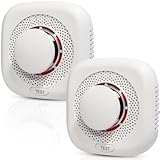
- ADVANCED PHOTOELECTRIC SENSOR – The optical smoke sensing chamber quickly detects slow-burning fires with thick white smoke, providing early warning for home safety.
- FEWER FALSE ALARMS – High-performance optical sensors reduce nuisance alarms caused by cooking fumes, ensuring a more reliable smoke detection experience.
- TEST & HUSH FUNCTION – Press the large test button to check if the alarm is functioning properly. If a false alarm occurs, press and hold the button for 5 seconds to silence it.
- LOW BATTERY WARNING – When the battery is running low, the red LED indicator will flash, prompting you to replace the battery as soon as possible. To ensure optimal performance, it is important to regularly check the battery level and replace it promptly when the indicator flashes. This will help maintain the accuracy and reliability of your device.
- EASY TO INSTALL – Comes with a removable base plate for hassle-free installation. Simply attach the base plate to the ceiling with the provided screws, then twist and lock the alarm into place. To ensure optimal performance, we recommend placing the device in a stable, well-ventilated area, away from direct sunlight, high airflow, or excessive humidity, which could affect its functionality and lead to false alarms or missed detections.
BRK First Alert SMI100, Battery-Operated Smoke Alarm, 3-Pack

Looking for a smoke alarm that stays reliable without ever needing a hard‑wired outlet? First Alert’s SMI100 3‑pack delivers that promise. Each unit runs on a 9 V alkaline battery that comes pre‑installed, and you can swap it via the front compartment. With an ionization sensor, it spots alarms early and cuts cooking‑nuisance sounds. The small, 5.6″ cube weighs only 0.6 lb and fits easily on any wall. It includes a test/silence button for fast checks. You can return the set within 30 days if it falls short of your expectations. By using three units, you’ll protect bedrooms, hallway, and the kitchen.
Best For: families and renters who want a simple, battery‑operated smoke alarm for bedrooms, hallways, and kitchens without the need for hard‑wiring.
Pros:
- Comes with a 9 V alkaline battery pre‑installed in each unit, eliminating the need for external power.
- Ionization sensor offers early fire detection and low cooking‑nuisance alarms for a quieter, safer home.
- Lightweight (0.6 lb) and compact 5.6″ cube design fits easily on any wall or ceiling.
Cons:
- Requires periodic manual battery replacement; no battery‑backed auto‑switch.
- Limited to ionization technology—no photoelectric sensor for smoke detection.
- No built‑in speaker connectivity or smart‑home integration.

- First Alert's Precision Detection advanced sensing technology complies with new industry standards to reduce cooking nuisance alarms and provides early warning in the event of a home fire emergency
- Battery-operated alarm allows for easy installation and maintenance
- Front access battery compartment makes for easy battery replacements
- End-of-life warning lets you know when it’s time to replace the alarm
- Test/silence button for efficient testing to ensure alarm is working properly
Battery Operated Photoelectric Smoke Alarms (3‑Pack)

Do you need a battery‑operated smoke alarm that offers decade‑long protection without the hassle of wiring? With a dual‑sensor photoelectric design, these units detect slow‑burning smoke as early as 0.08 seconds. They run on a 9‑V battery, giving about three times the lifespan of standard AA cells. The module draws less than 0.1 µA in standby, so it won’t drain your power bank. When smoke hits the 360° inlet, the alarm rises to 85 dB, awakening sleepers. A flashing red LED signals low battery and test conditions. Packaged in a 4.2‑inch cube, the three‑unit bundle includes tape or screws for mounting.
Best For: homeowners and landlords who want a maintenance‑free, decade‑long smoke detection system without wiring.
Pros:
- Dual‑sensor design delivers early detection of slow‑burning fires with a low false‑alarm rate.
- 9‑V battery offers ~3× longer life than standard AA, with ultra‑low standby power.
- Loud 85 dB alarm wakes sleepers, with a flashing red LED indicating low battery or test conditions.
Cons:
- Requires manual testing; no real‑time monitoring or alerts.
- 9‑V batteries may be less readily available than standard AA cells.
- 360° inlet coverage requires multiple units to fully protect large rooms.

- 【Advanced photoelectric sensor technology】Featuring dual-sensor photoelectric technology with a lifespan of up to 10 years, this device excels at detecting slow-burning fires (such as soft furnishings or electrical appliance fires). It offers exceptional sensitivity to faint smoke and slow smoldering fires, with a low false alarm rate and extended service life.
- 【Sensitivity 0.1 Bar & Sensor detection speed 0.08 Seconds】This smoke alarm is equipped with a high-sensitivity error correction chip and is designed to provide accurate monitoring information, rapid response, and avoid false alarms or false triggers. It also features low power consumption and long standby time.
- 【High-Capacity Battery & Ultra-Low Power Chip】Our smoke detectors utilize high-capacity 9V batteries, unlike standard AA batteries found on the market, delivering three times longer battery life. Paired with an intelligent chip, they achieve ultra-low standby power consumption of <0.1μA, providing long-term protection for your safety.
- 【High-Efficiency Smoke Channel & 85dB Alarm】 The 360° smoke inlet and dedicated flue connected directly to the photoelectric detector detect fires instantly. A red LED flashes rapidly while triggering an alarm exceeding 85 decibels—waking you even if you're sound asleep in the next room.
- 【Easy Installation & Low Battery Alert】Measuring 4.2×4.2×0.66 inches, this smoke alarm installs quickly on ceilings or walls using included 3M adhesive tape or screws. When battery power is low, the red LED indicator flashes with a “beep” sound, reminding users to replace the batteries.
4-Pack 9V Photoelectric Smoke Detectors, Easy Install

Whether you’re a renter or a hotel manager, this 4‑pack set of photoelectric smoke alarms is your go‑to choice for quick, wiring‑free protection. Each unit uses a 9 V battery—four batteries are included—and a photoelectric sensor that reacts faster to smoldering fires than ionization models. The alarms emit an 85 dB buzz and a flashing red LED, housed in fire‑retardant ABS for durability. Installation is a single screw‑in clamp, no wiring, so you can cover multiple rooms instantly. Test monthly, dust‑clean biannually, and replace batteries when a chirp signals low power. With a 10‑year warranty and 24‑hour response, you’re today covered.
Best For: renters, homeowners, and hotel managers seeking quick, wiring‑free smoke protection.
Pros:
- 9 V battery‑operated units with 4 batteries included provide instant power with no wiring.
- Easy screw‑in mounting for instant coverage of multiple rooms.
- 10‑year limited warranty with 24‑hour response guarantees long‑term peace of mind.
Cons:
- Low‑battery chirp requires timely battery replacement to maintain protection.
- Limited to indoor use; not suitable for outdoor or highly damp environments.
- No smart connectivity or integration with home automation systems.

- Accurate & Sensitive: The small size smoke alarm adopts photoelectric technology to detect smoke, which is more sensitive to light smoke and slow smoldering fires and more quickly to remind you. Keep your home safe 24/7
- Photoelectric Technology&Material: Fire-Retardant ABS V0 Level. 9V Battery-Powered Photoelectric sensor Smoke Alarm. photoelectric technology which is optimized to detect slow smoldering fires which generate light smoke, little heat and may smolder from all directions for hours before bursting into flames.
- Test Button: Test smoke alarm every week by pressing the test button in the middle of the cover for 5 seconds. Please change batteries when smoke detector inform low battery, smoke alarm “chirp” every 32 seconds and the red LED flashes at the same time
- Sound & LED Warning: If fire alarm detects smoke or combustion particles in the air, it will sound in 85db and red LED will flash rapidly to remind every member to check. If fault, please clean dust or smoke inside smoke alarm with fan
- Home Protection: According to US data analysis, a family fire begins every 38 seconds. The faster you know about the fire, the sooner you start moving your family, and the smoke alarm at work reduces the risk of home fire deaths by 50%
2-Pack Battery Smoke Detectors with LED Test Mute

If you need a dependable, battery‑powered smoke detector that keeps your home ready even when the mains are off, the SZ PGST Pack Battery Smoke Detectors with LED Test Mute are ideal.
You’ll appreciate its dual‑sensor photoelectric design, offering high sensitivity while keeping false alarms low. The 10‑year service life and 85 dB alarm give confidence, and the stand‑by current stays under 0.1 µA. Two NiMH 1.5 V AA cells power it, with a red LED blinking every 55 s to signal low battery and a simple beep‑beep alert. The clear LED status light, monthly test button, and mute function let you test effortlessly while preventing nuisance alarms. Installation is a quick snap‑in—just secure the base, insert batteries, and press. Support includes a 24‑hour tech response and a 30‑day return guarantee for peace of mind.
Best For: homeowners who want reliable, battery‑powered smoke detection that remains active during power outages.
Pros:
- Dual photoelectric sensors detect slow‐burn and smoldering fires while keeping false alarms low.
- 10‑year service life with standby current < 0.1 µA saves battery and reduces maintenance.
- Snap‑in installation, monthly test button, LED mute function and clear status light make operation hassle‑free.
Cons:
- Two separate bases are required, adding extra clutter to ceilings.
- Operable only up to 50 °C, making it less suitable for extreme heat environments.
- Low‑battery alert relies on a blinking LED and beep, which may be overlooked if not checked regularly.

- 【Dual-Sensor Photoelectric Detector】Our smoke detector employs a dual-sensor photoelectric technology, offering high sensitivity to smoke, low false alarm rates, and extended service life. It excels at detecting slow-burning fires, responding swiftly even to faint smoke and smoldering fires from soft furnishings or appliances.
- 【Ready to Use Upon Arrival】The package includes 6 pack of smoke detectors, the required number of batteries, base stickers, and a base screw set. Installation is simple: just secure the base to the wall and rotate the alarm to snap it into place (Note: Batteries must be installed for the base to snap securely). No additional accessories needed.
- 【Extra-Long Battery Life】The high-capacity 1.5V AA batteries included in this package feature a large capacity and low natural discharge rate, delivering significantly longer battery life than other common batteries. Our smoke detectors consume less than 0.1 microamperes in standby mode, providing you with long-lasting safety protection.
- 【Low Battery Alert】When battery power reaches the threshold, the alarm's red LED flashes approximately every 55 seconds, accompanied by a “beep-beep” warning sound. Easily determine if the battery is functioning properly.
- 【One-Touch Mute/Test Button】 The smoke alarm is equipped with a mute/test button. We recommend using the test button monthly to verify the smoke alarm is functioning properly. In the event of an accidental false alarm, simply press the button to stop the alarm.
Factors to Consider When Choosing a Compact Smoke Alarm (Battery)
Choosing a compact battery‑powered smoke alarm means you’ll want to compare battery life, ensuring it lasts years before you need a replacement. Pay close attention to how easy the unit is to install—many models let you screw it in with a basic drill or slide it into an existing outlet. Finally, check the detection technology, warranty, and certification standards to guarantee reliable performance in case of fire.
Battery Life
Ever wondered how a single battery can power a smoke alarm for a decade? You’re right—most compact units run on one lithium or alkaline cell for ten years, with manufacturers flagging a chirp or a dim LED as the low‑power cue. Because these alarms draw under 0.5 mW, even a low‑capacity AA can survive 60 months. Photoelectric sensors pull less current than ionization types, slicing standby drain and stretching life. When the unit emits a series of short beeps every minute, it signals sensor wear, not a battery failure, and aligns with the 10‑year calendar. Replace the battery every six months, or sooner if the alarm chirps constant; a dying cell can trigger false alarms and weaken fire protection. And guarantee 100% reliability on every emergency.
Installation Ease
After discovering a single battery can keep a compact smoke alarm lit for ten years, you’ll appreciate how quickly that same unit goes into service. Most models let you mount without a drill—either a twist‑and‑click bracket or magnetic board—so you can finish an install in about 3–5 minutes. Ceiling units use two ¼‑inch screws, while wall or door‑frame options latch onto an adhesive pad or bolt. Because it’s no‑wiring, you can place the alarm in sub‑basements or unfinished rooms that lack outlets, cutting the need for a pro. A front “test & silence” button lets you verify behavior instantly, and the rear battery compartment recharges in three minutes. Finally, a LED that flashes every 60 seconds confirms the unit is powered, eliminating separate test hardware.
Detection Technology
Because the heart of a compact alarm is its sensor, understanding the science behind each option lets you tune performance to your home’s needs. If your home faces slow‑smoldering fires, photoelectric sensors are best. They detect smoke by light scattering before flames ignite, giving extra seconds. Ionization units react quickly to flaming fires but can trigger on kitchen steam. Dual‑beam photoelectric models sample at two distances, filtering out harmless aerosols and cutting false alarms. Advanced algorithms analyze particle size and density, reducing cooking‑related nuisance alerts by up to 70 % while keeping fast response. Low‑power microchips monitor fire constantly, drawing less than 0.5 µA standby current, letting a single battery run a decade before a low‑power warning ensuring your protection stays uninterrupted throughout the year every day.
Warranty Coverage
Having learned how the sensor physics behind photoelectric and ionization alarms work, you’ll also want to understand the warranty coverage that protects you from defects over the unit’s life. First, check that the warranty lasts ten years from the first power‑on, encompassing manufacturing defects and sensor failure. Ten years is standard, but some brands may offer longer periods. Second, start the warranty clock with an initial activation test. If the alarm never powers, the coverage might not begin, so test it immediately after installation. Third, read the terms for what counts as a covered repair: most manufacturers will replace any part or provide labor for a faulty sensor, but exclude damage from mishandling, improper wiring, or drops. Keep your receipt; claims require purchase proof.
Certification Standards
If you’re shopping for a battery‑operated smoke alarm, the certifications on the box signal that the unit meets rigorous safety and performance benchmarks. Most U.S. models carry UL 217 8th or 10th‑Edition marks. The 10th Edition demands a ten‑year battery life, a 10 dB/min false‑alarm reduction, and an 85‑dB alarm at 10 ft. International buyers should look for EN14604/CE, which guarantees a photoelectric sensor that spots smoldering fires 15 minutes before ionizers and limits standby current under 20 µA. IEC 60335‑2‑33 covers electrical safety, guarding against overheating, shock, and corrosion. Extra seals, like UL 94 V‑0 housing and an IP rating ≤ 95 % RH, confirm the alarm can survive tough indoor environments. Check the label for your warranty and support contact today. Certified alarms offer a self‑test function that notifies you of sensor failure.
Frequently Asked Questions
Do Compact Battery Smoke Alarms Always Need a 10‑Year Replacement?
No, they don’t always need a 10‑year replacement. Many compact battery alarms specify a 7‑ or 10‑year lifespan, but that depends on model and usage. If the ARL test pin shows a weak signal or if the unit emits buzzing, it’s time for a swap regardless of age. Always check the manufacturer’s instructions, and replace batteries at least annually. And when you handle the unit, keep the batteries handy for changes.
Can Battery Smoke Alarms Be Hard‑Wired Into a Home Fire Detector System?
Yes, you can hard‑wire a battery smoke alarm into your home’s fire detection system, but you’ll need a compatible panel and proper wiring. Most modern units offer a low‑voltage connection that plugs into a breaker box, allowing the alarm to draw power while still keeping its battery for backup. Install it with a licensed electrician, make sure it meets local codes, and test the system regularly to verify reliable operation.
What Is the Expected Battery Life for a Single AA in a Compact Alarm?
A single AA battery in a compact smoke alarm usually lasts about 8 to 10 years under normal conditions, though some high‑quality models claim up to 12. Manufacturers often guarantee 5‑to‑10‑year performance, and the alarm’s internal circuits minimize power draw. Real‑world factors—humidity, temperature, and discharge rate—can affect longevity, but most users find replacements after roughly eight years. Regularly test your unit annually to stay safe and keep it every year.
Is It Permissible to Use Rechargeable Batteries Instead of Standard Ones?
Imagine this: you’re scrolling through your phone near the kitchen, and the bulb that flashes on the compact smoke alarm seems to sync with your heartbeat. You can use rechargeable batteries, but they must match the manufacturer’s specifications. Most units accept high‑capacity Ni‑MH or Li‑ion packs that recharge fully before you reinstall them. Double‑check the alarm’s label, test it after replacement, and update the maintenance log, and keep it reliable.
Where Is the Ideal Placement for a Battery‑Powered Smoke Alarm in a Bedroom?
Place your battery‑powered smoke alarm high on the ceiling or on the wall at least two feet from the ceiling, near the center of the bedroom. Avoid corners, windows, or drafty vents that could push smoke away. Keep it away from bedding and sleeping areas, so it wakes you early, but close enough to detect smoke promptly. It also functions silently, ensuring peace while protecting everyone in your home today.
Conclusion
By choosing the right compact smoke alarm, you’ll protect, you’ll breathe easy, and you’ll rest confident. You’ll mount it near every sleeping area, you’ll replace its battery yearly, you’ll test it monthly, and you’ll keep the timer ticking. You’ll opt for a photoelectric sensor for slow fires, you’ll select a low‑profile unit for modern décor, and you’ll trust only UL‑certified models. You’ll stay safe, you’ll stay prepared, and you’ll stay reading and always stay alert.
Battery Smoke Detector, kitchen safety, Smoke Alarm