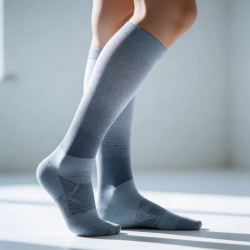
Best Compression socks (graduated) for Leg Comfort

Introducing Maria, our meticulous planner and talented visual storyteller. She has a knack for discovering those hidden gems, chic boutique spots, and charming little cafes that add a touch of elegance to every journey. With her keen eye for photography and her passion for travel, Maria will transport you to the most enchanting corners of the world, inspiring you to explore new places, one picture-perfect destination at a time.
You deserve leg support that feels natural and powerful. Try 20‑30 mmHg knee‑high socks—ideal for athletes, travelers, or long‑standing workdays—offering graduated pressure, breathable mesh, and a seamless toe. For lighter yet effective help, pick 15‑20 mmHg packs like Sooverki’s copper‑infused or CharmKing’s 360‑degree stretch style; they’re breathable and keep you fresh. Need mild relief? Dr Scholl’s 8‑15 mmHg works. Unsure which pressure and length fit your routine? You’ll discover the perfect match to find the best fit for performance.
Key Takeaways
- 20‑30 mmHg graduated socks (unbranded or Physix Gear) give high‑pressure support and anti‑fatigue benefits but can feel tight for mild swelling.
- 15‑20 mmHg options (Sooverki, CharmKing, Merino) provide moderate compression, breathable copper or Merino fibers, and reinforced toe/heel for cushioning.
- Dr. Scholl’s 8‑15 mmHg socks are ideal for light‑pressure use, stay‑up design, and moisture‑wicking, especially for post‑workout recovery or mild swelling.
- The 30‑40 mmHg knee‑high set offers the strongest gradient, 360° stretch and heat‑retentive material, ideal for athletes and nurses but less comfortable for everyday wear.
- Always match the sock gradient to leg circumference, wear a consistent pair each day, and choose seamless or knotless construction for irritation‑free comfort.
Unisex 20-30mmHg Graduated Compression Knee-high Socks

If you’re a nurse, a long‑haul traveler, or anyone who spends hours on their feet, these unisex 20‑30 mmHg graduated compression knee‑high socks give you the pressure where you need it most—your calves and ankles—helping to ward off swelling and keep blood moving quickly. You’ll notice a snug fit that flexes with each step, thanks to an 85–percent nylon, 15–percent polyester blend that’s breathable, soft and moisture‑wicking. Ventilated panels keep your legs cool during HIIT or long runs. These socks aid recovery by easing muscle soreness, reducing micro‑tears, and boosting oxygen delivery—ideal for nurses, travelers, runners, and those chasing performance.
Best For: Nurses, long‑haul travelers, runners, cyclists, hiking enthusiasts, and anyone on their feet all day who wants to prevent swelling and enhance blood circulation.
Pros:
- 20–30 mmHg graduated compression targets calves and ankles, improving venous return and delaying muscle fatigue.
- The nylon‑polyester blend is breathable, moisture‑wicking, and features ventilated panels that keep legs cool during high‑intensity activity.
- Supports recovery by reducing soreness, minimizing micro‑tears, and boosting oxygen delivery to working muscles.
Cons:
- The snug, knee‑high fit may feel restrictive for users with severe edema or those who prefer looser compression.
- Color options are limited, limiting style versatility for fashion‑driven buyers.
- While machine washable for convenience, the compression level may not suit individuals who require higher‑grade (40+ mmHg) or lower‑grade compression.

- SUPPORT RECOVERY AND PAIN RELIEF - promote blood circulation and oxygen flow reducing fatigue and swelling, and varicose veins by providing a mild squeezing action.. Our products stimulate oxygen delivery to the muscles and augment airflow. This aids with joint and muscle recovery, and supports rejuvenating relief from pain and discomfort.
- Comfort&Stretch:All-Day, Effortless Comfort. Our socks provide gentle, consistent support without bunching, rolling down, or cutting off your circulation.Perfect, Adaptive Fit,Freedom of Movement,Breathtakingly Soft & Flexible Material,No More "Too Tight" or "Too Loose"
- Thick Quality Build – Built to Endure,Premium Thick-Knit & Reinforced for Lasting Wear.Tear-Resistant,Heavy-Duty Reinforcement at Heel & Toe.High-quality fabrics Resist Pilling & Maintain Shape. Machine Wash Safe,Stays Fresh & Odor-Resistant Between Washes High elasticity maintains compression strength over time — unbeatable value for money
- Multi-Scene Performance – Work, Travel, Running & Postpartum Recovery Versatile compression socks for all lifestyles: perfect for nurses, teachers, travelers, athletes, and new moms. Relieves swelling after long hours of standing, supports recovery, and keeps legs energized whether at the office, gym, or on flights over 6 hours
- Inclusive Fit (S/M, L/XL, 2XL–3XL)– With three distinct size options, finding your ideal match is simple.Available in wide-calf and plus-size options up to 3XL, accommodating users with larger legs without extra tightness. Our 4-way stretch fabric ensures consistent compression, tested for 99% fit satisfaction across different body types and calf shapes
FITRELL 3-Pair Compression Socks 20-30mmHg

Want to guard against swelling during long flights or after a long run? The FITRELL 3‑pair compression socks (20‑30 mmHg) give you versatile, mid‑calf support for running, travel, pregnancy, and medical care. Their 5‑zone graduated design boosts venous flow, protects the plantar fascia, and eases shin splints. Make sure you measure your calf: S/M fits 9–15 in, L/XL fits 14–16 in, and pick a smaller size for tighter pressure. Fabric blends 72 % polyamide, 18 % polyester, 9 % spandex wick moisture and breathable mesh at the calf. Seamless toes, cushioned sole, and machine‑washable construction mean comfort, durability, and easy care today.
Best For: athletes, frequent travelers, pregnant women, or anyone needing mid‑calf compression to boost circulation and prevent swelling.
Pros:
- 5‑zone graduated compression improves venous flow and reduces edema.
- Durable, machine‑washable fabric blends with moisture‑wicking and breathable mesh.
- Seamless toe and cushioned sole enhance comfort during long wear.
Cons:
- Compression may feel restrictive to those unaccustomed to wearing support socks.
- Limited to 20‑30 mmHg, unsuitable for severe medical conditions requiring higher pressure.
- Requires precise sizing; improper fit can diminish effectiveness.

- 【Size Tips】: Choose according to your CALF size first as for 20-30 mmHg. One size smaller if need tighter compressions. S/M fit for Calf size 9-15in, mens US shoes 6-8.5, womens US shoes 7-9.5; L/XL fit for Calf size 14-16in, mens US shoes 9-12, womens US shoes 10-13
- 【Moisture-Wicking & Breathable】: These athletic compression socks are made of high-performance fabrics with environmental auxiliaries of moisture-wicking effect, aiming to provide dry fit feeling. At the same time, mesh designs around the calf make your feet breathe freely, help to release the sweat, and keep you cool whole day
- 【Friction & Shock Protection】: Our compression stockings are sewn with a seamless toe, reducing the friction between toes and shoes. To absorb the shock and prevent overuse injuries during any activities, thick and soft cushions are embedded in the sole of these running compression socks, protecting your feet and providing all-day comfort, increasing the performance and durability. These padded compression socks are a perfect match for the demanding athlete, and for the occasional runner seeking
- 【Circulation & Muscle Support】: 5 zones of Graduated compression socks boost venous flow, protect the Plantar Fascia, support the Achilles, improve circulation and reduce swelling, creating these compression socks comfortable and easy to wear daily. These 20-30mmHg compression support socks help relieve the shin splints, painful joint and muscle stiffness, reduce the fatigue, treat varicose veins, avoid blood pooling in the extremities, fasten the recovery of your muscle
- 【For Women & Men in Multiple Occasions】: Our compression socks are designed both for women and men, they can be suitable for a wide range of people. Equipped with high performance, these compression socks are suitable for running, travel, flight, workers, teachers, pregnancy, edema, maternity, medical treatment
Sooverki Copper Compression Socks 8-Pack, 15‑20mmHg

The Sooverki Copper Compression Socks, 8‑pack, deliver 15‑20 mmHg graduated compression—perfect for athletes, nurses, and anyone who stands for long stretches. Made from an 85% nylon, 10% polyester, and 5% copper fiber blend, these knee‑high socks boost circulation naturally. Copper fibers enhance blood flow, while the wicking design keeps moisture and odor at bay. The mild warmth from heat‑retentive compression helps soothe tired legs and reduces soreness after workouts. You’ll wear a pair for up to eight working days without washing, making them convenient for busy schedules. Fit small to medium, black socks come in a 10×8×3 inch pack.
Best For: athletes, nurses, and anyone who stands for long periods and needs recovery support from 15‑20 mmHg graduated compression.
Pros:
- Long‑lasting comfort with up to eight days of wear without washing — ideal for busy schedules.
- Copper‑fiber blend boosts circulation and contains antibacterial, odor‑control technology for a fresh feel.
- Heat‑retentive, knee‑high design eases sore legs, promotes quicker muscle recovery, and reduces fatigue.
Cons:
- Compression level (15‑20 mmHg) may be insufficient for severe varicose‑vein or medical conditions requiring higher pressure.
- Size range limited to small‑medium only, which may not fit all users comfortably.
- Single color choice (black) limits styling options and variety.

- Copper Compression Socks - 8 pairs of quality socks with unique color combination,it is perfect for 8 working days without daily wash, Through our socks, we are extending its natural property to rejuvenate blood circulation through your legs through copper fibers capable reviving blood circulation along with providing a 15-20 mmHg compression.
- Reduce Injuries - Provide mild squeezing for warmness and enhance blood moving through your legs. Remove stress and stimulate every cell, relieves symptoms varicose veins and excess fluid retention. Help relieve pain & discomfort related to plantar fasciitis, Provides true graduated compression to support your legs, reduce fatigue, soreness, cramping and prevent injuries at the same time.
- Recover Faster - Our compression socks are designed to promote blood circulation and oxygen flow preventing fatigue and helps in muscle recovery. Wicking design eliminates irritating odors, increasing the comfort of wearing.
- Increase Circulation - Provide mild squeezing of warmness and enhance blood circulation in your legs. It is great for joggers, athletes, workout fanatics, office workers, runners, nurses and doctors. A veritable necessity for anyone working long-hours standing on their feet, or those heavily invested in athletics and a fitness lifestyle.
- Unseen Support for Your Everyday Best - These socks will keep doing their job in the background while you focus on your daily routine. everyone can harness from the power of compression to feel their best and conquer their day, every day.
CHARMKING Compression Socks 15-20 mmHg 8 Pairs

When you’re tackling long runs or standing through a busy day, CharmKing’s 15‑20 mmHg graduated socks give the moderate pressure athletes and office workers alike need, boosting circulation without pinching the leg—plus you get eight ready‑to‑wear pairs for a full week’s worth of support.
Durable 85 % nylon blended with spandex gives a 360‑degree stretch that stays snug. A breathable weave keeps your calves dry during long runs or office hours. Targeted compression lifts the calf, reducing fatigue and speeding recovery. The multicolor combo keeps your look fresh each day, while machine‑washable care saves time and 24/7 comfort without any hassle.
Best For: athletes, runners, cyclists, and office workers who need moderate knee‑high compression for fatigue relief and circulation.
Pros:
- Durable 85 % nylon blend with 360‑degree stretch for long‑lasting fit
- 15‑20 mmHg graduated compression boosts circulation without pinching
- Multicolor combinations keep your style fresh every day
Cons:
- 15‑20 mmHg may be insufficient for severe circulatory issues
- Knee‑high length may not satisfy users who prefer ankle or full‑leg support
- Some users may find the fabric slightly thicker than desired for very hot weather.
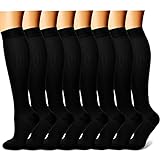
- MULTICOLOR COMBO - You get a color combination of your choice. Perfect for a whole week without daily wash. You are getting an amazing offer to keep your feet stay with optimal compression all the time (See the 7th image for the Size Chart)! High quality stitched & Easy to get on even though they are compression socks!
- COMPRESSION IS PROVEN to allow you to move faster, react quicker and use less energy. Targeted compression zones provide varying levels of support from moderate to extra firm. Unique color design, add a touch of color to your ordinary life.
- COMFORTABLE MATERIAL AND CAREFUL CONSTRUCTION - CHARMKING knee high compression socks' material are upgraded with nylon percentage from 40% to 85%, Delivers 360-degree stretch for greater flexibility and durability. Breathable high performance fabric keeps an optimal temperature. We are confident that you will choose it!
- GREAT GIFT IDEA - The package includes 8 pairs of socks. If you are struggling with a gift idea to a loved one or a casual friend, this is will reduce your anxiety without even you wearing them. Great gift choice for joggers, athletes, workout fanatics, office workers, ok...can we just say whoever use their leg extensively.
- SHOP WITH CONFIDENCE - Finest product and service around! A veritable necessity for anyone working long-hours standing on their feet, or those heavily invested in athletics and a fitness lifestyle. Feel safe to put this item into your Cart! Feel free to enjoy your fascinating life with it!
Dr Scholl’s Women’s Knee-High Compression Socks, Mild 8-15mmHg

If you spend long hours standing or sitting—whether at work, on a flight, or commuting—these Dr Scholl’s mild 8‑15 mmHg knee‑high compression socks are your go‑to gear. They combine style with function; the knee‑high length boosts appearance while keeping pressure where needed. Your feet benefit from a gradual compression that eases calf tension, boosts circulation, and fights swelling after long days. The stay‑up top keeps the socks in place, and an ultra‑smooth toe seam stops irritation, so you’ll feel comfortable all day. The breathable knit lets oxygen in while wicking moisture, and the blend of nylon, polyester, spandex, and other fibers keeps the fabric durable yet flexible. Tested by the American Podiatric Medical Association, they support venous return and reduce fatigue, making everyday activities feel lighter.
Best For: anyone who spends long periods standing, sitting, or traveling and needs gentle, supportive compression to reduce fatigue and swelling.
Pros:
- Mild 8‑15 mmHg compression that eases calf tension and improves circulation without feeling restrictive.
- Knee‑high length and stay‑up top keep the socks in place during activity or long flights.
- Durable, breathable nylon‑polyester‑spandex blend with a smooth toe seam for all‑day comfort.
Cons:
- The mild compression may be insufficient for serious circulatory issues that require higher pressure.
- Some users may find the fabric blend less “feel‑like-natural” than natural‑fiber alternatives.
- Limited color and pattern options may not suit every personal style preference.

- This product is accepted by the APMA (American Podiatric Medical Association) for promoting good foot health.
- Great for Travel and Everyday: Designed for those who sit, stand, or travel for long periods of time.
- Soothing & Revitalizing: Designed to soothe and revitalize for exceptional support and comfort with 8-15 mmHg Mild Compression. Experience targeted compression beginning at the ankle and gradual reduction in compression pressure up the leg.
- Achy Foot & Fatigued Leg Relief: Graduated compression helps to improve circulation and ease swollen, fatigued, and achy legs. Comfortable knee high length is designed to improve circulation through the calf fighting fatigue.
- Stays In Place: Premium, Stay-Up Top helps keep socks in place.

Amazon Essentials Men’s Knee-High Compression Socks

For those who spend long hours standing at work or traveling for business, these knee‑high compression socks offer gentle, graduated pressure that keeps circulation flowing smoothly. Crafted from a 64 % cotton, 33 % nylon, and 3 % elastane blend, they retain shape while remaining breathable. The smooth‑toe design cuts bulk, and the mild compression zone‑cushioned support reduces foot fatigue and swelling. Moisture‑managing cotton mesh keeps feet dry, while the elastane stretch and arch support provide a snug fit from foot to calf. Machine‑washable and sold in bundles of three, they fit easily into busy wardrobes and travel gear for daily needs.
Best For: people who stand or travel for long hours.
Pros:
- Provides mild, graduated compression that reduces fatigue and swelling.
- Made from a cotton‑nylon‑elastane blend for breathability and shape retention.
- Machine‑washable and sold in bundles for added convenience.
Cons:
- Compression level is only mild, which may not benefit those with severe circulation problems.
- The cotton content can make the socks feel cooler in hot climates, potentially less breathable.
- No adjustable tightening zones, so comfort depends solely on fit.

- Certified STANDARD 100 by OEKO-TEX, which requires textiles-based products to be tested against a list of 1,000+ chemicals, to limit those which may be harmful to human health
- ALL-DAY COMFORT: These cotton compression socks with moisture management and mesh keep your feet dry and comfortable, making them essential for daily wear
- SUPERIOR FIT: Elastane provides the stretch & recovery you need for an optimal fit, enhancing support and comfort from foot to calf
Physix Gear 20-30 mmHg Compression Socks

These Physix Gear 20‑30 mmHg compression socks are the go‑to for athletes, healthcare workers, travelers, and anyone on long shifts because they deliver graduated compression that cradles the arches, heels, and calves for smooth blood flow and swelling relief.
You’ll feel the nylon‑spandex mesh flexing with every stride, while copper‑infused variants give a cooling edge. The socks briskly boost circulation, cut swelling, and cut fatigue, keeping your legs light and ready for the next session. Machine‑washable and tumble‑dry‑low, they stay firm through use. Made in the USA, they blend performance and sleek style across sizes and durability feels no compromise.
Best For: athletes, healthcare professionals, travelers, and anyone on long shifts needing graduated compression for blood circulation, swelling relief, and fatigue reduction.
Pros:
- Graduated 20‑30 mmHg compression delivers effective blood flow support.
- Moisture‑wicking nylon‑spandex mesh and optional copper infusion offer cool, comfortable wear.
- Machine‑washable, tumble‑dry‑low construction provides long‑lasting durability.
Cons:
- Higher price point may limit accessibility for budget‑conscious buyers.
- Limited sizing options may not fit every foot shape or height exactly.
- Initial tightness can feel uncomfortable until adjusted, and those with certain medical conditions should consult a clinician.

- Experience Superior Comfort: Our calcetines de compresion provide unparalleled support for all-day wear; perfect as the best compression sock for active lifestyles or long work shifts; ideal for blood pressure socks and circulation improvement
- Unleash Your Full Potential: Whether for sports or work, these sock compression socks are designed to enhance your performance; a perfect choice for those seeking compressions socks with optimal comfort and durability in one versatile package
- Stay Energized All Day: Our compression socks for women & men are crafted to boost circulation and reduce swelling; the best compression socks for those long days on your feet, ensuring you feel refreshed and ready to take on any challenge
- Relieve Discomfort: Designed for anyone needing blood pressure socks or sock compression; these compression socks provide comfort and comfort; also excellent as copper compression socks for women and men for added comfort
- Durable & Long-Lasting: Our compression socks are built to last, providing consistent support over time; perfect for those looking for the best compression sock, whether for daily wear or athletic use, keeping your feet comfortable and supported
Fenglaoda 3-Pair Graduated Compression Socks for Nurses

With a pack of three pairs, Fenglaoda’s graduated compression socks are the go‑to pick for nurses who spend hours on their feet, easing leg fatigue while maintaining professional polish. Their 97 % polyester‑spandex blend feels light, elastic, and breathable, so you stay cool after long shifts. The OEKO‑TEX certification guarantees skin‑friendly performance, making them safe for all staff. Ergonomic contouring boosts blood flow, reducing calf strain, while reinforced toe and heel zones offer extra support. You’ll notice noticeable relief as you walk between rooms or queue patients. Just pick your favorite print, machine‑wash, and enjoy daily comfort for the day.
Best For: nurses, medical staff, runners, and anyone who stands or sits for extended periods.
Pros:
- Five‑plank graduated compression enhances blood flow, reducing calf strain and leg fatigue.
- Lightweight 97 % polyester/3 % spandex blend keeps feet cool and breathable during long shifts.
- Pack of three pairs allows easy rotation, saving ongoing costs and providing variety of prints for personal style.
Cons:
- OEKO‑TEX certification adds to the price, making it pricier than non‑certified alternatives.
- Limited to only a few sizes; some users might find no perfect fit.
- Bright animal‑print patterns might not meet everyone’s preference for a more subdued workplace appearance.

- COMPRESSION SOCKS FOR WOMEN Fenglaoda knee-high socks provide graduated compression with ergonomically designed. These are aimed to promote blood circulation and oxygen flow prevent fatigue and support recovery from pain and discomfort
- STYLISH COMFORT DESIGN We have prepared compression stockings for women with different cute animal prints for you. Brightly colored compression socks are with a unique pattern and reinforced toe and heel sections for added support and comfort. Just pick your favorite from these fun compression socks to show your personality and style
- SUITABLE FOR VARIOUS OCCASIONS Support compression socks are suitable for a variety of people, whether you are nurses, runners, joggers, pregnant women, office workers, airplane travelers, or on other occasions, They can promote blood circulation and reduce pain. It is an indispensable part of your life
- GOOD GIFT IDEA You may have difficulty choosing gifts. Animal compression socks are a good option. First of all, compression stockings can be used by anyone, especially those standing or sitting for a long time. Second, it shows your kindness towards the health of others. Finally, It could promote your friendship or love
- PERFORMANCE FABRIC PROFESSIONAL CERTIFICATION Funny compression socks are made from, highly lightweight, elastic, breathable, and durable polyester and spandex, and they are OEKO-TEX certified. Test results show that patterned compression socks are completely healthy for both men and women
Merino 15-20 mmHg Knee Compression Socks

When you’re on a long flight or standing for hours, a 15–20 mmHg Merino knee compression sock gives you just enough support to keep swelling at bay without feeling restrictive.
The fabric blends 30 % Merino wool, 50 % viscose bamboo, 15 % Repreve Sorbtek, and 5 % Lycra for thermoregulating comfort. Its 4‑zone graduated pressure starts strongest at the ankle and tapers to the knee, encouraging blood flow limiting swelling. Seamless toe closure and arch support prevent irritation, reinforced footpads absorb shock during running. Machine‑washable, the socks keep shape after multiple washes, making them ideal for travel, pregnancy, or long‑haul work daily use.
Best For: people who spend long periods standing or traveling, pregnant women, athletes, and professionals requiring moderate knee compression to prevent swelling and fatigue.
Pros:
- Moisture‑wicking, breathable Merino‑bamboo blend keeps feet comfortable and odor‑free.
- 4‑zone graduated compression (15‑20 mmHg) promotes circulation and limits swelling.
- Unisex, seamless toe closure, arch support, and machine‑washable construction make it travel‑friendly and long‑lasting.
Cons:
- 15‑20 mmHg may be too gentle for severe edema or medical‑grade compression needs.
- Wool content can trap heat, making the socks feel warmer in hot climates.
- Despite Lycra and reinforcement, repeated washing and stretching can still reduce elasticity over time.
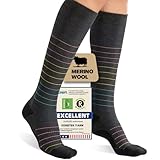
- Ultra Soft & Breathable: The compression socks is made of MERINO WOOL & VISCOSE from BAMBOO, which is anti-odor, moisture-wicking, thermoregulating, breathable, ultra-soft, lightweight, perfect for all-season comfort. Arch Support assists in optimizing foot force, Seamless Toe Closure protect your toes
- Sorbtek Repreve Polyester:Sorbtek fabric is a high-performance functional fabric developed by an American company. It forms a siphon effect through the grooves on the fiber surface, greatly enhancing the moisture absorption and perspiration management ability of the fabric.
- TRUE 4 ZONES GRADUATED COMPRESSION: 15-20 mmHg of Graduated Compression offer targeted Arch-to-Knee support that is strongest at the ankle and gradually decreases up the leg, boosting circulation and reducing swelling
- UNISEX in Multiple Occasions: Our compression socks are designed both for women and men. Perfect for all day wear, pregnant, flight, travel, exercise, and prolonged sitting or standing. Ideal for comfort during pregnancy, nurse, and athletes
- DURABLE & EASY CARE: Reinforced footpads can absorb shock, protect wear-prone parts. LYCRA enhance durability and comfort. Pre-shrunk compression stockings resist shrinking and maintain shape through washes; machine washable for convenience
30-40mmHg Graduated Compression Socks – Knee High

For anyone who demands 30‑40 mmHg of graduated compression to keep calves and ankles healthy, our knee‑high socks deliver that exact pressure profile. They pressure‑drop down from 30‑40 mmHg at your feet to 20‑30 mmHg around the calves, and finally 10‑15 mmHg near the welt, giving you the perfect graduated support. Made from 47 % polyester, 41 % nylon, and 12 % spandex, the socks stay breathable and moisture‑wicking while flexing 360° for movement. They’re machine washable, and the two‑piece set lets you rotate or clean each leg separately. Ideal for athletes, hikers, office workers, nurses, pregnant women, and anyone tall or thick‑legged, they’re also a thoughtful gift for friends and healthcare professionals. With satisfaction guarantee, you can swap or refund.
Best For: Best For: Ideal for athletes, office workers, nurses, pregnant women, or anyone who needs 30‑40 mmHg graduated compression for calf and ankle support.
Pros:
- Precise graduated pressure profile (30‑40 mmHg at foot, 20‑30 mmHg at calf).
- Breathable, moisture‑wicking fabric with 360° stretch for comfort.
- Durable, machine‑washable 2‑piece set for easy rotation and clean‑up.
Cons:
- Limited color options may not suit all style preferences.
- Not designed for medical‑grade severe edema or high‑risk conditions.
- Requires proper sizing; incorrect fit can reduce effectiveness.

- ✅30-40mmHg:Pressure value update.HI CLASMIX is the best recommendation by doctors, and it is also the best choice for promoting blood circulation in the feet and relieving daily fatigue and swelling.
- 💙GRADUATED COMPRESSION:Tailored to the right pressure for your calf every parts.The circulation pressure gives a more comfortable experience to you.Pressure Value: Foot: 30-40mmhg, Ankle and Calf: 20-30mmhg,socks welt : 10-15mmhg.
- 🏃COMFORTABLE FABRIC:High-performance, high-quality fabrics that deliver 360-degree stretch for greater flexibility and durability. Breathable, moisture-wicking gives you the maximum level of comfort.
- 🎁BEST GIFTS:2 pcs package is more suitable for replacement and cleaning, Solid and twist patterns meet your various collocations.Best Gifts for women, men, friends, parents, husbands, nurses, doctors, athletes, runners, office workers, olders, high heels person, Pregnant, thick legs person. Our socks are universally suitable for you.
- 😊SATISFACTION GUARANTEED - I believe you will love our compression socks.Finest product and service guaranteed!!! Your satisfaction and good health is our top most priority. So shop with 100% confidence, if you are not happy with the purchase for any reasons, contact us for an exchange or refund with no questions asked.
CHARMKING Compression Socks 15‑20 mmHg, 3 Pairs

You’ll notice Charmking’s 15‑20 mmHg compression socks deliver a stamina‑enhancing lift for anyone who spends long hours on their feet—whether you’re cycling, running, teaching, flying, or simply staying in the office all day. The 15‑20 mmHg pressure gives you a lift that steadies blood flow and cuts fatigue. Made of 85 % nylon and 15 % spandex, the socks flex 360° for comfort durability. Their breathable fabric keeps your legs cool, while the all‑black design stays discreet under any outfit. Packaged three at a time, the set fits men and women in sizes, and it’s perfect for cyclists, runners, teachers, pilots, office workers.
Best For: cyclists, runners, teachers, pilots, office workers, pregnant women, and seniors who spend long hours on their feet and need reliable compression support.
Pros:
- 15‑20 mmHg compression optimizes circulation and reduces fatigue for active and sedentary users alike.
- 85 % nylon / 15 % spandex blend with 360° stretch delivers lasting comfort and durability.
- Breathable, all‑black design keeps legs cool while remaining discreet under any outfit.
Cons:
- Limited to two size options (Small‑Medium), which may not accommodate larger or narrower feet.
- All‑black color may not appeal to users seeking varied styling choices.
- The 15‑20 mmHg level may feel strong for beginners or those requiring lighter compression.
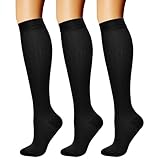
- COMPRESSION SOCKS - We intend combining fashion, technology and science to bring you the triple comfort without. The material of our compression socks are upgraded with nylon percentage from 40% to 85%. Delivers 360-degree stretch for greater flexibility and durability. Breathable high performance fabric keeps an optimal temperature.
- COMFORT - We carefully designed and manufactured our compression socks to provide premium support, comfort, and relief without compromising your mobility. Form fitting, lightweight, and breathable fabric features maintain stability regardless of activity.
- EFFECTIVE - Our compression socks (15-20 mmHg) are highly recommended by preferred by trainers. These are designed to promote blood circulation and oxygen flow preventing fatigue and helps in muscle recovery. Whether you are an athlete, teacher, flight crew, receptionist, office worker, pregnant, nurturing mother, elderly, our socks are universally suitable for all work.
- UNISEX - Two size options available to pick from,suitable for both men and women. Best Gift for women, athletes and runners - Anyone on their feet all day. If you are struggling with a gift idea to a loved one or a casual friend, this is will reduce your anxiety without even you wearing them.
- SHOP WITH CONFIDENCE - Your satisfaction is our topmost priority. If you find that our socks do not meet your expectations, we are here to assist you with a solution to ensure you're content with your purchase. Simply reach out to us, and we'll work together to resolve any issues you may have, always aiming to provide you with the best possible customer experience.
Dr. Scholl’s Men’s Graduated Compression Over the Calf Socks (3-Pack)

If your day demands long hours on your feet, Dr. Scholl’s 3‑pack over‑the‑calf compression socks keep you moving. Designed for men who stand all day, they don’t slip, thanks to a non‑binding top and smooth Invisiseam toe seam that stops irritation. The 94‑97 % nylon, 3‑6 % spandex blend stays breathable while the 8‑15 mmHg graduated pressure boosts circulation and eases swelling and fatigue. APMA‑approved, these socks energize legs, boost confidence, and can be machine‑washed for durability everyday. Grab the set and trust in steady support from ankle to calf. When you finish your shift, put them on and feel relief today.
Best For: men who spend all day standing in jobs such as manufacturing, healthcare, or hospitality and need reliable, irritation‑free compression support from ankle to calf.
Pros:
- Graduated 8‑15 mmHg compression improves circulation and reduces leg fatigue.
- Smooth Invisiseam toe seam and non‑binding top prevent slipping and irritation.
- Durable nylon/spandex blend that is breathable and machine‑washable for everyday use.
Cons:
- Compression may feel too tight during warm weather for some users.
- Limited color palette may not match all outfits.
- Pack of just three socks requires frequent laundering for busy workers.

- This product is accepted by the APMA (American Podiatric Medical Association) for promoting good foot health.
- Soothing and Revitalizing: 8-15 mmHg Mild Compression Experience targeted compression beginning at the ankle and gradual reduction in compression pressure up the leg, delivering a soothing and revitalizing sensation for exceptional support and comfort.
- Achy Foot & Leg Relief + Energizing Support: Say goodbye to swollen, fatigued, achy legs and hello to energizing support and a new level of confidence with our compression socks. Graduated compression improves circulation and reduces leg fatigue.
- Smooth Seams: Invisiseam Ultra Smooth Toe Seam Prevents Irritation Against Sensitive Skin.
- Goodbye to Fatigue: Comfortable over the calf length to improve circulation through the calf fighting fatigue.
LEVSOX Compression Socks 20-30mmHg Knee High

The LEVSOX 20‑30 mmHg knee‑high compression socks are perfect for anyone who sits or stands for long periods—nurses, long‑haul flight crew, or office workers—thanks to their thickened sole and wide cuff that keep the socks in place while actively promoting blood flow. Made from a 70 % cotton, 22 % nylon, and 8 % elastane blend, they balance softness with reliable stretch. The 20‑30 mmHg graduated pressure runs from ankle to calf, encouraging venous return, reducing swelling, and cutting fatigue. The thick sole cushions your feet, making you feel like walking on a soft compression stocking. They stay in place all day, you comfortable.
Best For: anyone who sits or stands for long periods—such as nurses, flight crews, or office workers—who need gentle compression to support circulation and reduce fatigue.
Pros:
- 20‑30 mmHg graduated compression that encourages venous return and reduces swelling.
- Wide cuff and thickened sole keep the socks in place, preventing slipping during movement.
- 70 % cotton blend gives a soft, breathable feel while maintaining reliable stretch.
Cons:
- Not suitable for users requiring higher compression levels (e.g., 30‑40 mmHg).
- The thick sole may feel bulky on very tight shoes or in hot climates.
- No pricing or comparative data provided, so cost-effectiveness is unclear.

- Cotton Compression Socks: Extra thick compression socks for women and men are made of premium cotton material, very soft and comfortable, with high elasticity and a wide cuff that won't cut off your circulation or slip down easily. The thickened design on the sole of foot makes them more comfortable and durable to wear, giving you the feeling of stepping on cotton.
- Graduated Compression Socks: Compression socks 20-30mmHg knee high provide comfortable and appropriate pressure from the ankle to the calf, effectively promoting blood circulation in the legs, caring for your leg health, and keeping you comfortable all day long.
- Multifunctional Compression Socks: Compression socks for pregnancy&nurses effectively address leg-related issues, prevent blood clots and alleviate fatigue, ease swelling and pain during pregnancy, and provide support to eliminate fatigue and boost leg vitality. They are suitable for nurses, pregnant women, those with long shifts, travel and flight.
- Best Compression Socks: Ladies cotton compression socks women are skin-friendly and comfortable, easy to put on and take off. Packaged in pairs, cute fun compression socks very practical and ideal for gifting to your lover, family, friends, pregnant women, nurses, etc. They provide the perfect solution for people who sit for long periods during travel or work.
- Add to Cart Now: Soft compression stocking, easy care and wash well, longer service life. LEVSOX specialize in compression socks over a decade of expertise; customer satisfaction is our priority; contact us for any queries, and we'll ensure you find a satisfactory solution.
Laite Hebe Compression Socks, 6 Pairs, Running

These Laite Hebe compression socks—delivered in a handy 6‑pair set—feature graduated compression that gently hugs your legs without feeling restrictive, making them the go‑to choice for runners who need support without the “overly tight” sensation.
Crafted from 85 % nylon and 15 % polyester, the socks wick sweat to keep feet cool during runs and stay warm at rest. Their lightweight design stays in place without bulging, you feel supported yet free. By improving circulation, they cut fatigue, cramping, prevent varicose veins. Suitable for running, hiking, cycling, office hours. A 100 % satisfaction offer lets you exchange or refund if you’re not happy.
Best For: active runners, commuters, and anyone who spends long hours standing or exercising that requires gentle yet effective leg support.
Pros:
- Lightweight, breathable fabric keeps feet cool while wicking sweat.
- Graduated compression improves circulation, reduces fatigue and helps prevent cramps.
- 100 % satisfaction guarantee offers a risk‑free purchase.
Cons:
- Limited color options may not suit all preferences.
- Slight bulkiness can appear when the socks are wet.
- May shrink or lose shape after the first machine wash.

- COMPRESSION SOCKS FOR WOMEN-Contrary to popular belief , compression socks are not just for the elderly. As the pandemic has changed the workscape for many, you may find yourself sitting at home for longer periods of time. And if you are standing for longer periods of time,Laite Hebe‘s soft hug approach is ideal. Our one-of-a-kind compression hugs your legs just right, promoting boosted circulation without that overly tight feeling, so you can get the comfort and support you deserve.
- AMAZING EFFICACY-With a unique compression level that isn't too loose or too tight,it means you can wear our compression socks for women all day long comfortably.As they gently constrict the tissues and oxygenate the blood,they move waste fluids out,promoting ample circulation.Remove stress and stimulate every cell,reduce fatigue,soreness,cramping and prevent Varicose veins at the same time Ensure the healthy functioning of your circulatory system.Keep your legs feel fresher and more energized.
- COMFORTABLE-Made from 85% Nylon and 15% Polyester.Our compression socks for women are incredibly soft,breathable,and moisture-wicking,provides a perfect composition between comfort and grip.High performance material and temperature control,keeping your muscles cool during workouts and warm during rest.It can gently wraps around feet,ankles,and legs to provide enough support to stimulate blood flow.Don't hesitate to wear compression socks for women daily.They can be a great relief!
- FOUR SEASONS&ALL SPORTS-Our compression socks for women are not too thick or too thin,warm in winter and breathable in summer. Professionally customized for all sports,mountain climbing,football,hiking,running,tennis,basketball,cycling,etc.A veritable necessity for anyone working long-hours standing on their feet,or those heavily invested in athletics and a fitness lifestyle.It is great gift to joggers,athletes,workout fanatics,office workers,parent or grandparent,runners,nurses and doctors.
- SHOP WITH CONFIDENCE-If you are struggling with a gift idea to a loved one or a casual friend,it will reduce your anxiety. A veritable necessity for anyone working long-hours standing on their feet, or those heavily invested in athletics and a fitness lifestyle.Passion and customer obsession is our key principle.So shop with 100% confidence,if you are not happy with the purchase for any reasons,contact us for an exchange or 100% refund with no questions asked.Add to cart now
Men/Women Knee-High Compression Socks 20-30 mmHg

Looking for a sock that delivers just enough pressure to keep you comfortable on a flight or during a hard workout? These knee‑high socks use a graduated 20‑30 mmHg V‑compression that eases calf vibration, reduces cramps, and adds arch support. You’ll enjoy calf pressure that pushes blood back to the heart and the Achilles padding reduces heel friction. The polyester blend with elastodiene offers snug fit, breathability, and quick drying, keeping feet dry on runs. They’re machine‑washable, come in 2, 4, or 6 pairs, and carry a one‑year warranty. Ideal for athletes, long‑haul travelers, and anyone needing all‑day leg support.
Best For: athletes, long‑haul travelers, and anyone seeking gentle calf support and cramp relief during all‑day wear.
Pros:
- Graduated 20‑30 mmHg V‑compression that eases calf vibration, reduces cramps, and promotes healthy circulation.
- Arch support and Achilles padding cut heel friction, keeping feet comfortable on long flights and intense workouts.
- Quick‑dry polyester blend with moisture‑wicking weave keeps feet dry and comfortable during run or travel.
Cons:
- 20‑30 mmHg compression may be too mild for people requiring therapeutic-grade compression therapy.
- Limited colour options and lack of customization may not suit every style preference.
- Requires regular machine washing; delicate fabrics may need extra care to maintain shape and fit.
Factors to Consider When Choosing Compression Socks (Graduated)
When picking graduated compression socks, you should first identify the compression level that best suits your activity and medical needs—usually measured in mmHg—to guarantee proper support. Next, evaluate the fabric for comfort and moisture‑wicking ability while checking that the sock comes in the correct size to avoid slippage or pressure points. Finally, consider how durable the socks are when worn on the go, so they maintain their shape and compression over time.
Identify Compression Level
If you’re trying to pick the right compression level, start by reading the label for the millimeters of mercury (mmHg) rating. You’ll see ranges such as 8–15 mmHg for mild, 15–20 mmHg for moderate, and 20–30 mmHg for strong knee‑high socks. A graduated sock delivers the highest pressure at the ankle and tapers toward the calf, whereas a full‑calf sock keeps pressure uniform. If you’re active or battling mild swelling, aim for 15–20 mmHg. For edema, long trips, or post‑workout recovery, 20–30 mmHg works best. Check the packaging or the manufacturer’s specs—if still unsure, use a handheld wrist or calf compression meter. Higher grades, like 30–40 mmHg, are meant for medical conditions and should come from a healthcare professional. Consult your doctor before choosing levels above standard workout ranges today.
Evaluate Fabric Comfort
Because the material of a compression sock determines whether you stay dry, comfortable, and injury‑free, you ought to examine its fiber blend and construction right away. A high‑performance sock should feature at least 85 % nylon or polyester for tensile strength and breathability, with no more than 15 % elastane to provide elasticity without compromising compression. Look for moisture‑wicking fabric that moves at least 5 g / min of sweat away from the skin, preventing dampness and blisters during long sessions. Seamless or ultra‑thin‑toe designs cut friction, reducing chafing, especially when the sock slides under your heel. Breathable weaves or embedded mesh panels can boost airflow by up to 30 % versus flat knit, keeping the calf cool while maintaining compression uniformity. Finally, weight around 250–300 g / m² keeps
Determine Proper Fit Size
After choosing a moisture‑wicking, breathable fabric for your graduated compression sock, you’ll need to nail down the exact size. Start by measuring your foot length—line the longest toe to the heel base—and match the result to the length chart (roughly 7–11 in for women, 8–13 in for men). Next, wrap a tape around the widest calf section, usually 14–18 in for women and 16–20 in for men. Pick the size that covers the full circle without slack. The sock should apply uniform pressure: a snug ankle that loosens toward the knee, and no pinching within 2 cm of the top. If you’re between ranges or have unusual calf shape, go for a one‑size‑fits‑all or adjustable style and use a compression‑compatible band to fine‑tune the gradient right now so today.
Assess Moisture‑Wicking Features
Since moisture‑wicking pulls sweat into micro‑channels for rapid evaporation, you’ll see a noticeable drop in skin temperature—10–15 °C cooler than cotton. When choosing socks, look for a blend about 85 % nylon and 15 % polyester; add a pinch of elastane for stretch, which helps the fibers stay tight yet let moisture escape. Synthetic fabrics outperform natural ones when it comes to drying speed—wool, for example, traps sweat rather than shuttles it out. A high‑permeability knit lets air move through the sock at over 20 mm h⁻¹, boosting evaporation by three to five times compared with cotton. Choose a looser, looped construction if you expect heavy perspiration; a tighter flat knit keeps fluid from gathering in a pool. By prioritizing these attributes, you’ll keep legs cool and comfortable activity today.
Consider On‑The‑Go Durability
When you’ve chosen the right moisture‑wicking fibers, the next step is to evaluate how long they’ll keep performing.
Socks rich in synthetic fibers—around 60‑70 % polyamide or nylon—survive 20–30 washes, losing under 10 % compression strength, while natural blends drop extreme 10–15 %.
Seamless or flat‑lock stitching cuts abrasion at toe, heel, and cuff, extending sock life by up to 25 % during use.
A 50:50 cotton‑polyester blend boosts moisture wicking, resists dirt buildup, keeps socks fresh, and slows fiber fatigue across many travel cycles for your trips.
Silicone or copper‑infused inner coatings keep elasticity intact in temperatures from ‑5 °C to 35 °C, granting longevity in varying climates daily.
Since socks shrink at the factory and you wash them cold, enjoy a 15–30 wash cycle lifespan, preserving fit feel.
Verify Gradation Accuracy
First, you’ll see that the pressure gradient drops from ankle (≈20‑30 mmHg) to calf (≈10‑15 mmHg). To confirm a true gradient, grab a calibrated gauge or tensiometer and measure internal pressure at several sock points. Each reading should match the label, with foot pressure at least 5 mmHg higher than the calf. Inspect the seam and cuff—whether visibly smooth or with a magnifier—to verify no abrupt spikes or gaps that could alter the pattern. Make sure the top ends seamlessly, avoiding binding that distorts pressure. Finally, feel or caliper the material thickness at ankle, calf, and knee; it should thicken where pressure increases and taper toward the heel. These checks guarantee that every step of the sock’s design delivers the compression supporting circulation comfort throughout the day.
Frequently Asked Questions
How Many Hours per Day Should Compression Socks Be Worn for Optimum Benefit?
To get the most benefit, wear your compression socks for about 8 to 10 hours a day when you’re awake. If you lead a very active schedule, you can keep them on throughout a typical workday, taking them off at night or after a long trip. If you’re traveling or have a job that requires you to sit, aim for at least 6 hours of wear each day to stay.
Can Children or Teenagers Safely Use Graduated Compression Socks?
Yes, children and teenagers can wear graduated compression socks, but only after consulting a healthcare professional. You must choose a size that fits well and a pressure level suitable for their age and activity. You also need to monitor for any skin irritation or numbness. If you follow these steps, you’ll safely enjoy improved circulation and comfort during sports or recovery while wearing them for daily walking or training sessions.
What Washing Instructions Preserve Compression Sock Integrity?
Wash your graduated compression socks in cold water, never hot, to prevent fibers from shrinking. Use a sulfate‑free detergent and don’t use fabric softeners, because they can coat the material and reduce pressure. Spin lightly or air‑dry on a flat surface; don’t tumble dry as the heat can crease the elastic. Hand‑washing once a week maintains elasticity, but machine cycles should be short, low‑speed, and set to a light cycle.
Should I Adjust Compression if Calf Circumference Changes Seasonally?
Imagine your calves as a garden that swells in spring showers and shrinks in autumn heat. As that garden shifts, you should tweak your compression. If your calf gets narrower in winter, a lighter band or temporary adjustment will keep comfort. Conversely, a fuller calf in summer means a slightly firmer band. Trust your measurements and let your socks match the season, not the other way around for your comfort.
What Signs Indicate Compression Socks Are Too Tight?
You’ll know they’re too tight if you feel persistent pumpy pain, tingling, numbness, or dull aching around your calf. Notice if your skin looks flushed or your foot appears swollen—those are red flags. If the socks leave a white mark after you remove them, that’s also a sign. In short, squeeze, sting, or swelling means it’s time to loosen them. Remember, comfort and circulation matter more than style for you.
Conclusion
You’ve surveyed spectacular selections, orchestrating nuanced nuances while noting that natural comfort hinges on precise pressure, proper fit, and quality fabric—each factor fortified by thoughtful features. Your choice will champion circulation, curb swelling, and carve out lasting leg luxury. Grab your ideal pair, glide through daydreams, and grant gratitude to grounded, generous gear. As you embrace newfound ease, remember: steadfast support surpasses superficial style; celebrate sustainable, superior strides and elevate everyday endurance for future games.
graduated compression, leg comfort, sock selection