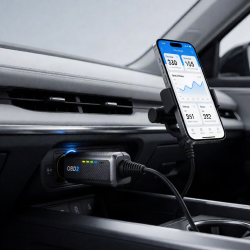
Best OBD2 Bluetooth scanner (Trip Diagnostics) for driving

Introducing Maria, our meticulous planner and talented visual storyteller. She has a knack for discovering those hidden gems, chic boutique spots, and charming little cafes that add a touch of elegance to every journey. With her keen eye for photography and her passion for travel, Maria will transport you to the most enchanting corners of the world, inspiring you to explore new places, one picture-perfect destination at a time.
If you want every drive to become a trip diagnostic adventure, pick the BlueDriver Bluetooth Pro. It plugs straight into any 1996+ gasoline model, hands you live graphs, misfire counts, and a video repair library—all via its free app. It never needs a battery, comes with a 2‑hour warranty, and ships with round‑the‑clock support. Curious why BlueDriver tops the list? For every driver, you’ll see why it’s the best choice for your daily drives.
Key Takeaways
- BlueDriver offers comprehensive live‑data graphs, trip logging, and fault history via its smartphone app—ideal for detailed trip diagnostics.
- ANCEL BD310 delivers an on‑board HUD and real‑time trip analytics, keeping data with you even when the phone is in use.
- Bluetooth OBD2’s subscription powers AI‑driven pass/fail, instant repair guidance, and continual updates, boosting accuracy for ongoing trip monitoring.
- YTFRL‑6665DT provides a free app, printable trip reports, and audible alerts, great for long‑haul drivers who want no extra software cost.
- Veepeak OBDCheck is budget‑friendly and plug‑in, but its limited trip‑analytics suit basic diagnostics more than in‑depth trip data.
BlueDriver Bluetooth Pro OBD II Scanner

If you’re a hands‑on enthusiast who wants a single, no‑subscription tool that covers every major gasoline car built since 1996, the BlueDriver Bluetooth Pro OBD II scanner is the obvious pick.
Connect it via Bluetooth to your phone, and the app decodes trouble codes without a subscription fee—one purchase gives diagnostics smog‑check validation. It covers every gasoline model built since 1996, from GM to BMW and Honda, using CR‑2 batteries in a 2.08‑oz body. Read, clear, and export codes; view PIDs on graphs or gauges; log misfire counts with Mode 6. Support is 24/7, and videos through fixes, no account needed.
Best For: Small‑shop mechanics and DIY car owners who need a one‑time, subscription‑free diagnostic tool that covers a wide range of gasoline cars built after 1996.
Pros:
- One‑time purchase gives full access to diagnostics, code reading (including ABS, airbag, TPMS, transmission), live data graphs, and Mode 6 misfire counts without any recurring fees.
- Built‑in repair video library and real‑time health monitoring keep you informed on‑the‑go, while 24/7 professional support is available through phone or in‑app chat.
- Does not sell or share user data and requires no external accounts—privacy‑conscious usage.
Cons:
- The app is English‑only, limiting usability for non‑English speakers.
- Requires CR‑2 batteries; if you don’t have spare batteries on hand, you’ll need to purchase them separately.
- Supports only gasoline vehicles built 1996 and newer; diesel and heavy‑duty vehicles are not covered.
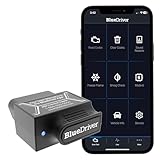
- [Pro OBD2 Scanner] - BlueDriver is the easiest way to scan and understand your vehicle like a professional mechanic. Read and clear your car’s trouble codes and check engine light.
- [Read & Clear The Codes] - BlueDriver's enhanced vehicle diagnostics gives you access to information normally available only to mechanics on their OBD2 scan tools. Now you can read and clear ABS, Airbag, SRS, TPMS codes, and many more.
- [Get The Right Fix & View Live Data] - Much more than a car code reader, BlueDriver is a diagnostic tool. You’ll get unlimited repair reports with possible causes and fixes, plus real-time health monitoring while you drive with the live data feature.
- [Wireless & Bluetooth Enabled] - Say goodbye to wires. BlueDriver connects with Bluetooth via your phone/tablet to a sensor that plugs into your car's OBDII port. Get all of the capabilities of an expensive code reader & scan tool without any annoying wires.
- [User-Friendly App and Repair Videos] - BlueDriver gives you more ways to scan and fix your vehicle. Our iOS & Android app connects you to a large database of repair videos with step-by-step directions of repairs.
Veepeak OBDCheck OBD Scanner for iOS & Android

The Veepeak OBDCheck BLE gives you instant, generic diagnostics right from your phone—so if you own an older OBD‑II vehicle (1996+) and just need to read, clear, and monitor basic engine codes without digging into manufacturer‑specific apps, this scanner is your go‑to.
It plugs straight into the 129‑pin port and uses BLE; you don’t need a battery. The unit is 16 mm by 20 mm, weighs ~2 oz. Pair through app—Car Scanner ELM OBD2—rather than phone menu. You can read and clear CEL codes, view freeze‑frame data, check I/M readiness, and stream live sensor values. It supports most 1996+ cars; EVs and advanced features stay app‑dependent.
Best For: the budget-conscious mechanic or hobbyist who wants quick, generic OBD‑II diagnostics on an older vehicle without needing manufacturer‑specific software.
Pros:
- Compact, lightweight, and battery‑free—plugs straight into the 129‑pin port and is ready to use.
- Works with a wide range of 1996+ vehicles and many popular generic‑app platforms (Car Scanner, Torque, OBD Fusion, etc.).
- Affordable and simple to set up—no need for pairing through the phone’s menu, just launch the desired app.
Cons:
- Limited to basic generic functions; advanced diagnostics (ABS, SRS, injectors, EPB, etc.) are not supported, which may frustrate users needing deeper data.
- Compatibility with Android head‑unit systems is uncertain; may not work as a standalone dongle for in‑vehicle infotainment.
- Requires downloading and possibly purchasing features within an external app; the free tier may be insufficient for some users.

- Note: This device requires a compatible third-party app to work. Generic OBD functions are typically free via apps such as Car Scanner. Advanced features are vehicle- and app-dependent, and may require additional purchase. Please check the product description or user instructions for supported Apps and functions before purchasing.
- Generic OBD-II FUNCTIONS – read & clear trouble codes for check engine light (CEL or MIL), view freeze frame data, I/M readiness, and live sensor data to help monitor vehicle health and diagnose check engine problems.
- COMPATIBLE VEHICLES – Works with most 1996+ cars and light trucks in the US, and other OBD-II/EOBD compliant vehicles in other regions for generic OBD-II functions. Support for EVs is app-dependent; please check compatibility in Car Scanner App or contact Veepeak. Some newer vehicles with WWH-OBD are NOT supported.
- BLUETOOTH CONNECTION: Supports Bluetooth LE & Classic on Android, and Bluetooth LE on iOS. For Bluetooth LE, no pairing is required — just plug in the device, open the app, and connect from within the app. Do not pair in the phone’s Bluetooth menu (especially for iOS devices). Android head units may not be supported.
- COMPATIBLE APPS: Car Scanner (recommended for generic OBD-II functions), Torque (for Android), OBD Fusion, BimmerCode*, BimmerLink*, OBD JScan, Dr. Prius, etc. Note: some Apps or in-App features require separate purchase. NOT compatible with Carly, MHD, xHP, ProTool, bootmod3, etc.
ANCEL BD310 OBD2 Scanner Code Reader Bluetooth

Looking for a handheld OBD‑II scanner that also talks wirelessly to your phone? The ANCEL BD310 merges a magnetic vent mount with a 56‑inch cable for 12‑V support. Its phone‑style body projects real‑time data—RPM, speed, coolant temp—to a HUD, while voice‑activated alarms guide you through code read/clear and EVAP/O₂ tests. It records trip analytics for sharing and displays a live voltage graph to monitor battery health. Durable buttons and a 30‑day return plus manufacturer warranty make it reliable. For any issue, email toptool‑service@outlook.com with photos and your order number for a free replacement today, right away at no cost.
Best For: a vehicle owner or independent mechanic who wants a compact, hands‑free OBD‑II scanner that wirelessly connects to a smartphone for real‑time data and voice alerts.
Pros:
- Dual‑mode handheld & Bluetooth pairing for quick, on‑the‑go diagnostics.
- Real‑time HUD display and voice‑activated alarms guide code read/clear and sensor tests.
- Full 10‑mode OBD‑II coverage, EVAP & O₂ tests, plus live battery voltage monitoring for overall health checks.
Cons:
- Requires a smartphone for full HUD and app features; no standalone monitoring.
- Limited to 12‑V vehicles; not compatible with 6‑V or older 5‑V EFI systems.
- Basic OBD‑II functions only—no manufacturer‑specific coding or advanced diagnostic options.

- 2-IN-1 OBD2 SCANNER – WIRED SPEED + BLUETOOTH APP FEATURES. Recognized in Car and Driver testing as a standout scanner for DIY diagnostics, the ANCEL BD310 combines plug-in OBD2 scanning with advanced Bluetooth app features. Use it as a wired vehicle scanner for instant results or connect to the app for deeper insights. The phone-style design with magnetic vent mount enables fast startup, hands-free viewing, and quick access to codes, live data, battery tests, and performance checks
- CHECK ENGINE LIGHT DIAGNOSTICS – READ, UNDERSTAND & CLEAR CODES. Stop guessing what that warning light means. The BD310 car scanner shows plain-English fault code explanations with built-in DTC Lookup linked to Google Search, helping you quickly find reliable repair information. Clear codes after repairs and confirm the issue is resolved before getting back on the road
- SMART BATTERY MONITORING PLUS PERFORMANCE & TRIP INSIGHTS. Monitor battery voltage in real time with graphical tracking that helps you observe charging behavior and better understand battery condition over time. Go beyond a simple voltage check—the BD310 lets you view voltage changes during driving for clearer battery health insights. The free mobile app also includes performance tests and trip analysis, tracking speed, braking behavior, and coolant temperature for deeper vehicle insights
- YOUR AT-HOME SMOG CHECK ASSISTANT – KNOW BEFORE YOU GO. Run I/M Readiness checks at home to see if your vehicle is emissions-ready before inspection day. Verify O₂ sensor status, detect EVAP-related issues, and confirm all monitors are set—avoiding wasted trips, surprise failures, and last-minute stress at the testing station
- KEEP EYES UP – TURN LIVE DATA INTO A SMART DRIVING DISPLAY. Switch to HUD mode to project real-time RPM, speed, and key stats onto your windshield. Customize your dashboard layout and data views to stay informed without taking your eyes off the road—making daily driving safer, smarter, and more engaging
Bluetooth OBD2 Scanner for iPhone & Android

For any driver who wants instant, AI‑powered diagnostics straight from their phone, this Bluetooth OBD2 scanner plugs into the vehicle and delivers clear, actionable health reports in minutes—no cables, no batteries, just plug‑and‑play.
You’ll connect it within seconds via Bluetooth 5.4—no cables, no batteries—letting the app stream metrics like RPM, coolant temperature, and O₂ voltage. A tap triggers a scan, return Pass/Fail status and repair guidance for 1996‑modern models. The diagnostic engine stays updated with lifetime updates covering 35,901+ codes, all under a subscription. UJS’s ROCCO unit ships with a lifetime hardware and software warranty and a 30‑day return policy.
Best For: the tech‑savvy driver who wants instant, AI‑powered vehicle diagnostics without any cables, batteries, or subscription fees.
Pros:
- Plug‑and‑play Bluetooth 5.4 delivers real‑time metrics (RPM, coolant temp, O₂ voltage) straight to iOS or Android.
- AI‑driven diagnostics give instant Pass/Fail status and clear repair guidance, no mechanic needed.
- Lifetime hardware & software warranty plus free continuous updates covering 35,901+ diagnostic codes.
Cons:
- Requires a functional OBD II port, so it won’t work on pre‑1996 vehicles.
- Performance can be limited by the phone’s Bluetooth reception, especially deep inside cabins.
- Lacks built‑in data logging or for‑later‑analysis features beyond the app’s current session.

- AI-Powered Car Health Reports in Minutes - Get beyond confusing codes. Our scanner connects to your phone and uses AI intelligence to analyze live data and freeze frame information, generating easy-to-understand health reports and actionable repair advice—no mechanic knowledge needed.
- Truly Wireless & Ultra-Compact Design - Weighing only 0.98 ounces, this mini scanner plugs seamlessly into your OBD2 port and stays there. No cables, no batteries, no clutter. Leave it in your car for 24/7 monitoring and connect via Bluetooth 5.4 whenever you need a diagnosis.
- Visualize Your Car's Performance in Real-Time - See your engine's heartbeat with stunning real-time data graphs and charts on your phone screen. Monitor RPM, coolant temperature, and oxygen sensor voltage visually to pinpoint intermittent issues that simple code readers miss.
- One-Tap Full Vehicle Scan & Code Clearance - Stop the guesswork. The app's "Full Vehicle Scan" feature quickly checks all systems and gives a simple Pass/Fail result. Read and clear check engine lights instantly after repairs, turning off the warning lamp and getting you back on the road.
- Universal Compatibility with Free Lifetime App Updates - Works with all OBD2 protocol vehicles from 1996 and newer (cars, trucks, SUVs). The free app supports iOS & Android and receives lifetime updates with new features and expanded fault code libraries (35,901+ codes), ensuring it never becomes obsolete.
Bluetooth OBD2 Car Scanner & Code Reader

Installing the YTFRL‑6665DT on your vehicle lets you read and clear fault codes instantly, thanks to its wireless Bluetooth connection that skips cables entirely. You connect it to your phone or PC with the free app, pop the scanner into the 10‑pin port, and start the engine. The device speaks OBD‑II protocols aloud, then the app shows live data and fault codes in real time. That quick pairing means you can see trouble right away and reset flags without a computer. Its ABS‑strength shell and corrosion‑resistant casing guard the electronics. At 1.44 oz, it’s light, and its compact 3.86 × 2.56 × 1.14‑inch size fits in the glovebox. The YTFRL‑6665DT works across iPhone, Android, Windows, and Mac, but double‑check protocol compatibility for your make and model before buying.
Best For: Car owners and independent mechanics who need rapid, cable‑free access to real‑time diagnostic data and fault code management in a compact, durable form factor.
Pros:
- Wireless Bluetooth eliminates cables, enabling quick pairing and easy use on the go.
- Lightweight, compact design (1.44 oz, 3.86 × 2.56 × 1.14 in) fits easily in a glovebox.
- Robust ABS shell and corrosion‑resistant enclosure protect electronics during everyday use.
Cons:
- Requires a compatible smartphone or PC app, limiting use when the device is unavailable.
- Limited to standard OBD‑II protocols; may not support all modern vehicle variants.
- Lacks advanced diagnostics or graphical live‑data displays found in higher‑end scan tools.
- Practical Function: The car OBDII scanner can read and clear the car fault codes in real time, detect the engine function, and accurately locate the vehicle abnormality. This helps car owners understand the vehicle's operating condition in a comprehensive way, greatly improving the detection efficiency
- Wireless Bluetooth: The car scanner flexibly supports wireless Bluetooth connection, simplifying the wiring work and enhancing the user's ease of use. By quickly connecting to a cell phone or computer with Bluetooth, you can read the data related to the vehicle's engine running with ease
- Durable Material: With an ABS shell, the OBD2 Bluetooth scanner features high hardness, which can withstand daily collision or friction, and protects the internal components from all kinds of damage well. Excellent corrosion resistance keeps it high performance in long-term use
- Easy to Use: At first, download and install the specified application. Then, plug the scanner tool into your car's OBDII port and start the car engine. Next, connect your phone's Bluetooth. Finally, open the app to read clear data for easy clearing of engine faults
- Compatible Scope: The Bluetooth scanner connects with various smartphones and PC devices, which is an essential maintenance tool for vehicle inspection and restoration. Please check the compatibility protocol on the detail page to ensure fitment before buying
Veepeak OBDCheck BLE+ Bluetooth OBD II Scanner

If you need a simple, plug‑in OBD‑II scanner that works with both Bluetooth LE and Classic without your phone’s OS having to pair it, the Veepeak OBDCheck BLE+ delivers that right out of the box. Plug it into your vehicle’s 15‑pin port, and it powers on automatically—no batteries, no RAM. It supports most cars and light trucks from 1996 onward, though advanced EV functions are limited. Pair it with Car Scanner ELM OBD2 for quick read/clear codes, freeze‑frame data, and live sensor feeds. Android users can also use Torque, OBD Fusion or BimmerCode, while iOS relies on BLE‑only apps. Weight: 2.12 oz, dimensions: 1.97 × 1.61 × 0.87 in.
Best For: DIY mechanics, casual drivers, and small workshop teams looking for a simple, plug‑in OBD‑II scanner that works across Android and iOS without OS pairing.
Pros:
- Plug‑and‑play with power from the OBD‑II port (no batteries or RAM).
- Dual support for Bluetooth LE and Classic, allowing flexibility across devices.
- Compatible with a wide range of third‑party apps, including generic Car Scanner ELM OBD‑2.
Cons:
- Advanced EV and OEM‑specific features are limited or unsupported.
- Requires separate app selection; not all functions work on older models or non‑Apple platforms.
- Does not support specialized software like Carly, MHD, or bootmod3.

- Note: This device requires a compatible third-party app to work together. Generic OBD functions are typically free via apps such as Car Scanner ELM OBD2. Advanced features are vehicle- and app-dependent, and may require additional purchase. Please check the product description or user instructions for supported Apps and functions before purchasing.
- GENERIC OBD-II FUNCTIONS – read & clear trouble codes for check engine light (CEL or MIL), view freeze frame data, I/M readiness, and live sensor data to help monitor vehicle health and diagnose check engine problems. (For 1996+ OBD-II compliant vehicles in the US, EVs excluded)
- BLUETOOTH CONNECTION: Supports Bluetooth LE & Classic on Android, and Bluetooth LE on iOS. For Bluetooth LE, no pairing is required — just plug in the device, open the app, and connect from within the app. Android head units and stereos may not be supported.
- FUNCTION LIMITATIONS: Advanced diagnostics (like ABS, SRS) and data (like transmission temperature, injector rate) are only available for some car makes/models via specific apps. Special functions such as injector coding, ABS bleeding, EPB reset, oil light & service resets are not supported. Check FAQs in user instructions for details.
- COMPATIBLE APPS: Car Scanner ELM OBD2 (recommended for generic OBD-II functions and reading battery data on some EVs), Torque (for Android), OBD Fusion, BimmerCode*, BimmerLink*, OBD JScan, Dr. Prius, etc. Note: some Apps or in-App features require separate purchase.
Bluetooth OBD2 Scanner Reader for iOS & Android

When you’re a busy car owner who wants to skip costly shop visits and take control of your vehicle’s health, the Bluetooth 5.4 OBD‑II scanner delivers instant, cable‑free diagnostics straight to your Apple or Android device. You can read and clear trouble codes, reset emission monitors, view live data like speed, temperature, voltage, and access VIN and freeze‑frame logs—all wirelessly. The dedicated app offers real‑time charts, tutorials, severity indicators, and suggested fixes, making it beginner‑friendly. Bluetooth 5.4 guarantees rapid, reliable connection to over 96 % of global models, from Toyota to Porsche. Compact, lightweight, and multilingual, it’s a practical tool for every driver. Its 3.8 × 2.5 × 3.8‑inch body weighs 1.44 oz, fits any vehicle, and comes with a manual and 24‑hour email support. The OBD‑03‑1 model empowers even seasoned mechanics to dive deep into diagnostics for confident repairs today effectively.
Best For: busy drivers who want quick, wireless diagnostics and DIY repair guidance.
Pros:
- Cable‑free Bluetooth 5.4 connectivity for immediate, high‑frequency data transfer.
- Comprehensive on‑screen guidance, real‑time charts, and auto‑clear code functionality.
- Ultra‑compact, lightweight (3.8 × 2.5 × 3.8 in, 1.44 oz) and multilingual, making it universally usable.
Cons:
- Requires a compatible smartphone or tablet; no independent display.
- Support is limited to 24‑hour email, lacking direct phone helpline.
- Compatibility drops for very old or niche models prior to 1996.

- 【Comprehensive Performance Testing】V011 OBD2 Scanner provides a complete diagnostic solution, giving you a thorough understanding of your vehicle's condition. It supports a variety of performance tests, including fast reading of DTCs, access to electronic emission readiness, turning off CEL or MIL, resetting monitors, reading live data and retrieving the vehicle's VIN, battery health check, freeze frame, sensor data, data streaming, diagnostic reports, onboard monitoring, live data streaming, and more. With these features, you can monitor your car's performance in real time and discover potential problems before they become major issues.
- 【Convenience and Savings for All Users】Designed with user-friendliness in mind, the V011 OBD2 Scanner is perfect for both novices and seasoned car enthusiasts. The intuitive app helps you interpret the check engine light, understand the severity of any detected problems, and suggests possible fixes. This can help you avoid unnecessary trips to the repair shop and prevent you from being overcharged for repairs. The product also includes helpful how-to guides and video tutorials, empowering you to clear the check engine light yourself and save significantly on repair bills.
- 【Intuitive Data Visualization】Understanding car diagnostics has never been easier. The V011 OBD2 Scanner displays detected data in clear, easy-to-read charts. Whether it's engine coolant temperature, engine speed, vehicle speed, or control module voltage, the visual representation helps you quickly grasp your car’s status. Even beginners can compare these readings against normal values to determine if their car needs any repairs.
- 【Broad Compatibility】The newly upgraded V011 OBD2 Scanner supports over 96% of car makes and models, making it one of the most versatile diagnostic tools on the market. It is compatible with a wide range of brands including Toyota, Honda, Chevrolet, Ford, Mercedes-Benz, Jeep, BMW, Porsche, Subaru, Nissan, Cadillac, Volkswagen, and Lexus, covering vehicles from 1996 to the present. This ensures that almost any vehicle owner can benefit from its extensive features. The device also supports multiple languages, including English, German, Spanish, Finnish, French, Italian, Dutch, Portuguese, and Chinese, ensuring accessibility for a global audience.
- 【Advanced Bluetooth 5.4 Connectivity】Say goodbye to the hassle of traditional wired connections. The V011 OBD2 Scanner features an upgraded Bluetooth 5.4 system, providing faster and more reliable connections. Simply turn on your vehicle's Bluetooth, access the application page, and wait for the connection to establish automatically. This seamless connectivity ensures you can start diagnosing your vehicle without any delays.
Panlong OBD2 Bluetooth Diagnostic Tool

For anyone who wants to skip a pricey mechanic visit, the Panlong OBD2 Bluetooth scanner lets you turn your Android phone into a professional‑grade diagnostic tool that reads and clears error codes, shows live sensor data, and lets you fix simple problems before heading out the door.
It plugs into any OBD‑II port. With ELM327 compatibility, it supports nine protocols for vehicles from 1996 to 2000 models. Pair with Android apps Torque or Car‑Scanner‑ELM to display code meanings, RPMs, coolant temps, fault histories. The 1.9×1.0×1.3‑inch dongle weighs 0.64 ounces. Amazon backs it with a 30‑day return policy and warranty.
Best For: Enthusiastic DIY mechanics looking to diagnose and resolve common vehicle issues using their Android device without costly shop visits.
Pros:
- Compact, lightweight design fits easily into a pocket or keychain.
- Broad compatibility with 9 OBD‑II protocols for vehicles from 1996‑2000.
- Supports popular Android diagnostic apps for real‑time data and code clearing.
Cons:
- Requires an Android phone/tablet; no compatibility with iOS devices.
- Connectivity can drop if other Bluetooth devices interfere.

- Panlong Bluetooth OBD2 scanner turns your Android phone or tablet into a professional-grade diagnostic tool, and allows you to access manufacturer-specific vehicle data
- Read/clear error codes, display their meaning, turn off Check Engine Light, show current sensor data, find out why check engine light is on before visiting a mechanic, save money by fixing simple problems yourself
- Fully ELM327 compliant, support 9 OBDII protocols, compatible with 1996 US-based, 2000 EU and Asian-based 12V gas-powered & light diesel vehicles, and newer OBDII domestic or import vehicles
- Work with Android cellphone and tablet; compatible Apps on Google Play: Torque, Dashcommand, Car Scanner ELM OBD2, OBD Fusion, OBD Auto Doctor... and Dr. Prius App for Toyota/Lexus hybrid; we recommend downloading free version first as there are many other Apps you may be interested in trying out
- Please Note: 1. this version supports Android phone/tablet only; 2. if you don't see "OBDII" on your phone Bluetooth device list, that's OK; go ahead to run App and it will find in App; 3. if you have 2 or more scanners, go to phone Bluetooth setting and unpair "OBDII" before you use the second one
TOPDON Carpal OBD2 Bluetooth Scanner

Meet the TOPDON CarPal—your go‑to tool for diagnostics that fit in your pocket. Device: A Bluetooth 5.0 OBD2 scanner works with iOS 11+ and Android 7+. AutoVIN grabs VIN and scans all systems—engine, brakes, steering, and more—while graphs, gauges, and a 4‑in‑1 view display live voltage, emissions, and performance data. You can read, list, and clear DTCs, even see severity tags, plus access repair guides and TSBs. It offers six reset functions (oil, TPMS, BMS, EPB, throttle, DPF). Battery, smog, and 0‑60 mph tests keep your car healthy. Compact (2 L×1 W×3.3 H, 3.2 oz), 33 ft range, and multilingual support make it handy, world’s best.
Best For: DIY mechanics, car enthusiasts, and everyday drivers who need a pocket‑sized, multi‑language OBD2 scanner that offers real‑time diagnostics, reset functions, and maintenance tests without a bulky dashboard tool.
Pros:
- Compact, lightweight design with Bluetooth 5.0 and 33 ft range.
- Comprehensive diagnostics for every vehicle system plus built‑in reset functions and repair guides.
- Multi‑language support and compatibility with iOS 11+ and Android 7+.
Cons:
- Not compatible with 32‑bit‑unaware devices.
- Requires a smartphone app; no standalone display.
- Limited to standard OBD‑II vehicles; may miss advanced diagnostics on newer models.

- [Easy OBD2 Bluetooth Scanner, Complete Car Insights] Enjoy peace of mind with our comprehensive vehicle health check. From engine to steering, CarPal covers every crucial vehicle system and meticulously evaluates your car's health and enables read/clear codes with one tap. Understanding engine status has never been easier. CarPal indicates the severity of faults (severe or minor), and each code comes with tailored repair instructions to help you prioritize repairs and make informed decisions. It can seamlessly connect with up to three different vehicle brands, making it the perfect solution for multi-car households
- [6 Essential Maintenance Functions] Take your vehicle maintenance to the next level with CarPal. This advanced diagnostic tool offers 6 of the most common reset services to keep your car running at its best. Start with features like Oil Reset and TPMS Reset to manage your vehicle's routine needs, and BMS Reset and EPB Reset for smoother driving. Throttle Adaptation and DPF Regeneration maintain optimal engine efficiency
- [Advanced Care, Save Time and Money] The Battery Test feature monitors real-time voltage and tracks battery performance to stay ahead of potential issues and maximize battery longevity. Our Smog Check allows you to perform a pre-test of the vehicle emissions, ensuring you pass your annual inspections. And for those who crave speed, the Performance Test measures your car's 0-60mph acceleration, giving you a clear picture of the vehicle’s capabilities
- [Your Car's Health, Perfectly Monitored] CarPal is designed to make vehicle maintenance straightforward and efficient. With smart AutoVIN for rapid identification, you can easily connect to your car without manual inputs. The live data will be visualized in various formats, including graphs, numerical values and gauge displays, and clear 4-in-1 data graphs, making it effortless to monitor real-time performance. The data record/report enables playback and further analysis
- [Mobile Mechanic for On-the-Go Car Care] Featuring Bluetooth 5.0 technology, CarPal provides a stable wireless connection with no-cable convenience in a range of up to 33ft/10m, ideal for you to diagnose from a comfortable distance. This diagnostic tool is compatible with Android 7.0 or above and iOS 11.0 or above, transforming a phone into an easy-to-use scanner. Along with a compact body that fits in a pocket or toolbox, CarPal will be your vehicle health partner on the move
Panlong OBD2 Bluetooth Car Diagnostic Scanner

Looking for a cost‑effective way to keep your car running smoothly? The Panlong OBD2 Bluetooth scanner turns your smartphone into a diagnostic tool. It supports Android and iOS, is fully ELM327‑compliant with nine OBDII protocols, and works on vehicles from 1996 onward in the U.S. and 2000+ in Europe. Read and clear trouble codes, deactivate the check engine light, run I/M inspections, and monitor real‑time data like fuel consumption and catalytic‑converter temperature. Pairing auto‑completes through an app, and it’s compatible with Torque, Car Scanner, and more. Lightweight, 1.44 oz., it ships in a case and includes a 30‑day return guarantee.
Best For: DIY mechanics, car enthusiasts, and budget‑conscious drivers who want to diagnose and monitor their vehicle through a smartphone.
Pros:
- Extremely lightweight (1.44 oz.) and compact, easy to carry in a glove box or pocket.
- Auto‑pairing via a free dedicated app eliminates manual Bluetooth setup, and it works flawlessly with popular third‑party apps like Torque, Car Scanner, and Dashcommand.
- Fully ELM327‑compliant with nine OBDII protocols, covering vehicles built 1996+ in the U.S. and 2000+ in Europe, including most gasoline and light‑diesel models.
Cons:
- Restricted to OBDII protocols; newer vehicles with advanced or proprietary diagnostic layers may not be fully supported.
- Basic functionality is limited in the free version; advanced data logging and trend analysis require paid in‑app purchases.
- Lacks a built‑in LED or physical status indicator—users must rely on smartphone notifications to confirm connection.

- 【Support Android & iOS】Panlong new obd2 scanner turns your phone into a professional-grade diagnostic scan tool, allows you to monitor your car's performance via phone in real time
- 【Worthy to Try】This Bluetooth obd2 scanner has the same function as the expensive ones, it can tell you what’s going on with your car’s engine, help to determine if you can fix it yourself or need a mechanic
- 【Save on Car Repairs】Read code, erase code, turn off Check Engine Light, run an I/M pre-inspection test, O2 sensor test, EVAP system test, show freeze frame and real-time sensor data, helping you pinpoint issues faster and avoid unnecessary repairs
- 【View Live Data】Tell you more than the dashboard: you can view fuel consumption, throttle position, intake temps, coolant temps, even the temperature of your catalytic converters...
- 【Simplest Operation】Come with dedicated App which is free and the simplest; you don’t have to manually pair or connect, just a click, it’s all done AUTOMATICALLY. Note: if you don't see "OBDII" on your phone Bluetooth device list, that's OK. Please go ahead to run App and it will find in App
AUTOPHIX 3210 Bluetooth OBD2 Scanner

Connect it to your car’s 12 V port, get RPM, temperature, and throttle readouts. A one‑click frozen frame dives into faults, while Google lookups pop code definitions on your phone. The app, on iOS and Android, offers a dashboard and HUD mode so stats float on your windshield—no subscription needed. Its 2.76‑lb unit supports J1859, ISO 9141, CAN, and more, and the 30‑day return policy guarantees peace of mind.
Best For: a motivated DIY mechanic or car enthusiast who wants a free, fully‑featured OBD‑II scanner that delivers real‑time data and instant code lookup on their smartphone.
Pros:
- Full real‑time data stream (RPM, temp, throttle, O₂ sensor, fuel injectors) without any subscription.
- One‑click frozen‑frame and Google‑linked DTC lookup give instant, clear code definitions.
- HUD mode projects key stats onto the windshield, and the lightweight 2.76‑lb design fits any 12 V OBD‑II port.
Cons:
- Lacks advanced diagnostics such as Live Injection Profiling or ECU reflashing.
- Dependent on a Bluetooth connection, which can suffer from signal drop‑outs or lag.
- No built‑in display; all data is shown through the phone app, requiring a smartphone in the vehicle.

- Broad Compatibility – Plug & Play on 99% of Cars. Worried it won't fit your vehicle? Don't be. AUTOPHIX 3210 bluetooth obd2 scanner works with most OBD2-compliant cars, trucks, and SUVs sold in the US since 1996. Whether you drive a Ford F-150, Toyota Camry, Honda Civic, Chevrolet Silverado, or BMW 3 Series – this scanner speaks your car's language. It covers thousands of models across American, European, and Asian brands. Not sure? Just message us – we’ll confirm for you.
- Check Engine Light & Pass Smog Check – Without the Headache. That glowing orange light stressing you out? Plug in, read the code, and know exactly what's wrong – in plain English, not just numbers. Fix it, clear it in seconds, and watch that light disappear. Before your smog check, run an I/M Readiness test from home. Make sure your EVAP system, O2 sensors, and monitors are ready – so you never waste a trip getting rejected. Pass with confidence, every time.
- Full OBD2 Functionality – Everything You Need, Nothing You Don't. Read real-time data, view freeze frames, check I/M Readiness, monitor EVAP system status, and more. Fix the issue, clear the code in seconds – perfect for DIYers. No professional knowledge needed: just plug it in, diagnose, and drive with confidence. One note: This code reader is for engine diagnostics (OBD2). It does NOT clear ABS, SRS, or transmission codes.
- See What Your Mechanic Sees – Live Data & 0-60 Test. Most cheap code scanners give you a code and leave you guessing. Not this one. Open the Dashboard module and see live engine data your factory gauges hide. MAF acting up? Engine running rough or guzzling gas. Spark Advance off? Hesitation when you step on it. Throttle Position delayed? That laggy pedal? This is why. Plus, verify your fix with the 0-60 test. Ran slower? Something's wrong. Ran faster? You nailed it. Let data decide.
- No Subscriptions, No Ads – Lifetime Free Updates & Service Support. Tired of apps with ads or "pay to unlock" traps? The AUTOPHIX app is 100% free forever. No subscriptions, no hidden fees, no annoying pop-ups. Lifetime updates included – even when you switch phones or cars. And if you ever have questions? We're here. our customer support ready to help with setup, compatibility, or troubleshooting. Buy with confidence – we've got your back.
TOPDON TopScan Lite OBD2 Bluetooth Bi-Directional Scanner

If you need a handheld that turns your phone into a full‑spectrum diagnostic partner, the TOPDON TopScan Lite is the clear choice. It pairs instantly via Bluetooth 5.0, weighs under an ounce, and fits most cars through its universal iOS/Android app. You can read, clear, and analyze over 10,000 model codes, pull VINs, and view real‑time graphs. Its bi‑directional mode lets you trigger A/C, doors, or seat‑locator commands. It offers 8+ reset functions—from oil‑cycle to ABS bleed—and one‑click firmware upgrades. With no annual fee for core features, you get CAN‑FD coverage, TSB database, and a 30‑day return guarantee. Support
Best For: DIY mechanics and automotive hobbyists who want a lightweight, affordable, and versatile OBD‑II scanner that works seamlessly with their smartphone to perform advanced diagnostics and bi‑directional vehicle control.
Pros:
- Instant Bluetooth 5.0 pairing with iOS and Android for quick setup.
- Comprehensive diagnostics for 10,000+ models, including full code read/clear, live data, and TSB access.
- Bi‑directional control that lets users trigger functions like A/C, doors, and seat locator directly from the phone.
Cons:
- Short battery life since it is corded; the device relies on power from the phone’s Bluetooth connection.
- Limited reset functions compared to higher‑end scanners (only eight out of many available).
- Requires smartphone app, so no standalone, on‑board user interface is available.

- Bi-Directional Control, Quickly Locate Problems: Turn your phone into a professional diagnostic tool. You can send commands from your phone to the ECU to test injectors, cooling fans, headlights, A/C clutch, windows, wipers, and more. See which one doesn't respond. Helps you quickly locate the problem and save time. No need to tear things apart, avoid blind disassembly.
- Full System Diagnostics, No Fault Hides: Unlike basic diagnostic tools that only cover 4 systems, TopScan can scan all systems. Read and clear trouble codes, view live data streams, and generate a complete vehicle health report – all issues are clear at a glance. Covers 10,000+ vehicle models and is compatible with 99.99% of vehicles.
- Flexible Subscription, Choose Advanced Features as Needed: TopScan Lite provides free-for-life access to core diagnostics, including full system scan, code reading, performance tests, and repair information. After purchase, advanced features (bi-directional control, service operations, live data, code clearing, and AI functions) are free-for-the-first-year. After the first year, if you want to use advanced features, you need to subscribe on a monthly, quarterly, or yearly basis. As new models and reset functions are updated, the tool will also be continuously upgraded.
- AI Assistant - TopFix: Think of TopFix as your personal AI mechanic. It leverages a repair database and OEM data to deliver clear, step-by-step repair solutions. Features include AI Q&A, one-click translation, and a full repair log, making your diagnostic process simpler and more efficient.
- 8+ Hot Resets, Keep Your Car in Top Shape: One-tap resets for oil, throttle, EPB, steering angle, DPF, ABS, BMS, and airbag. It enables car owners to easily perform essential maintenance, ensuring the vehicle stays in optimal condition and extends its service life.
BLCKTEC 440 Bluetooth OBD2 Scanning Tool

The BLCKTEC 440 turns your phone into a compact diagnostic workstation, making it the perfect choice for DIY mechanics who need instant insight into their car’s health.
With a 2.8‑inch display, it plugs into your vehicle’s 16‑pin port and streams live‑data graphs, code reading, and battery checks. The Bluetooth link pairs with iOS and Android apps, offering color‑coded LED readiness cues and emissions‑hotkeys. It supports cars, SUVs, light trucks, and 12 V diesel rigs, and you can print reports via compatible printers. No extra battery needed—just your phone. Lifetime free updates and responsive support make it a reliable staple for garage.
Best For: DIY mechanics and vehicle owners looking for a fast, mobile diagnostic solution that eliminates the need for bulky tools.
Pros:
- Compact Bluetooth design lets you use your phone as a portable diagnostic workstation with live‑data graphs and code reading.
- Color‑coded LED readiness cues and emissions‑hotkeys give instant, easy-to‑read status at a glance.
- Lifetime free software updates and responsive support ensure the tool remains current without extra cost.
Cons:
- Requires pairing with a phone each session, which can be inconvenient during quick checks.
- Supports only the standard 16‑pin OBD‑II interface, limiting compatibility with rare or older vehicles.
- Lacks deeper, manufacturer‑specific diagnostics and advanced ECU functions accessible in professional scan tools.
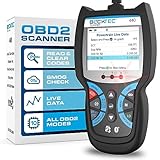
- [Effortless Vehicle Health Management] - Master your vehicle’s diagnostics with the blcktec 440 obd2 scanner, the ultimate tool in car maintenance. This car check engine code reader not only simplifies the process of reading and clearing trouble codes but also enhances your diagnostic capabilities by providing comprehensive emissions readiness and system resets. It’s the go-to device for turning off CEL efficiently.
- [Precision Monitoring & Analysis] - Elevate your diagnostic experience with our OBD2 scanner’s live data graphing feature. Perfect for in-depth monitoring of your vehicle's real-time performance, this tool ensures you receive accurate error code interpretations for a broad range of vehicles including cars, SUVs, light trucks, and 12V diesels equipped with OBD2. A must-have for optimal vehicle performance assessment.
- [Expert-Recommended Tool] - Embrace the 440, a scanner for car diagnostics endorsed by leading mechanics for its superior capabilities. With its patented design, vibrant 2.8" color screen, and printer compatibility for easy report sharing, this scanner is a staple in professional DIY toolkits. It includes free lifetime updates and expert support, ensuring it’s a valued part of your diagnostic equipment.
- [Streamlined Smog Preparation] - Get smog test ready with the blcktech 440 code reader for cars and trucks. Designed for efficiency, its user-friendly I/M readiness hotkeys paired with clear, color-coded LEDs provide instant readiness status, making it an indispensable tool for emissions testing. Ideal for both novices and professionals, it simplifies compliance and enhances diagnostic workflows.
- [Plug-and-Play Convenience] - Ready to use right out of the box, the BLCKTEC OBD scanner powers up directly from your vehicle’s 16-pin DLC—no batteries needed. An essential tool for every toolbox, this scanner for car maintenance is ideal for both home mechanics and automotive DIYers, offering reliable diagnostics without the hassle.
Bluetooth OBD2 Scanner for Car Diagnostics (iOS, Android)

Whenever you’re a DIY mechanic or tech‑savvy driver craving instant fault codes and live engine data on your iOS or Android device, the SinoTrack OBD2 Bluetooth scanner delivers that instantly for any gasoline or diesel car built after 1996.
Size? 2.34×1.81×0.84 inches, 2.08 ounces—yet it runs every OBDII protocol. Pair via Bluetooth 4.2, and the chip speeds reads 80 %. The Car Scanner app offers a 16‑language DTC library, gauges—coolant, oil, O₂, airflow, fuel economy—and tests: oxygen, battery, I/M, freeze‑frame, EVAP. Setup takes a minute: plug in, download, pair, troubleshoot. SinoTrack provides 24‑hour support, two‑year warranty, and 30‑day free Amazon return.
Best For: hobbyist drivers or wannabe mechanics who need quick, on‑board diagnostics for any gasoline or diesel vehicle built after 1996 using an iOS or Android phone.
Pros:
- Plug‑and‑play Bluetooth 4.2 with 80 % faster data read times.
- 16‑language DTC library plus real‑time gauges for coolant, oil, O₂, airflow, and fuel economy.
- 2‑year warranty, 24‑hour customer support, and 30‑day Amazon return policy.
Cons:
- Excludes hybrids, pure electric, and rechargeable models.
- No dedicated Windows/macOS application—works only via iOS/Android.
- Requires pairing each use; battery life can be short if left in the car.

- Compact but Powerful Tool: Providing fault codes along with definitions makes it easy for even owners unfamiliar with car trouble conditions to keep track of vehicle information. This OBD2 scanner Bluetooth code reader integrates code reading, live data stream, oxygen sensor test, battery voltage test, I/M readout, vehicle information, freeze frame, EVAP test (fuel evaporation system), and DTC library, and other powerful features in 16 languages including Spanish.
- Compatible with Most Vehicles: A necessary wireless Bluetooth car diagnostic tool for today’s car owners, this vehicle fault code reader is suitable for consumer cars, light trucks, and other cars of 1996 and newer models (gasoline or diesel) that are purchased in the US in compliance with OBD II/Protocol. Warm Tips: It does not apply to hybrid, electric, rechargeable, pure electric vehicles that use electricity
- Plug and Play: Even though beginner drivers can use it easily, no complicated setup installation, 1. Plug the Bluetooth OBD2 scanner into your car's onboard OBD2 port; 2. download an app and then pair the diagnostic scan tool with your phone via Bluetooth; How simple and efficient! We provide the video guide(iOS/Android) to help you complete the diagnosis more intuitively
- Efficiency and Savings: In a situation where the car breaks down on the road, know what is wrong with your car before taking it to a mechanic. This small tool is exactly what you need, instead of spending hundreds of dollars sending to the garage to figure out what's happening, monitor the status of your vehicle and find the issues do maintenance on a time basis, and even fix the small issue by yourselves
- Fast Accurate Result: Diagnose your vehicle fault in seconds, the upgrade intelligent chip using the latest technology, based on the principle of chip improvement, making the Bluetooth connection very stable, this V019 car reader reading speed increased by 80%. Faster reading speed than most other OBDII wireless Bluetooth OBD2 readers
BLCKTEC 420 OBD2 Scanner, Clears Check Engine Light

Need a hassle‑free way to reset a check‑engine light? The BLCKTEC 420 is a tiny, lightweight (6.4 oz) Bluetooth OBD2 scanner that plugs into any 1996‑plus vehicle. You can read and erase trouble codes, stream live data, and test your battery or alternator—all from a single tap. Its companion app works on iOS and Android and delivers ASE‑certified fixes, maintenance schedules, recall alerts, technical service bulletins, and RepairPal data. Automatic firmware updates keep it current. It supports English, Spanish, and French, and comes with a 30‑day voluntary Amazon return guarantee. Reach out to McGaaw’s support team for help. All set today.
Best For: Mechanics, car enthusiasts, and everyday drivers who want quick, reliable engine diagnostics without a garage visit.
Pros:
- Compact, lightweight design (6.4 oz) that plugs directly into any 1996+ vehicle.
- Comprehensive app features: live data streaming, code erase, battery/alternator test, and ASE‑certified fixes, recalls, and RepairPal info.
- Automatic firmware updates keep diagnostics current, and the device supports iOS & Android in English, Spanish, and French.
Cons:
- Requires a smartphone; no standalone interface for scanning.
- Limited to OBD‑II compliant vehicles (pre‑1996 models excluded).
- No built‑in solutions for complex multi‑vehicle ECU repairs; the app must be used for full fixes.

- [Effortless Diagnosis & Repair] - Harness the full potential of the automotive code reader to quickly identify issues with your vehicle. Our advanced OBD2 reader not only reads and erases codes but also provides live data, battery/alternator tests, and detailed code severity levels. It's the ultimate tool for DIYers and mechanics seeking a comprehensive car tester diagnostic for all cars.
- [Top Rated App] - Pair our auto scanner diagnostic code scanner with our exclusive app for comprehensive diagnostics and verified fixes by ASE Certified Technicians, tailored to your vehicle. With our zurich OBD2 code reader, accurately diagnose and efficiently solve issues. Plus, access Maintenance Schedules, Dealer Recalls, Technical Service Bulletins, and RepairPal. This car scanner diagnostic for all cars offers premium features for seamless upkeep, compatible with iOS & Android.
- [Get Free Updates] - Stay ahead with the OBD2 reader, designed for longevity and precision. Benefit from firmware updates that ensure your car tester diagnostic for all car remains at the forefront of vehicle diagnostics technology. Our OBD 2 scanner code reader is the smart choice for professionals and enthusiasts seeking future-proof tools.
- [Unrivaled Compatibility & Language Support] - Our OBDII Scanner sets the standard for versatility, supporting 1996 and newer OBD2 compliant vehicles across brands and regions. Whether you speak English, Spanish, or French, our scanner for car ensures no detail is lost in translation.
- [Designed & Supported in the USA] - Proudly based in Southern California, our OBD reader is the brainchild of local Master Technicians. Experience unmatched customer support and product expertise designed to empower every mechanic. For queries or guidance, our friendly team is just a message away, ensuring you get the most out of your car scanner.
Factors to Consider When Choosing the OBD2 Bluetooth Scanner (Trip Diagnostics)
Before you pick a Bluetooth OBD2 scanner, check that it supports your car’s make and model to avoid compatibility headaches. Make sure it streams clean, real‑time data and offers a robust app with useful diagnostics and long‑term logging. Verify its connection stability and warranty cover so your investment stays protected.
Vehicle Compatibility
Because you’ll be plugging the device into a range of cars, you need a scanner that covers every OBD‑II compliant vehicle built from 1996 onward. It should support all major communication protocols—ISO 9141, O‑BD, CAN, KWP2000—plus newer CAN‑FD variants. If you’re towing a heavy trailer or own a commercial truck, check that the scanner also vents into a 12‑volt system; most won’t handle 24‑volt or high‑voltage setups. Keep firmware up‑to‑date so the device can pull the latest standard PIDs, manufacturer‑specific codes, and recall‑related data that newer models rely on. An expanded DTC database that updates with recalls and technical service bulletins guarantees you’ll see the right trouble codes across decades of vehicles. Verify your chosen unit supports these features before purchase to avoid compatibility issues.
Real‑Time Data Quality
When you rely on real‑time data to guide on‑the‑go diagnostics, the scanner’s latency, sampling rate, and data consistency become the linchpin of effective trip monitoring. First, check how quickly the device sends updates; a sub‑second lag can hide critical engine spikes. Second, a high sampling rate—preferably 10 Hz or more—lets you spot transient faults that a 1 Hz device would miss. Third, look for built‑in error detection; an automatic checksum in the firmware means corrupted packets get flagged instead of silently altering your readings. Fourth, confirm the Bluetooth firmware supports BLE or Classic Bluetooth, as the latter guarantees a steady stream without re‑pairing. Consistency also depends on the phone’s processor; a dual‑core chipset handles rapid bursts better than a single‑core engine. Demanding real‑time accuracy saves drives.
App Feature Set
If you’re hunting for instant insight, your app should decode every OBD‑II DTC, drop clear layman definitions, severity tags, and fix hints while covering modules from ABS to TPMS. It must track live data for at least twelve parameters—RPM, speed, coolant, O₂ voltage, throttle, manifold, and more—displaying graphs that you can export as CSVs or screenshots for later review. When a fault is stored, the app auto‑captures freeze‑frames and presents them instantly. A one‑tap smog‑check screen tells you I/M readiness and pass/fail status. Your dashboard should be fully customizable: pick gauges, numerics, or 4‑in‑1 charts, and keep diagnoses current with OTA firmware updates. Finally, it ought to support multiple languages and offline lookup so you never depend on a live internet connection. Anytime, effortlessly.
Connection Stability
Even while you drive, a reliable OBD‑II scanner needs strong, low‑latency Bluetooth coverage. Aim for version 5.0 or higher; it boosts range, lowers lag, and beats Wi‑Fi interference. Magnetically mount the unit so the antenna stays close to the port and motion won’t break the link. A dual‑mode scanner that supports Classic and Low Energy pairing gives head‑unit or phone flexibility, cutting jitter that trips sporadic drops. Engineers design internal RF gain and antenna orientation for at least 30 feet inside a car, countering steering‑column and dashboard loss. Keep firmware fresh—updates patch known bugs, while a smart auto‑reconnect loop instantly re‑pairs after brief hiccups, keeping live data streams steady. This reliability lets you cross busy streets, inspect trouble codes, and monitor performance without interruption for peace.
Warranty Coverage
While a solid Bluetooth link keeps your data flowing, you also need to lock in peace of mind for the scanner itself.
Pick scanners with generous coverage and support.
You should check how long the warranty lasts—some list 12 months, others lift it to a lifetime. A solid plan covers hardware defects and includes parts and labor, but it typically leaves out wear‑and‑tear items like batteries or cables. Many brands pair this with a no‑cost software upgrade promise, so firmware stays current throughout the coverage period. Look for quick on‑site or remote support; your team should reply fast and cover free repairs or replacements to keep downtime low. Finally, a return window—often 30or60days—lets you get a refund if the unit proves defective or unsatisfactory.
Frequently Asked Questions
How Long Does the Scanner’s Battery Last During Continuous Use?
You’ll find the scanner’s battery lasts roughly four hours of continuous use, give or take, depending on your vehicle’s electrical load and the number of diagnostics you run. If you prefer a longer endurance, consider swapping in a larger 18650 cell, which can push that figure to six hours or more. Otherwise, plan to pause for a quick recharge after each session and continue tracking for ideal performance daily session.
Does the OBD2 Bluetooth Scanner Support Live Data Streaming for Third‑Party Apps?
Yes, your OBD2 Bluetooth scanner streams live data to third‑party apps in real time. You can connect it with popular diagnostics apps like Torque, OBD Auto Doctor, or Car Scanner, and watch RPM, speed, fuel consumption, and fault codes update instantly. The built‑in ANT+ and Bluetooth LE interfaces deliver low‑latency data, so you’ll monitor Live data without noticeable delay. And your dashboard will reflect any changes immediately in real time.
Can I Use the Scanner to Perform Bi‑Directional Controls (E.G., Reset ABS) on All Vehicles?
Like a Swiss Army knife tucked into your car’s chest, the scanner won’t let you push bi‑directional commands, such as resetting ABS, on all vehicles. We’ll show you which models, like the ScantyTool F40, actually support limited reset functions on compatible makes, and we’ll walk through the steps so you feel really tinkering. Just remember to check vehicle’s manual first, and if the scanner fails, a guesser might be ally.
What Is the Maximum Distance Range Between the Scanner and the Vehicle’s OBD Port?
You’ll expect a typical Bluetooth scan to maintain a reliable link up to about 30 feet (roughly 10 meters) from the vehicle’s OBD‑II port, though actual range may dip to 15–20 feet due to interference. If you need a more extended reach, consider a Wi‑Fi‑based adapter or a mid‑range Bluetooth module. Always keep the cables short and cluttered doors closed to maximize stability for ideal performance during everyday driving today.
Is There a Firmware Update Process to Add New Diagnostic Trouble Codes?
Yes, you can update the firmware to welcome new diagnostic trouble codes, like adding fresh petals to a blooming diagnostic garden. You’ll press the update button, letting the device download new code libraries. Once installed, the scanner identifies newly emerged fault codes instantly. Remember to back up old firmware before you sow these updates. With each patch, your diagnostics grow richer, brushing away hidden engine woes, and sharpen car secrets.
Conclusion
Picture your car as a sleek warhorse, and your Bluetooth scanner as its trusty locket, flicking glows into insight. When you jack the hood, the reader whispers codes faster than a lighthouse keeper’s beacon. You’ll saga through maintenance like a knight framing a quest, with every trip fueling ease and safety. Keep in mind battery life, app support, and the brand’s longevity—your companion on the road of tomorrow as you speed toward horizons untold today.
BlueDriver, Bluetooth diagnostic, OBD2 scanner