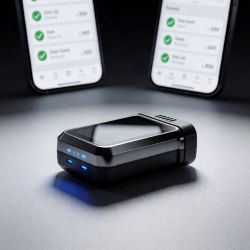
Best OBD2 Emergency Code Reader (Bluetooth) Wins Trust

Introducing Maria, our meticulous planner and talented visual storyteller. She has a knack for discovering those hidden gems, chic boutique spots, and charming little cafes that add a touch of elegance to every journey. With her keen eye for photography and her passion for travel, Maria will transport you to the most enchanting corners of the world, inspiring you to explore new places, one picture-perfect destination at a time.
When you need a quick emergency OBD2 scan that never asks for a subscription, the SLB‑201 delivers. Its Bluetooth 5.4 pairs in a blink, streams live data, and uses AI to translate error codes instantly, so you get clear guidance without digging through manuals. It works on every 1996‑present model, keeps power low, and stays updated for life. If you keep looking, you’ll discover even more reasons this reader tops the trust list of drivers.
Key Takeaways
- Bluetooth 5.4 pairs in < 1 s, giving instant access to live data and fault codes when a vehicle stalls.
- Covers >96 % of 1996‑present models with a 7000‑plus issue database for rapid, accurate diagnostics.
- AI‑translated DTCs and freeze‑frame imagery deliver clear, actionable results without shop visits.
- Battery‑free or ultra‑low‑power design (e.g., SLB‑201) keeps the device operational even during crank‑in emergencies.
- No subscription fees, free lifetime updates, and competitive pricing build long‑term user trust.
Bluetooth OBD2 Scanner for iOS & Android

If you’re a driver or a DIY mechanic who wants instant, on‑the‑go diagnostics, the Bluetooth OBD‑II scanner for iOS & Android is the perfect solution.
Your unit supports nine OBD‑II protocols, lets you read, clear, and store trouble codes, toggle the check‑engine light, and reset emission monitors. It streams core parameters—engine speed, coolant temp, vehicle speed, sensor data, and voltage—in real time, delivering live charts for instant assessment. The intuitive app decodes codes, offers troubleshooting videos, and displays standard‑value comparisons, so even novices spot anomalies quickly. With Bluetooth 5.4, you connect inside 1 second to more than 96 % of models from 1996 onward, including Toyota, Ford, and BMW. Technical specs keep it ultra‑compact (3.8 × 2.5 × 3.8 in, 2 oz). Support is 24‑hour email, plus a 30‑day return and manufacturer warranty today.
Best For: enthusiasts and DIY mechanics who need quick, on‑the‑go engine diagnostics and real‑time data streams while keeping an intuitive, mobile‑friendly interface.
Pros:
- Lightning‑fast, Bluetooth 5.4 connection—gets paired in under a second for instant data.
- Live streaming charts, code decoding, and troubleshooting videos make it beginner‑friendly.
- Covers >96 % of makes/models (1996‑present) with multi‑language support for global users.
Cons:
- Works only with OBD‑Home devices; not compatible with other Bluetooth scan tools.
- Requires the vehicle ignition to stay on, which can drain the battery if left connected too long.
- Lacks Wi‑Fi or wired connectivity options, limiting use to mobile devices only.

- 【Comprehensive Performance Testing】V011 OBD2 Scanner provides a complete diagnostic solution, giving you a thorough understanding of your vehicle's condition. It supports a variety of performance tests, support 9 protocols,👍automotive fault clearing,including fast reading of DTCs, access to electronic emission readiness, turning off CEL or MIL, resetting monitors, reading live data and retrieving the vehicle's VIN, freeze frame, sensor data, data streaming, diagnostic reports, onboard monitoring, live data streaming, and more. With these features, you can monitor your car's performance in real time and discover potential problems before they become major issues.
- 【Convenience and Savings for All Users】Designed with user-friendliness in mind, the V011 OBD2 Scanner is perfect for both novices and seasoned car enthusiasts. The intuitive app helps you interpret the check engine light, and suggests possible fixes. This can help you avoid unnecessary trips to the repair shop and prevent you from being overcharged for repairs. The product also includes helpful how-to guides and video tutorials, empowering you to clear the check engine light yourself and save significantly on repair bills.The fault code can only be cleared after the car is repaired. ⚠️ Notice:lf the car is not repaired,the fault code can only be cleared by the computer in the 4s shop.
- 【Intuitive Data Visualization】Understanding car diagnostics has never been easier. The V011 OBD2 Scanner displays detected data in clear, easy-to-read charts. Whether it's engine coolant temperature, engine speed, vehicle speed, or control module voltage, the visual representation helps you quickly grasp your car’s status. Even beginners can compare these readings against normal values to determine if their car needs any repairs.
- 【Broad Compatibility】The newly upgraded V011 OBD2 Scanner supports over 96% of car makes and models, making it one of the most versatile diagnostic tools on the market. It is compatible with a wide range of brands including Toyota, Honda, Chevrolet, Ford, Mercedes-Benz, Jeep, BMW, Porsche, Subaru, Nissan, Cadillac, Volkswagen, and Lexus, covering vehicles from 1996 to the present. This ensures that almost any vehicle owner can benefit from its extensive features. The device also supports multiple languages, including English, German, Spanish, Finnish, French, Italian, Dutch, Portuguese, and Chinese, ensuring accessibility for a global audience.
- 【Advanced Bluetooth 5.4 Connectivity】Say goodbye to the hassle of traditional wired connections. The V011 OBD2 Scanner features an upgraded Bluetooth 5.4 system, providing faster and more reliable connections. This seamless connectivity ensures you can start diagnosing your vehicle without any delays.Tips: 1. The car must be started (power on and ignition), 2. The mobile phone Bluetooth is turned on. Note that Apple phones only need to turn on Bluetooth, do not connect Bluetooth in the phone settings to turn on OBD Home, the APP will automatically connect (this product is only suitable for OBD home)

BlueDriver OBDII Scan Tool for iPhone & Android

No subscription fee means you, as a budget‑conscious automotive enthusiast, get instant, on‑device diagnostics from the BlueDriver OBDII Scan Tool. It plugs wirelessly into any 1996‑or‑newer gasoline car, spins up the app instantly, and feeds street‑level data right to your iPhone or Android. You pull confirmed, pending, or permanent CELs—plus ABS, airbag, and TPMS complaints—for every OEM. Freeze‑frame snapshots lock the moment a fault spawns, and live‑data graphs toggle between graph, gauge, or numeric readouts. Exporting logs is quick, and the app streams real‑time diagnostics, complete with repair videos and step‑by‑step fixes. CR‑2 batteries power the lightweight tool.
Best For: Budget‑conscious DIY mechanics and car owners who want instant, on‑device diagnostics without a subscription fee.
Pros:
- One‑time purchase, no recurring fees.
- Real‑time data streaming and live‑data graphs across multiple PIDs.
- Extensive coverage (7000+ issues) with repair videos and step‑by‑step instructions.
Cons:
- Requires CR‑2 rechargeable batteries that need replacement.
- Supports only gasoline cars built 1996 or newer, excluding diesel and hybrid models.
- No Wi‑Fi connectivity; relies solely on Bluetooth pairing with a smartphone.
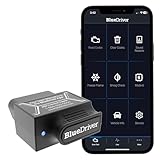
- [Pro OBD2 Scanner] - BlueDriver is the easiest way to scan and understand your vehicle like a professional mechanic. Read and clear your car’s trouble codes and check engine light.
- [Read & Clear The Codes] - BlueDriver's enhanced vehicle diagnostics gives you access to information normally available only to mechanics on their OBD2 scan tools. Now you can read and clear ABS, Airbag, SRS, TPMS codes, and many more.
- [Get The Right Fix & View Live Data] - Much more than a car code reader, BlueDriver is a diagnostic tool. You’ll get unlimited repair reports with possible causes and fixes, plus real-time health monitoring while you drive with the live data feature.
- [Wireless & Bluetooth Enabled] - Say goodbye to wires. BlueDriver connects with Bluetooth via your phone/tablet to a sensor that plugs into your car's OBDII port. Get all of the capabilities of an expensive code reader & scan tool without any annoying wires.
- [User-Friendly App and Repair Videos] - BlueDriver gives you more ways to scan and fix your vehicle. Our iOS & Android app connects you to a large database of repair videos with step-by-step directions of repairs.
Veepeak OBDCheck BLE OBD II Scanner

What’s a pocket‑sized, affordable OBD‑II scanner that gives you instant fault‑code clearance and live sensor data? The Veepeak OBDCheck BLE does just that. It plugs into any 1996 + OBD‑II car and pairs over Bluetooth LE (Android) or just LE on iOS. With compatible apps like CarScanner, Torque, or BimmerCode, you read and erase CELs, see freeze‑frames, track I/M readiness, and stream real‑time engine stats. It skips advanced ABS, SRS, or injector coding features, and it won’t work with Carly or Techstream. The device weighs a mere 2.11 oz and offers 30‑day warranty return. to keep you protected on road.
Best For: budget‑savvy tech users who need quick fault‑code clearance and live data on standard 1996 + OBD‑II cars without advanced diagnostic features.
Pros:
- Compact, lightweight, and inexpensive – perfect for on‑the‑go diagnostics.
- Works with a variety of free or low‑cost apps (CarScanner, Torque, BimmerCode).
- 30‑day warranty return policy and easy plug‑and‑play Bluetooth LE pairing.
Cons:
- Lacks ABS, SRS, injector‑coding, and other advanced diagnostics.
- No support for Carly, Techstream, or other proprietary tools.
- Limited to generic functions on older iOS versions (no Bluetooth Classic).

- Note: This device requires a compatible third-party app to work. Generic OBD functions are typically free via apps such as Car Scanner. Advanced features are vehicle- and app-dependent, and may require additional purchase. Please check the product description or user instructions for supported Apps and functions before purchasing.
- Generic OBD-II FUNCTIONS – read & clear trouble codes for check engine light (CEL or MIL), view freeze frame data, I/M readiness, and live sensor data to help monitor vehicle health and diagnose check engine problems.
- COMPATIBLE VEHICLES – Works with most 1996+ cars and light trucks in the US, and other OBD-II/EOBD compliant vehicles in other regions for generic OBD-II functions. Support for EVs is app-dependent; please check compatibility in Car Scanner App or contact Veepeak. Some newer vehicles with WWH-OBD are NOT supported.
- BLUETOOTH CONNECTION: Supports Bluetooth LE & Classic on Android, and Bluetooth LE on iOS. For Bluetooth LE, no pairing is required — just plug in the device, open the app, and connect from within the app. Do not pair in the phone’s Bluetooth menu (especially for iOS devices). Android head units may not be supported.
- COMPATIBLE APPS: Car Scanner (recommended for generic OBD-II functions), Torque (for Android), OBD Fusion, BimmerCode*, BimmerLink*, OBD JScan, Dr. Prius, etc. Note: some Apps or in-App features require separate purchase. NOT compatible with Carly, MHD, xHP, ProTool, bootmod3, etc.
Bluetooth OBD2 Scanner for Car

Need a compact, Bluetooth‑enabled scanner that lets you read, clear, and flag vehicle fault codes straight from your phone? Plug it into the OBD‑II port, start the engine, and pair via Bluetooth to any phone or PC that supports OBD‑II protocols. The YTFRL‑6665DT streams live diagnostic data, letting you clear trouble codes instantly. Its ABS shell and corrosion‑resistant build guard against daily impacts, ensuring long‑term reliability. At only 41 g and dimensions 3.86×2.56×1.14 in, it stays tidy behind the steering wheel for daily tasks everyday. Compatible with Android, iOS, and Windows diagnostics, it’s a versatile tool for inspections, maintenance, and restorations. Verify protocol compatibility before buying, enjoy a 30‑day return guarantee, and gain confidence.
Best For: vehicle mechanics and DIY car owners who need a portable, wireless OBD‑II scanner to read and clear fault codes directly on smartphones or PCs.
Pros:
- Compact 41 g and 3.86 × 2.56 × 1.14 in dimensions keep it pleasantly tiny behind the steering wheel.
- Bluetooth connectivity eliminates cables, supporting Android, iOS, and Windows diagnostics.
- Robust ABS shell with corrosion‑resistant construction guarantees long‑term reliability.
Cons:
- Must be checked for OBD‑II protocol compatibility before purchase.
- Offers only basic diagnostic and code‑clearing functions, no extended service‑history features.
- Limited to a 30‑day return guarantee unless manufacturer‑provided coverage is purchased.
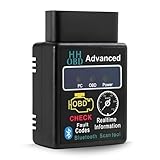
- Practical Function: The car OBDII scanner can read and clear the car fault codes in real time, detect the engine function, and accurately locate the vehicle abnormality. This helps car owners understand the vehicle's operating condition in a comprehensive way, greatly improving the detection efficiency
- Wireless Bluetooth: The car scanner flexibly supports wireless Bluetooth connection, simplifying the wiring work and enhancing the user's ease of use. By quickly connecting to a cell phone or computer with Bluetooth, you can read the data related to the vehicle's engine running with ease
- Durable Material: With an ABS shell, the OBD2 Bluetooth scanner features high hardness, which can withstand daily collision or friction, and protects the internal components from all kinds of damage well. Excellent corrosion resistance keeps it high performance in long-term use
- Easy to Use: At first, download and install the specified application. Then, plug the scanner tool into your car's OBDII port and start the car engine. Next, connect your phone's Bluetooth. Finally, open the app to read clear data for easy clearing of engine faults
- Compatible Scope: The Bluetooth scanner connects with various smartphones and PC devices, which is an essential maintenance tool for vehicle inspection and restoration. Please check the compatibility protocol on the detail page to ensure fitment before buying
Bluetooth OBD2 Car Diagnostic Scanner

If you’re a driver who wants a on‑the‑go way to read and clear engine‑check codes, this Bluetooth OBD‑II scanner turns your phone into a diagnostics tool in just a few minutes. Plug it into the vehicle’s port, start the engine, and pair with your Android device—iOS isn’t supported, but any Android or Windows PC works. Once connected, apps like Torque or Scan Master show data: RPM, coolant temp, speed, throttle position, and emissions metrics. With the default password 1234 or 0000, you can clear trouble codes instantly. The lightweight unit stays tiny on your dash yet offers novice‑friendly performance.
Best For: drivers who want a quick, affordable way to read and clear engine‑check codes on their Android smartphone, especially new car owners and DIY mechanics.
Pros:
- Ultra‑compact and lightweight—fits instantly in the OBD‑II port.
- Easy setup: plug‑in, start engine, pair via Bluetooth, and decode with popular apps like Torque or Scan Master.
- Built‑in default passwords (1234/0000) let you clear trouble codes on the fly without extra accessories.
Cons:
- No iOS support limits use to Android and Windows only.
- Limited to basic diagnostics—doesn’t support advanced protocols or extended data streams.
- Bluetooth range is modest; close proximity to the phone is required for a stable connection.

- [Scanner Function] The internal information of the vehicle can be accessed via Bluetooth devices such as a mobile phone, tablet or laptop for diagnosing engine lights and monitoring the car. It can read trouble codes and understand their meaning, clear car trouble codes, and turn your phone or tablet into a professional diagnostic tool.
- [Easy Operation] Plug the device into the car's OBD2 port to start the car, turn the car on, enable Bluetooth on your Android phone or tablet, search for "OBDII" and pair it with it, run the download app using simple Settings, and wait for a successful connection to the car's ECU. You can complete this setup in a few minutes, and even a novice can quickly find and fix problems with the car.
- [Widely Used] The Bluetooth OBD2 scanner V2.1 retrives information about the engine, emissions, and other relevant data, including engine speed, coolant temperature, vehicle speed, intake manifold pressure, air temperature, intake pressure, air flow, throttle position, oxygen sensor voltage, fuel pressure, and more.
- [Compatible] This car diagnostic scanning tool supports Torque software for Android phones, OBD range software for phones, PPC phones, Scan Master ELM for PCS and more, making it a practical and affordable device for car owners to use to meet your needs.Not supported on iOS.The password 1234 or 0000.
- [Essential Tools] This is a very useful tool, in daily work or travel, if there is an abnormal situation in the car, you can immediately make a quick and accurate diagnosis, which can not only save you time, but also save you money.
AI-Powered Bluetooth OBD2 Scanner for iPhone & Android

Because you’ll want instant, reliable vehicle insights, the OBD2 Emergency Code Reader delivers AI‑powered diagnostics in under a minute, turning complex fault codes into clear, actionable advice—especially valuable for DIY mechanics and commuters alike. Plug the 0.98‑oz device into any 1996‑plus car’s OBD‑II port—no battery, no cables. One tap gives Pass/Fail and a health report with clear repair steps. Clear check‑engine lights right after fixes. Bluetooth 5.4 allows 24/7 monitoring. Live graphs show RPM, coolant temp, oxygen voltage, exposing intermittent faults missed by other readers. Free lifetime updates, 35,901+ code library, no subscription—iOS and Android covered, keep you safe always.
Best For: DIY mechanics, commuters, and anyone who wants fast, clear vehicle diagnostics without dealer hassles.
Pros:
- Instant AI‑powered diagnostics in under a minute, translating complex fault codes into actionable repair steps.
- Ultra‑compact, battery‑free design with 24/7 Bluetooth 5.4 monitoring and live data graphs for real‑time insight.
- Free lifetime app updates and a comprehensive 35,901+ code library—no subscription needed, compatible with both iOS and Android.
Cons:
- Requires a smartphone; standalone use is limited.
- Bluetooth connectivity can be impacted by interference in certain garage or vehicle environments.
- Frequent feature prompts during updates may interrupt the user experience.

- AI-Powered Car Health Reports in Minutes - Get beyond confusing codes. Our scanner connects to your phone and uses AI intelligence to analyze live data and freeze frame information, generating easy-to-understand health reports and actionable repair advice—no mechanic knowledge needed.
- Truly Wireless & Ultra-Compact Design - Weighing only 0.98 ounces, this mini scanner plugs seamlessly into your OBD2 port and stays there. No cables, no batteries, no clutter. Leave it in your car for 24/7 monitoring and connect via Bluetooth 5.4 whenever you need a diagnosis.
- Visualize Your Car's Performance in Real-Time - See your engine's heartbeat with stunning real-time data graphs and charts on your phone screen. Monitor RPM, coolant temperature, and oxygen sensor voltage visually to pinpoint intermittent issues that simple code readers miss.
- One-Tap Full Vehicle Scan & Code Clearance - Stop the guesswork. The app's "Full Vehicle Scan" feature quickly checks all systems and gives a simple Pass/Fail result. Read and clear check engine lights instantly after repairs, turning off the warning lamp and getting you back on the road.
- Universal Compatibility with Free Lifetime App Updates - Works with all OBD2 protocol vehicles from 1996 and newer (cars, trucks, SUVs). The free app supports iOS & Android and receives lifetime updates with new features and expanded fault code libraries (35,901+ codes), ensuring it never becomes obsolete.
ANCEL AD310 Universal OBD II Scanner (Black)

For drivers of 1996‑plus models who need a lightweight, on‑the‑go solution for emission‑related trouble codes, the ANCEL AD310 steps up. It weighs 8.1 oz, measures 8.9×6.9×1.4in, comes with a 2.5‑ft cable. You can read, erase, and freeze‑frame ETCs while watching live data and readiness. It supports OBD II protocols plugs into Android or iOS via USB‑OTG. No external power needed; optional lithium battery allows solo use. The 8‑in screen and rugged build handle drops. It covers 1996+ U.S., 2000+ EU, Asian cars, and SUVs, but only shows emission faults. A 30‑day return, one‑year warranty backs it, 61,912 reviewers rate it 4.6.
Best For: drivers of 1996‑plus vehicles who need a lightweight, on‑the‑go OBD II scanner for emission‑related diagnostic codes and live data, compatible with Android/iOS via USB‑OTG.
Pros:
- Fully portable – no external power required, optional lithium battery for solo use.
- Supports all OBD II protocols and instant read/clear of ETCs, freeze‑frame capture, and readiness status.
- Heavy‑weight screen with clear labeling, rugged build that withstands drops, and a 30‑day return guarantee.
Cons:
- Limited to emission‑related fault codes; non‑emission engine faults are not readable.
- Requires an OBD II‑capable vehicle; not usable with older OBD‑I or non‑standard interfaces.
- No onboard display for advanced diagnostics beyond basic live data and code reading.

- CEL Doctor: The ANCEL AD310 is one of the best-selling OBD II scanners on the market and is recommended by Scotty Kilmer, a YouTuber and auto mechanic. It can easily determine the cause of the check engine light coming on. After repairing the vehicle's problems, it can quickly read and clear diagnostic trouble codes of emission system, read live data & hard memory data, view freeze frame, I/M monitor readiness and collect vehicle information.
- Sturdy and Compact: Equipped with a 2.5 foot cable made of very thick, flexible insulation. It is important to have a sturdy scanner as it can easily fall to the ground when working in a car. The AD310 OBD2 scanner is a well-constructed mechanic tool with a sleek design. It weighs 12 ounces and measures 8.9 x 6.9 x 1.4 inches. Thanks to its compact design and light weight, transporting the device is not a problem. The buttons are clearly labelled and the screen is large and displays results clearly.
- Accurate Fast and Easy to Use: The AD310 scanner can help you or your mechanic understand if your car is in good condition, provides exceptionally accurate and fast results, reads and clears engine trouble emission codes in seconds after you fixed the problem. This device will let you know immediately and fix the problem right away without any car knowledge. No need for batteries or a charger, get power directly from the OBDII Data Link Connector in your vehicle.
- OBDII Protocols and Car Compatibility: Many cheap scan tools do not really support all OBD2 protocols. AD310 scanner as it can support all OBDII protocols such as KWP2000, J1850 VPW, ISO9141, J1850 PWM and CAN. This device also has extensive vehicle compatibility with 1996 US-based, 2000 EU-based and Asian cars, light trucks, SUVs, as well as newer OBD2 and CAN vehicles both domestic and foreign. Pls confirm with our customer service whether it is compatible with your vehicle before purchasing.
- Home Necessity and Worthy to Own: This is an excellent code reader to travel or home with as it weighs less and it is compact in design. You can easily slide it in your backpack as you head to the garage, or put it on the dashboard, this will be a great fit for you. The AD310 is not only portable, but also accurate and fast in performance. Moreover, it covers various car brands and is suitable for people who just need a code reader to check their car.
Veepeak Mini Bluetooth OBD2 Scanner for Android

The Veepeak Mini Bluetooth OBD2 Scanner lets tech‑savvy car owners—especially those with 1996‑plus vehicles—read and clear fault codes with a few taps on a modern Android smartphone. Plug it into the universal OBD‑II port, and using third‑party apps like Car Scanner ELM OBD2 or Torque, you’ll see live sensor data, freeze‑frame logs, and visibility for engine readiness. It supports 30‑day returns via Amazon and offers a solid warranty through its seller. Weighing just 1.12 oz, its compact footprint frees space in any vehicle. Note: iOS, Wi‑Fi head units, and certain EVs aren’t supported, so check app compatibility first to set up your system.
Best For: Android users with 1996‑plus vehicles who need a compact, budget‑friendly OBD‑II scanner.
Pros:
- Ultra‑compact and lightweight (just 1.12 oz, fits comfortably in any vehicle).
- Works with a range of popular Android diagnostic apps (Car Scanner, Torque, OBD Fusion, etc.).
- Simple plug‑and‑play setup—no extra hardware or complex configuration required.
Cons:
- iOS devices and Wi‑Fi head units are not supported.
- Advanced diagnostics (ABS, TPMS, EPB reset, etc.) are unavailable.
- Limited compatibility with certain EVs—app support must be verified before purchase.

- ⚠️ IMPORTANT – iOS NOT SUPPORTED: NOT compatible with iPhone or iPad. It is compatible with Android phones and tablets ONLY. For iOS devices, please choose the Bluetooth LE version – OBDCheck BLE. Android car head units and Wi-Fi connection are also not supported.
- READ BEFORE PURCHASE: This device requires a compatible third-party app to operate, and works with most 1996+ OBD-II compliant vehicles for generic OBD-II functions. Please read the product description and FAQ for supported functions.
- GENERIC OBD-II FUNCTIONS – read & clear trouble codes for check engine light (CEL or MIL), view freeze frame data, I/M readiness, and live sensor data to help monitor vehicle health and diagnose check engine problems.
- LIVE SENSOR DATA – Get vehicle speed, RPM, engine coolant temp, throttle position, O2 readings, fuel trim, mass air flow, and more on your Android device. You can create your own dashboard.
- APP COMPATIBILITY – Compatible with popular Android apps like Car Scanner ELM OBD2, Torque, OBD Fusion, Dr. Prius, CVTz50; NOT compatible with BimmerCode, BimmerLink, ABRP, and other Apps that require specialized hardware.
Panlong OBD2 Bluetooth Diagnostic Scanner

Wanting to cut down on mechanic visits, you’ll find Panlong’s Bluetooth OBD‑II scanner a perfect fit—you plug it in, pair via Bluetooth, and any Android app can start reading or clearing codes instantly. Fully ELM327 compliant, it supports all nine OBD‑II protocols, so whether you drive a 1996 U.S. model or a 2000 EU import, the device plugs into a 12‑volt port and streams real‑time sensor data. Pair it in your phone’s Bluetooth settings, launch a compatible app—Torque, Dashcommand, or Car Scanner ELM OBD2—and the scanner will appear, even if it’s omitted from the first list. Its compact 1.89×0.98×1.26‑inch size and 0.64‑oz weight keep it unobtrusive, while the manufacturer warranty covers you, and Amazon accepts returns within 30 days. Use it to diagnose issues before they reach costly fixes and save hours.
Best For: Automotive hobbyists and everyday vehicle owners who want affordable, on‑the‑go diagnostics without frequent mechanic visits.
Pros:
- Fully ELM327 compliant with support for all nine OBD‑II protocols
- Compact, lightweight design (1.89 × 0.98 × 1.26 in, 0.64 oz) stays unobtrusive
- Works with popular Android apps like Torque, Dashcommand, and Car Scanner for easy setup
Cons:
- Requires Bluetooth pairing for each use; multiple scanners need unpairing of previous ones
- iOS compatibility is limited compared to Android, potentially restricting app options
- Only supports 12‑V gasoline/diesel vehicles, not newer hybrids or electric cars without adapters

- Panlong Bluetooth OBD2 scanner turns your Android phone or tablet into a professional-grade diagnostic tool, and allows you to access manufacturer-specific vehicle data
- Read/clear error codes, display their meaning, turn off Check Engine Light, show current sensor data, find out why check engine light is on before visiting a mechanic, save money by fixing simple problems yourself
- Fully ELM327 compliant, support 9 OBDII protocols, compatible with 1996 US-based, 2000 EU and Asian-based 12V gas-powered & light diesel vehicles, and newer OBDII domestic or import vehicles
- Work with Android cellphone and tablet; compatible Apps on Google Play: Torque, Dashcommand, Car Scanner ELM OBD2, OBD Fusion, OBD Auto Doctor... and Dr. Prius App for Toyota/Lexus hybrid; we recommend downloading free version first as there are many other Apps you may be interested in trying out
- Please Note: 1. this version supports Android phone/tablet only; 2. if you don't see "OBDII" on your phone Bluetooth device list, that's OK; go ahead to run App and it will find in App; 3. if you have 2 or more scanners, go to phone Bluetooth setting and unpair "OBDII" before you use the second one
AUTOPHIX 3210 Wireless Bluetooth OBD2 Scanner

Need a one‑shot diagnostic that pairs instantly with your phone? The AUTOPHIX 3210 connects to 99 % of OBD‑II cars worldwide, covering 1996 models, 2002‑on European units, and 2008‑on Asian builds. You’ll read live data, freeze‑frames, I/M readiness, and clear codes in seconds—ABS, SRS, and transmission codes stay unreadable. The app, iOS and Android, offers one‑click readiness checks, DTC look‑ups, and a HUD mode projecting data onto the windshield. Drive‑home I/M tests spot EVAP leaks and O2 sensor issues, cutting repeat inspections. Compact 2.36‑inch, 2.76‑lb device runs on 12 V, supports all major protocols, and comes with a 30‑day return policy.
Best For: anyone who wants a quick, plug‑and‑play diagnostic tool for most cars without needing a cable or a laptop—especially DIY mechanics and everyday drivers eager for real‑time data and emissions readiness.
Pros:
- Covers 99 % of OBD‑II cars worldwide, from 1996 U.S. models to 2008 Asian builds.
- Instant Bluetooth pairing with iOS/Android, one‑click readiness checks, HUD projection, and free DTC look‑ups via Google.
- Compact, 12 V design with all major protocols, plus a 30‑day return policy for peace of mind.
Cons:
- Does not read ABS, SRS, or transmission codes; those samples remain unavailable.
- Limited to vehicles 1996+ (U.S.), 2002+ (Europe), or 2008+ (Asia) – older models may not be fully supported.
- Requires a smartphone and the app; no standalone display or wired connection is available.

- Broad Compatibility – Plug & Play on 99% of Cars. Worried it won't fit your vehicle? Don't be. AUTOPHIX 3210 bluetooth obd2 scanner works with most OBD2-compliant cars, trucks, and SUVs sold in the US since 1996. Whether you drive a Ford F-150, Toyota Camry, Honda Civic, Chevrolet Silverado, or BMW 3 Series – this scanner speaks your car's language. It covers thousands of models across American, European, and Asian brands. Not sure? Just message us – we’ll confirm for you.
- Check Engine Light & Pass Smog Check – Without the Headache. That glowing orange light stressing you out? Plug in, read the code, and know exactly what's wrong – in plain English, not just numbers. Fix it, clear it in seconds, and watch that light disappear. Before your smog check, run an I/M Readiness test from home. Make sure your EVAP system, O2 sensors, and monitors are ready – so you never waste a trip getting rejected. Pass with confidence, every time.
- Full OBD2 Functionality – Everything You Need, Nothing You Don't. Read real-time data, view freeze frames, check I/M Readiness, monitor EVAP system status, and more. Fix the issue, clear the code in seconds – perfect for DIYers. No professional knowledge needed: just plug it in, diagnose, and drive with confidence. One note: This code reader is for engine diagnostics (OBD2). It does NOT clear ABS, SRS, or transmission codes.
- See What Your Mechanic Sees – Live Data & 0-60 Test. Most cheap code scanners give you a code and leave you guessing. Not this one. Open the Dashboard module and see live engine data your factory gauges hide. MAF acting up? Engine running rough or guzzling gas. Spark Advance off? Hesitation when you step on it. Throttle Position delayed? That laggy pedal? This is why. Plus, verify your fix with the 0-60 test. Ran slower? Something's wrong. Ran faster? You nailed it. Let data decide.
- No Subscriptions, No Ads – Lifetime Free Updates & Service Support. Tired of apps with ads or "pay to unlock" traps? The AUTOPHIX app is 100% free forever. No subscriptions, no hidden fees, no annoying pop-ups. Lifetime updates included – even when you switch phones or cars. And if you ever have questions? We're here. our customer support ready to help with setup, compatibility, or troubleshooting. Buy with confidence – we've got your back.
BLCKTEC 410 Bluetooth OBD2 Scanner for Phones

Looking for a point‑of‑sale diagnostic tool that stays current without subscription hassles? The BLCKTEC 410 Bluetooth OBD2 scanner lets you read and reset codes, check battery and alternator health, and explore OEM‑specific data—all one‑time purchase, no recurring fees. It pairs through the RepairSolutions2 app, not phone settings, so launch the app straight after buying and walk through the in‑app setup. Compatible with every OBD2‑compliant vehicle from 1996 onward, it delivers precise data via an advanced OEM database. With a 30‑day return policy and lifetime updates, you get a reliable, 3.2 oz tool that fits in your pocket for U.S. users.
Best For: DIY car enthusiasts and independent shop owners who want a reliable, one‑time purchase diagnostic tool that stays current with lifetime updates and delivers precise OEM data for all OBD2‑compliant vehicles from 1996 onward.
Pros:
- One‑time purchase with lifetime updates – no recurring subscription fees.
- Advanced OEM database delivers accurate, consistent data across a wide range of vehicles.
- Compact, lightweight (3.2 oz) and easy to carry in your pocket.
Cons:
- Device and app usable only in the U.S. and Canada; no support for other regions.
- Requires pairing through the RepairSolutions2 app, not standard phone Bluetooth.
- Limited to vehicles manufactured 1996 or newer; older models not supported.

- [Hassle-Free Setup] - Experience unmatched convenience with our Bluetooth OBD2 scanner. Unlike other scanners, our device easily connects to your smartphone, offering a quick and effortless setup. Perfect for busy DIYers, it allows you to read and reset check engine codes with just a few taps, saving you time and eliminating any setup frustrations. [Pairing Instructions] DO NOT connect the BLCKTEC 410 through your phone’s Bluetooth settings. Instead, open RepairSolutions2 App and follow the instructions on the App to pair the BLCKTEC 410. To avoid connection issues, make sure to read the Quick Start Guide included in the box before first use.
- [Superior Accuracy and Reliability] - Trust in the unparalleled precision of our Bluetooth OBD2 scanner diagnostic tool. Unlike other scanners that might give inconsistent data, our device uses an advanced database of OEM and OBD2 codes to deliver accurate and dependable diagnostics, ensuring that you can make informed maintenance decisions without second-guessing the results.
- [Broad Compatibility with Added Flexibility] - Our OBD2 scanner diagnostic tool Bluetooth stands out by supporting a wider array of vehicles than most competitors. From 1996 models onwards, whether it's cars, trucks, or SUVs, our scanner provides the versatility needed by modern DIYers, making it the only scanner you’ll ever need.
- [No Hidden Subscriptions & Fees] - Choose our Bluetooth OBD2 scanner and enjoy significant savings. Other scanners might require additional purchases for full functionality, but our all-in-one solution means no hidden costs—just one purchase for complete access to all features, including lifetime updates.
- [Designed & Supported in the USA] - Proudly based in Southern California, our OBD reader is the brainchild of local Master Technicians. Experience unmatched customer support and product expertise designed to empower every mechanic. For queries or guidance, our friendly team is just a message away, ensuring you get the most out of your car scanner.
Veepeak OBDCheck BLE+ Bluetooth OBD II Scanner

If you’re a DIY mechanic who wants a compact, app‑driven solution, the Veepeak OBDCheck BLE+ delivers Bluetooth‑LE+ connectivity tailored for 1996+ vehicles.
Simply plug it directly into the OBD‑II port—power comes from your car, and at 2.12 oz it fits any 1996+ vehicle. Android users connect via Bluetooth Classic + LE to apps like Car Scanner and Torque, while iOS users link with LE inside the app. The scanner reads/clears codes, shows also freeze‑frame data, I/M readiness, and live sensor streams, capturing. Advanced functions—ABS, SRS, injector coding, EPB reset—activate only on certain makes with compatible apps. A 30‑day return policy keeps you protected.
Best For: DIY mechanics who need a lightweight, app‑driven OBD‑II scanner for 1996+ vehicles.
Pros:
- Compact 2.12 oz size and easy plug‑in design
- Works with a wide range of Android and iOS OBD apps (e.g., Car Scanner, Torque)
- 30‑day return policy for peace of mind
Cons:
- Requires a compatible third‑party app; not plug‑and‑play
- Advanced functions (ABS, SRS, EPB, injector coding) only on select makes/models
- No support for proprietary manufacturer tools or Android head‑unit integration.

- Note: This device requires a compatible third-party app to work together. Generic OBD functions are typically free via apps such as Car Scanner ELM OBD2. Advanced features are vehicle- and app-dependent, and may require additional purchase. Please check the product description or user instructions for supported Apps and functions before purchasing.
- GENERIC OBD-II FUNCTIONS – read & clear trouble codes for check engine light (CEL or MIL), view freeze frame data, I/M readiness, and live sensor data to help monitor vehicle health and diagnose check engine problems. (For 1996+ OBD-II compliant vehicles in the US, EVs excluded)
- BLUETOOTH CONNECTION: Supports Bluetooth LE & Classic on Android, and Bluetooth LE on iOS. For Bluetooth LE, no pairing is required — just plug in the device, open the app, and connect from within the app. Android head units and stereos may not be supported.
- FUNCTION LIMITATIONS: Advanced diagnostics (like ABS, SRS) and data (like transmission temperature, injector rate) are only available for some car makes/models via specific apps. Special functions such as injector coding, ABS bleeding, EPB reset, oil light & service resets are not supported. Check FAQs in user instructions for details.
- COMPATIBLE APPS: Car Scanner ELM OBD2 (recommended for generic OBD-II functions and reading battery data on some EVs), Torque (for Android), OBD Fusion, BimmerCode*, BimmerLink*, OBD JScan, Dr. Prius, etc. Note: some Apps or in-App features require separate purchase.
OBD2 Bluetooth Scanner for iOS/Android

Because it turns your smartphone into a full‑featured diagnostic console, you can spot and fix issues before heading to a shop, making the FlyroadUp OBD2 Bluetooth scanner the best pick for DIY car owners who want instant fault‑code readings without the hassle of cables.
It plugs via Bluetooth 4.0/5.0 and uses an ELM327 chip, so it handles 9 OBDII protocols from 1996 vehicles onward. Pairing is automatic; no manual setup. The free Mini OBDII app lets you read/clear ECU codes, view live data, freeze‑frames, and check battery voltage. VIN extraction builds confidence when inspecting used cars for you today now.
Best For: DIY mechanics or vehicle owners who want a convenient, cable‑free diagnostic tool that integrates directly with their smartphone.
Pros:
- Easy automatic Bluetooth pairing without manual setup.
- Free, user‑friendly Mini OBDII app providing instant code reading, clearing, live data, and VIN extraction.
- Compact, lightweight design (2.46 oz) that supports all major OBDII protocols since 1996.
Cons:
- Does not support ABS, SRS, or VSC diagnostics, limiting full‑system troubleshooting.
- Requires a smartphone and compatible OS; no standalone display or built‑in screen.
- Relying on a single battery‑powered dongle means occasional battery replacement may be needed.

- 【Save Repair Costs】Like the expensive scanners on the market, FlyroadUp new OBD2 scanner provides a comprehensive diagnostic solution to your vehicle engine, allowing you to monitor your car's performance in real time, discover potential problems, and save money by fixing simple issue yourself
- 【OBDII System Diagnosis】Read/clear codes, display live data, freeze frame, I/M readiness, battery voltage reading shows battery is in good condition before you hit the road, VIN reading ensures you buy a used car with confidence, speed performance test allows you to analyze speed changes and calculate engine displacement efficiency. Note: won’t support ABS, SRS, or VSC
- 【Support iOS & Android】This Bluetooth OBD2 scanner turns your iPhone and Android phone into a professional-grade diagnostic scan tool; say goodbye to the hassle of wired connections, you are now able to stream music and monitor your car at the same time
- 【Dedicated Free App】Mini OBDII App is totally free with user-friendly interface and simple operation. You don’t need to manually pair it with car or phone, just a click, it’s all done AUTOMATICALLY, no subscription fees, no login, no need that or this
- 【Third-party Apps】The code reader also works with popular OBD2 Apps like Torque Pro, Dashcommand, Car Scanner, OBD Fusion, OBD Auto Doctor, Dr. Prius and more
FIXD Bluetooth OBD2 Scanner for iPhone & Android

Want quick, on‑board diagnostics that let you read every trouble code your car can generate? The FIXD Bluetooth OBD2 scanner plugs into your vehicle’s port and pairs with iPhone or Android via Bluetooth. It reads over 39,000 codes—ABS, airbag, transmission, and TPMS—and lets you view, clarify, and clear stored, pending, or permanent codes. The free app logs unlimited scans, offers freeze‑frame snapshots, live data graphs, and mileage reminders. Premium adds repair guidance, cost estimates, live mechanic help, and vehicle value tools. Lightweight, universal fit, 30‑day return, and optional live mechanic support make it a practical choice today.
Best For: tech‑savvy car owners who want a quick, on‑board diagnostic tool that pairs with their smartphone to read and clear a wide range of vehicle trouble codes.
Pros:
- Unlimited free scans with clear code explanations.
- Live data graphs, freeze‑frame snapshots, and mileage reminders.
- Lightweight, universal fit and a 30‑day return guarantee.
Cons:
- Requires a compatible smartphone and active Bluetooth connection.
- Full repair guidance and live mechanic help are behind a paid tier.
- Dependent on two small batteries (not included) for power.
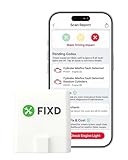
- Easily Diagnose Car Issues from Your Phone – Scan and identify 39,000+ issues across thousands of vehicles, from Check Engine lights to enhanced codes. Validate repairs or vehicle condition and reset codes without being an expert.
- Free App with Unlimited Scans – Get simple explanations of your car's issues instead of confusing error codes. Get alerted when FIXD detects dangerously severe issues or needed maintenance so your car and loved ones stay safe.
- Manage All Your Cars in One App – Save scans by vehicle, track mileage-based reminders, and share results with family or a shop. The compact sensor stays hidden under the dash in all your cars, always ready to scan.
- Works with OBD2 Vehicles 1996+ – Supports gasoline & hybrid vehicles 1996+ and diesel vehicles 2006+. Connects via Bluetooth to iPhone and Android for fast, wireless diagnostics. Features may vary based on vehicle make and model.
- Free 14-Day Premium Trial Included (& Optional) – Get repair recommendations, cost estimates, vehicle value by condition, and live mechanic support. Upgrade anytime for advanced insights and expert help.
BLCKTEC 420 Bluetooth OBD2 Scanner & App

Ideal for vehicle owners who want instant, on‑the‑spot diagnostics, the BLCKTEC 420 lets you read and erase check‑engine codes via a simple Bluetooth connection to your iPhone or Android.
It supports models built from 1996 onward, giving you a real‑time data stream of engine parameters and battery health.
The app, available in English, Spanish, and French, highlights code severity levels, provides maintenance schedules, and pulls dealer recalls and Technical Service Bulletins.
You’ll also see repair cost estimates through RepairPal integration, while the lightweight 6.4‑oz device keeps your setup compact and portable.
You get a 30‑day return, free updates, and support.
Best For: a tech‑savvy car owner who wants quick, on‑the‑spot diagnostics without a bulky OBD tool.
Pros:
- Fast Bluetooth pairing and real‑time engine data via a user‑friendly app
- Multilingual support and detailed maintenance/recall info right in the app
- Lightweight, free firmware updates, and a 30‑day return guarantee
Cons:
- Only compatible with vehicles built in 1996 or newer, so older cars cannot use it
- Relies entirely on a smartphone app, requiring a compatible phone and battery
- Lacks advanced diagnostic functions and screen displays that professional aftermarket scanners offer

- [Effortless Diagnosis & Repair] - Harness the full potential of the automotive code reader to quickly identify issues with your vehicle. Our advanced OBD2 reader not only reads and erases codes but also provides live data, battery/alternator tests, and detailed code severity levels. It's the ultimate tool for DIYers and mechanics seeking a comprehensive car tester diagnostic for all cars.
- [Top Rated App] - Pair our auto scanner diagnostic code scanner with our exclusive app for comprehensive diagnostics and verified fixes by ASE Certified Technicians, tailored to your vehicle. With our zurich OBD2 code reader, accurately diagnose and efficiently solve issues. Plus, access Maintenance Schedules, Dealer Recalls, Technical Service Bulletins, and RepairPal. This car scanner diagnostic for all cars offers premium features for seamless upkeep, compatible with iOS & Android.
- [Get Free Updates] - Stay ahead with the OBD2 reader, designed for longevity and precision. Benefit from firmware updates that ensure your car tester diagnostic for all car remains at the forefront of vehicle diagnostics technology. Our OBD 2 scanner code reader is the smart choice for professionals and enthusiasts seeking future-proof tools.
- [Unrivaled Compatibility & Language Support] - Our OBDII Scanner sets the standard for versatility, supporting 1996 and newer OBD2 compliant vehicles across brands and regions. Whether you speak English, Spanish, or French, our scanner for car ensures no detail is lost in translation.
- [Designed & Supported in the USA] - Proudly based in Southern California, our OBD reader is the brainchild of local Master Technicians. Experience unmatched customer support and product expertise designed to empower every mechanic. For queries or guidance, our friendly team is just a message away, ensuring you get the most out of your car scanner.
Factors to Consider When Choosing an OBD2 Emergency Code Reader (Bluetooth)
Check that the reader supports the broadest range of OBD‑II vehicles, especially the models you own. Look for a device that delivers stable data streams and smooth Bluetooth pairing, so you can get real‑time alerts without lag. Finally, make sure it runs on a long‑lasting battery and offers deep diagnostics—engine codes, sensor values, and pre‑emergency trends—to keep you prepared.
Coverage Across Vehicle Models
Because a dependable OBD‑II reader must support at least nine standardized protocols, you’ll be able to troubleshoot virtually any 1996‑present, 12‑V vehicle that relies on an onboard OBD‑II computer. Look for coverage that spans at least 96 % of U.S., European, and Asian models—Toyota, Ford, Honda, VW, and more. A robust scanner lists 7,000 + unique trouble code families, giving you ABS, air‑bag, transmission, and TPMS diagnostics along with engine data. International readiness becomes simple when it reads hybrids from 1996 onward and diesel models built from 2006. Plus, the device should capture freeze‑frame snapshots and readiness monitors across all protocols so you can pass emissions checks worldwide. With this breadth, you’ll avoid costly dealership visits, troubleshoot on the spot, and keep your vehicle road‑ready for now.
Data Stream Reliability
Reliability lies at the heart of any Bluetooth OBD‑II reader, and it hinges on a handful of hard‑wired design choices. You’ll want a device that ships with Bluetooth 5.0 or newer; its low latency and high throughput keep sensor data streaming in real time. Multiprotocol support for CAN, KWP2000, ISO9141, and J1850 lets the reader stay connected across any car architecture, cutting drop‑outs. Encryption and automatic reconnection routines help block interference from metal or electronics in the engine bay. A battery‑free design that draws power from the OBD‑II port eliminates power‑related stalls during logging. Finally, built‑in error handling—automatic packet retries and graceful degradation to static data—keeps your diagnostics reliable even when the link wavers. Real‑time monitoring stays consistent, giving you confidence in daily emergencies.
Ease of Pairing
While reliable data streams keep you informed, the convenience of pairing determines how fast you can start troubleshooting. Think about devices that let the app kick off Bluetooth automatically—open the app after you insert the reader and you’re in. Newer Bluetooth versions like 5.0 or 5.4 cut the connection time to few seconds, versus 10–15 seconds on older chips. Some scanners ditch the usual pairing dialog with a one‑tap method, whether a button press or a QR code, and they don’t need a pass‑code. Look for reconnection so the device resumes after drop, capturing fleeting data bursts during an emergency. Finally, a reader that draws power from the OBD‑II port keeps you plug‑and‑play, letting you start the engine, launch the app, and scan away.
Battery Power
You’ll want to check how the scanner pulls power from the vehicle’s port. Most Bluetooth OBD‑II readers draw 50–200 mA at 12–14 V, so a healthy car battery can keep them running without extra cells. Some models include a low‑power sleep mode that cuts idle draw to 5 mA, protecting the battery during long diagnostics. Others ship with built‑in 400–1,000 mAh lithium‑ion packs that offer 4–8 hours of continuous scanning before recharge. Keep an eye on capacity after 300–500 charge cycles, and monitor temperature to maintain reliability. A low‑voltage cutoff around 11 V and auto‑reset will further prevent draining the vehicle during remote use. If you rely on the built‑in battery, calibrate its charge level during each use and avoid letting it drop below 20 % to extend its lifespan today.
Diagnostic Depth
When you pick an OBD‑II emergency code reader, the diagnostic depth it offers can determine how quickly you diagnose and resolve problems. Make sure the device reads, clears, and stores standard, pending, and permanent codes across all nine OBD‑II protocols; missing a code type wastes time. A deep scanner also supports ABS, airbag (SRS), transmission, and TPMS codes, plus engine‑performance data like misfire counts and cylinder load from Mode 6. It should capture freeze‑frame snapshots when faults trigger, letting you pinpoint intermittent glitches that often slip through. Live‑data streaming of engine speed, coolant temperature, vehicle speed, sensor voltages, and I/M readiness tells you if the car is smog‑ready. With an over‑7,000 code library including manufacturer‑specific faults, you’ll obtain insights across any vehicle platform daily use.
Support Warranty
A solid support warranty gives you confidence when a Bluetooth OBD2 emergency code reader fails. Most plans include a minimum 30‑day return guarantee, so you can get a full refund if the unit is defective or doesn’t match the specs. Technical help usually comes through 24/7 email support plus free FAQ and online portal. Hardware coverage typically spans one to three years, covering manufacturing defects but not mishandling, unauthorized disassembly, or misuse. To claim, you’ll need the serial number, proof of purchase, and a brief issue description. Lifetime warranties usually only cover production defects, not long‑term performance or aftermarket changes. Check these details before buying. Also verify if the warranty extends to any bundled accessories, like rechargeable batteries, so you’re covered if they fail.
Frequently Asked Questions
How Long Does the Reader’s Battery Last During a Single Diagnostic Session?
You’ll find that most Bluetooth OBD‑II readers run for roughly 20 to 25 minutes per session on a single charge, thanks to low‑power Bluetooth LE and efficient firmware. If you keep the vehicle’s ECU active, you’ll see about 30 minutes of active data exchange. Most users note that a full charge spans 4–5 sessions before the battery drops below 20 %. Therefore, plan short bursts, recharge, repeat, and stay daily today everywhere connected.
Does the Device Log Data for Future Lookups?
Yes, it logs data for future lookups. Each scan writes diagnostics and timestamp info to internal memory, so later you can pull the history via the app. When you reconnect, it syncs and displays recent codes, severity, and sensor values. This feature lets you track trends over time, spot recurring issues, and plan maintenance right before a trip. You’ll never lose a clue again. You’ll always have a clear record right here.
Can It Read Aftermarket ECU Codes?
You’ll hit the nail on the head: it can read aftermarket ECU codes.
It pulls data directly from any supported chip, regardless of stock or modified status.
You’ll get real‑time fault codes, reloadable via your phone’s screen, instantly.
The app logs every read, so you can revisit history later.
No extra dongles required, and the software updates keep newer models supported.
Dive into diagnostics without waiting for a shop visit.
What Encryption Safeguards Protect My Vehicle Data?
You can rely on multiple layers that shield your vehicle data. Most modern OBD‑II readers use Bluetooth Low Energy with AES‑128 encryption, meaning your diagnostics zip up before they leave the module. Manufacturers also bind each pairing to a unique activation key, preventing rogue devices from snooping. Added protocols—like OBD‑ADA and ECC—perform key exchange and mutual authentication, so even if someone intercepts traffic, they can’t decipher your data for you.
Is Technician Support Available for Autonomous Vehicle Models?
Yes, you’ve got technician support for autonomous models. For instance, when Tesla rolled out its Autopilot SDK, a dedicated Apple‑style support portal immediately offered in‑app diagnostics, live chat, and workshop scheduling, ensuring drivers never felt stranded. Similarly, Volvo’s Pilot Assist fleet gets paper‑backed, 24‑hour hotline services and on‑site diagnostics from certified experts. So, rest assured, help is an immediate, promptly call away. Support also covers software updates, repairs, and diagnostics.
Conclusion
When you’re stalled on the side of the road, the earbuds in your pocket look dull and static. Tightening the last bolt, you open the app, and a single tap turns those silent icons into a glowing map of trouble. Bluetooth crackles in your pocket, urging you. Get ready: the mystery of your car’s heart is about to reveal itself—will you answer the call? Every beep, every flicker, each silent pause whispers clues to destiny now.
Bluetooth Diagnostics, Emergency Code Reader, OBD2 Reader