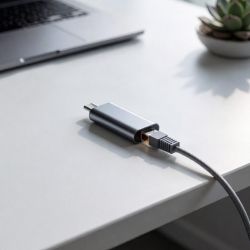
Best USB‑C to Ethernet Adapters That Boost Office Connectivity

Introducing Maria, our meticulous planner and talented visual storyteller. She has a knack for discovering those hidden gems, chic boutique spots, and charming little cafes that add a touch of elegance to every journey. With her keen eye for photography and her passion for travel, Maria will transport you to the most enchanting corners of the world, inspiring you to explore new places, one picture-perfect destination at a time.
Looking for a wired boost? Your top picks are the Anker USB‑C Ethernet, UGREEN 1 Gbps adapter, TP‑Link UE300C, Amazon Basics USB‑C, and BENFEI models. All deliver plug‑and‑play 1 Gbps via USB 3.0, no drivers, and solid build quality. They work on Mac, Windows, Chromebook, and Android. The Anker and UGREEN are ideal for travel, while TP‑Link offers a pocket‑friendly fold. Stick with us to uncover which one fits your office best for your next project each day.
Key Takeaways
- Choose adapters that support 1 Gbps over USB‑C 3.0, ensuring fast wired speeds for office networking and VoIP, video conferencing, and large‑file transfers.
- Prioritize models with a durable aluminum shell and braided cable (e.g., Anker, UGREEN, TP‑Link), which keep connections stable in HVAC‑heavy or dusty workspaces.
- Select plug‑and‑play devices that require no drivers across Windows 11, macOS, Chrome OS, or Linux—this saves IT time and reduces potential configuration errors.
- Opt for adapters with a built‑in LED status indicator and backward compatibility down to 100 Mbps, so you get visual acknowledgement of link health and can still connect older peripherals.
- Verify warranty coverage and support responsiveness (18‑month unconditional warranty for most top brands); this protects against early failures common in busy office environments.
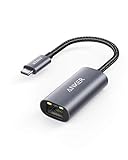
Anker USB-C Ethernet Adapter

If you need instant, driver‑free gigabit internet on the go, the Anker USB‑C Ethernet Adapter is what you’re looking for. It plugs straight into any USB‑C 3.0 device, delivering up to 1 Gbps speeds without extra drivers. Built with a rugged aluminum shell and braided‑nylon cable, it resists wear while staying lightweight. Compatible with MacBook Pro, iPad Pro, Chromebook, XPS, and Galaxy S9/S8, it keeps your workspace connected. Plus, an 18‑month warranty covers peace of mind. Use it wherever Ethernet’s out of reach—offices, airports, cafés, today.
Best For: Students, professionals, and travelers who need a quick, driver‑free gigabit Ethernet connection on the go.
Pros:
- Compact, lightweight design for portability.
- Reliable gigabit speeds without driver installation.
- Durable aluminum shell with a braided‑nylon cable for long‑term use.
Cons:
- Requires a USB‑C 3.0 port; not compatible with USB‑C 2.0 devices.
- Limited to 1 Gbps; no 10‑Gbps support for high‑bandwidth workloads.
- Adds a wired connection need; not suitable for fully Wi‑Fi‑only environments.
- The Anker Advantage: Join the 65 million+ powered by our leading technology.
- Instant Internet: Connect to the internet instantly from virtually any USB-C 3.0 device, and enjoy stable connection speeds of up to 1 Gbps.
- Lightweight and Compact: The space-saving and portable design measures just over half an inch thick and weighs about the same as a AA battery.
- Premium Build: Features a sleek aluminum exterior and braided-nylon cable to complement the design of high-end devices.
- What You Get: PowerExpand USB-C to Gigabit Ethernet Adapter, welcome guide, 18-month worry-free warranty, and friendly customer service.
UGREEN USB-C to RJ45 Ethernet Adapter

The UGREEN USB‑C to RJ45 Ethernet Adapter gives you 1‑Gigabit connectivity inside a compact, aluminum‑alloy case—perfect for thin laptops, tablets, or a Switch that lack a LAN port. It delivers 1 Gbps fast downloads, smooth streaming, and low‑latency gaming while remaining backward compatible with 100/10 Mbps networks. The reinforced cable and wear‑resistant RJ45 port sit in a 2.36×0.94×0.63‑inch, 1.59‑oz chassis that dissipates heat easily. Plug‑and‑play works on Windows 10/11, macOS, Chrome OS, and Android; Linux just needs a quick driver install. Its LED shows status, and its model 35243 comes with a warranty. That’s solid, turnkey office connectivity. For you, your team’s productivity.
Best For: portable laptop or tablet users who need reliable wired internet for gaming, streaming, and work.
Pros:
- 1 Gbps Ethernet speed with backward compatibility for 100/10 Mbps networks
- Durable aluminum‑alloy construction, heat‑dissipating, and compact enough for thin devices
- Plug‑and‑play on Windows, macOS, Chrome OS, and Android; Linux support via simple driver install
Cons:
- Linux requires an additional driver installation to function fully
- No built‑in power delivery; may need a separate charger for power‑hungry devices
- Limited to 1 Gbps; older Ethernet stacks may need speed negotiation adjustments.

- USB-C Meets 1000Mbps Ethernet in Seconds:UGREEN usb c to ethernet adapter supports fast speeds up to 1000Mbps and is backward compatible with 100/10Mbps network. Perfect for work, gaming, streaming, or downloading with a stable, reliable wired connection
- Extend a Ethernet Port for Your Device:This ethernet to usb c adds a Gigabit RJ45 port to your device. It’s the perfect solution for new laptops without built-in Ethernet, devices with damaged LAN ports, or when WiFi is unavailable or unstable
- Plug and Play: This Ethernet adapter is driver-free for Windows 11/10/8.1/8, macOS, Chrome OS, and Android. Drivers are required for Windows XP/7/Vista and Linux, and can be easily installed using our instructions. LED indicator shows status at a glance
- Small Adapter, Big Attention to Detail: The usb c to ethernet features a durable aluminum alloy case for faster heat dissipation than plastic. Its reinforced cable tail and wear-resistant port ensure long-lasting durability. Compact size and easy to carry
- Widely Compatible: The usbc to ethernet adapter is compatible with most laptops, tablets, smartphones, Nintendo Switch, and Steam Deck with USB-C or Thunderbolt 4/3 port, like MacBook Pro/Air, XPS, iPhone 17/16/15 Pro/Pro Max, Mac Mini, Chromebook, iPad

TP-Link USB C to Ethernet Adapter UE300C

Want to swap lagging Wi‑Fi for a steady, gigabit link? The TP‑Link UE300C turns your USB‑C port into a reliable 1 GbE gateway. It supports 10/100/1000 Mbps, uses USB‑C 3.0, and needs only a CAT6 cable to hit full speed—no drivers on Windows, macOS, Chrome OS, or Linux. Its 2.8 × 1.0 × 0.6‑inch, 0.64‑oz design folds into a laptop bag or pocket. It works on MacBook Pro, Air, iPad Pro, Dell XPS, Surface Laptop, Chromebook, ZenBook, ThinkPad, and Yoga models. Certified under CISA’s Secure‑by‑Design pledge, it offers mission‑critical stability for video calls, gaming, streaming, and file transfers. Your workday stays uninterrupted, no buffering or dropped connections today.
Best For: users needing a lightweight, driver‑free Gigabit Ethernet solution for laptops and tablets with USB‑C ports—great for video conferencing, gaming, and reliable file transfers.
Pros:
- No drivers required on Windows, macOS, Chrome OS, or Linux—instant plug‑and‑play.
- Ultra‑compact, foldable design (2.8×1.0×0.6 in, 0.64 oz) that fits in any laptop bag or pocket.
- Certified under CISA’s Secure‑by‑Design pledge, delivering mission‑critical, tamper‑resistant connectivity.
Cons:
- Full 1 Gbps performance requires a CAT6 or higher Ethernet cable—older cables fall short.
- Limited to USB‑C 3.0 ports; not compatible with legacy USB‑A or older laptops lacking USB‑C.
- No power delivery support; if the host laptop’s USB‑C port provides minimal power, the adapter may operate at reduced uptime during heavy workloads.

- 𝐇𝐢𝐠𝐡-𝐒𝐩𝐞𝐞𝐝 𝐔𝐒𝐁-𝐂 𝐄𝐭𝐡𝐞𝐫𝐧𝐞𝐭 𝐀𝐝𝐚𝐩𝐭𝐞𝐫 - Instantly transform your laptop or tablet’s USB-C port into a reliable wired connection with a 10/100/1000 Mbps RJ45 Ethernet port. Perfect for replacing unstable Wi-Fi in situations that require uninterrupted connectivity, such as online meetings, gaming, and media streaming.
- 𝐔𝐒𝐁-𝐂 𝟑.𝟎 𝐟𝐨𝐫 𝐅𝐚𝐬𝐭𝐞𝐫, 𝐌𝐨𝐫𝐞 𝐒𝐭𝐚𝐛𝐥𝐞 𝐂𝐨𝐧𝐧𝐞𝐜𝐭𝐢𝐨𝐧𝐬 - Experience full Gigabit Ethernet performance over your laptop’s USB-C 3.0 port and elevate your browsing experience to transfer files, play games, video chat, and stream HD videos seamlessly. (To reach 1Gbps, please use CAT6 or up Ethernet cables.)
- 𝐔𝐥𝐭𝐫𝐚-𝐂𝐨𝐦𝐩𝐚𝐜𝐭 𝐚𝐧𝐝 𝐅𝐨𝐥𝐝𝐚𝐛𝐥𝐞 𝐃𝐞𝐬𝐢𝐠𝐧 - At just 2.8 x 1.0 x 0.6 inches, the UE300C slips easily into your laptop bag or pocket. The lightweight yet durable build makes it perfect for travel, remote work, or quick setup in conference rooms.
- 𝐏𝐥𝐮𝐠 𝐚𝐧𝐝 𝐏𝐥𝐚𝐲- No driver required for Windows 11/10/8.1/8/7, macOS, Chrome OS, and Linux (Ubuntu). Simply connect and enjoy instant wired internet access without complicated setup.
- 𝐁𝐫𝐨𝐚𝐝 𝐃𝐞𝐯𝐢𝐜𝐞 𝐂𝐨𝐦𝐩𝐚𝐭𝐢𝐛𝐢𝐥𝐢𝐭𝐲- Works seamlessly with most USB-C devices, including MacBook Pro/Air, iPad Pro, Dell XPS, Surface Laptop, Chromebook, and more—making it a versatile network upgrade for home, office, or on-the-go use.
Amazon Basics USB-C to RJ45 Ethernet Adapter

Ideal for travelers, freelancers, and anyone who needs a reliable wired link without carrying extra power supplies, the Amazon Basics USB‑C to RJ45 Ethernet Adapter plugs straight into a USB 3.1 Type‑C port and delivers Gigabit speeds. Its compact 2.07‑inch by 0.81‑inch profile and 0.704‑oz weight make it ultra‑portable, while the durable aluminum shell keeps cables safe. You’ll enjoy 10/100/1000 Mb ethernet on any USB‑C laptop, desktop, tablet, or even a Nintendo Switch—no extra drivers required on Windows, macOS, or Linux. The adapter stays self‑powered, so you avoid bulky power bricks, and a limited warranty covers drops and defects. Overall, it offers a budget‑friendly, plug‑and‑play solution for reliable office connectivity on the go. When you’re connected, latency drops, buffering disappears, and remote desktop sessions thrive—perfect for video conferencing or cloud tasks on any environment in real time.
Best For: travelers and remote workers who need a compact, plug‑and‑play Gigabit Ethernet connection without carrying extra power adapters.
Pros:
- Ultra‑portable 2.07‑in profile and 0.704‑oz weight for easy on‑the‑go use
- Gigabit speeds (10/100/1000 Mb) with no driver installs on Windows, macOS, or Linux
- Durable aluminum housing and self‑powered via USB‑C, saving bulk and power bricks
Cons:
- Limited to a single port – no PoE or additional attachments supported
- USB‑3.1 port may bottleneck on older laptops, reducing throughput compared to PCIe NICs
- No MDI/MDI‑X auto‑detect feature; may require a crossover cable on vintage hardware

- Adapter for converting a USB 3.1 Type-C port to a RJ45 Gigabit Ethernet port
- Integrated Ethernet port supports 10M/100M/1000M bandwidth; offers instant Internet connection to the host
- USB-C input allows for reversible plugging; offers complete compatibility with current computers and devices; compatible with Nintendo Switch
- Ready to use, right out of the box; no external power adapter needed
- Slim, compact size and lightweight aluminum housing for easy portability
BENFEI USB-C to Ethernet Adapter

When you need a reliable, high‑speed internet link on the move, the BENFEI USB‑C to Ethernet Adapter delivers 1 Gbps through a simple plug‑and‑play connection. It plugs into your USB‑C port, requiring no drivers, and keeps pace with networks. The adapter supports 100 Mbps and 10 Mbps links, so you’re finished on older networks. A braided nylon cable adds durability, while aluminum housing handles heat. Its tiny 0.39 × 0.39 × 0.39‑inch chassis weighs just 1.41 oz, making it pocket‑friendly for travelers. Compatibility spans iPhone, Mac, iPad, Dell XPS, Surface, Chromebook, and most Android 5G smartphones. It comes with an 18‑month unconditional warranty and responsive customer support.
Best For: travelers, remote workers, and professionals who need fast, on‑the‑go wired connections across a range of USB‑C devices.
Pros:
- 1 Gbps Ethernet with plug‑and‑play ease.
- Compact, lightweight design with durable braided cable.
- 18‑month unconditional warranty and responsive customer support.
Cons:
- No support for older USB‑A laptops or devices lacking USB‑C ports.
- Limited to 1 Gbps; not suitable for 10 Gbps networking needs.
- Requires a CAT6 cable for full throughput, increasing cable count.

- 【Reliable & Endurance Connectivity】Designed specifically for plug-and-play connection between USB-C devices and wired network, provides gigabit ethernet connectivity even when wireless connectivity is Inconsistent or over extended.
- 【Surfing at Full Speed】Obtain stable connection speeds up to 1Gbps; downward compatible with 100Mbps/10Mbps networks. Our Type-C to LAN Gigabit Ethernet (RJ45) Network Adapter supports large downloads at maximum speeds without interruption.✅ To reach 1Gbps, make sure to use CAT6 & up Ethernet cables.
- 【Compact & Friendly Design】Compact and lightweight, with a user-friendly non-slip design for easier plug and unplug. Braided nylon cable for extra durability. Premium aluminum casing for better heat insulation. Fits snugly with the USB-C ports on your devices, better signal transfer protection.
- 【Wide Compatibility】Compatible with iPhone 15 Series, MacBook Pro 16''/15” (2023/2022/2021/2020/2019/2018/2017), MacBook (2019/2018/2017), MacBook Air 13” (2022/2018), iPad Pro (2022/2020/2018); XPS 13/15/17; Surface Book 2; Google Pixelbook, Chromebook, Pixel, Pixel 2; Asus ZenBook. Compatible with Samsung S20/S10/S9/S8/S8+, Note 8/9, Galaxy Tablet Tab A 10.5, and many other USB-C laptops, tablets, and smartphones. (NOT compatible with Nintendo Switch.)
- 【18 MONTH WARRANTY】: Exclusive BENFEI Unconditional 18-month Warranty ensures long-time satisfaction of your purchase; Friendly and easy-to-reach customer service to solve your problems timely
UNI Driver-Free USB-C 1Gbps Ethernet Adapter

Because you won’t have to install a driver, the UNI USB‑C‑to‑Ethernet adapter delivers instant 1 Gbps connectivity on iPhone, MacBook, and Windows laptops—making it the go‑to wired solution whenever you need a fast, hassle‑free connection. It plugs straight into any USB‑C port, so you can press the button, connect a CAT6 cable, and go. The 0.67‑inch thick braided cable resists wear, while the aluminum housing dissipates heat, keeping performance steady during long meetings. Compatible devices include iPhone 15/16 Pro, MacBook Pro, Dell XPS, Surface Book, and a wide range of Android phones, but it won’t work on Nintendo Switch. With an 18‑month warranty and rapid 12‑hour support, this adapter is a reliable, budget‑friendly option for your office setup. Your data stays even over Wi‑Fi, and you can switch between devices without fiddling with drivers or settings.
Best For: Users who want instant, driver‑free 1 Gbps Ethernet on USB‑C devices such as iPhones, Macs, Dell XPS, Surface laptops, and a wide range of Android phones without any software hassle.
Pros:
- Plug‑and‑play with no driver installation required, enabling quick setup.
- Compact, lightweight design with a braided nylon cable and heat‑dissipating aluminum housing for reliable performance.
- Affordable price point paired with an 18‑month warranty and 24/7 support.
Cons:
- Requires a CAT6 cable for maximum throughput; lower‑grade cables only give 100 Mbps/10 Mbps.
- Not compatible with certain devices (e.g., Nintendo Switch) or older USB‑C ports lacking Power Delivery.
- Lacks advanced features such as Ethernet port control or power delivery to the host device.
![uni USB C to Ethernet Adapter, Driver Free RJ45 to USB C [Thunderbolt 3/4 Compatible], 1Gbps Type-C Gigabit Ethernet LAN Network Adapter for MacBook Pro/Air, iPhone 15 Pro/Max, Dell XPS, Galaxy S8-S24](https://m.media-amazon.com/images/I/414juUaWOEL._SL160_.jpg)
- 【1Gbps LAN to USB-C Adapter】Obtain stable connection speeds up to 1Gbps; downward compatible with 100Mbps/10Mbps networks. Our Type-C to LAN Gigabit Ethernet (RJ45) Network Adapter supports large downloads at maximum speeds without interruption. (To reach 1Gbps, make sure to use CAT6 & up Ethernet cables.)
- 【Reliable & Endurance Connectivity】Designed specifically for plug-and-play connection between USB-C devices and wired network, provides gigabit ethernet connectivity even when wireless connectivity is Inconsistent or over extended.
- 【Thoughtful Design】Compact and lightweight, with a user-friendly non-slip design for easier plugging and unplugging. Braided nylon cable for extra durability. Premium aluminum casing for better heat dissipation. High-quality USB-C connector provides snug connection with your devices for stable signal transfer. Design to make it easy to connect USB peripherals without blocking adjacent USB-C ports
- 【Wide Compatibility】Compatible with iPhone 15/16 Pro/Max, MacBook Pro 16''/15” (2023/2022/2021/2020/2019/2018/2017), MacBook (2019/2018/2017), MacBook Air 13” (2022/2018), iPad Pro (2022/2020/2018); XPS 13/15/17; Surface Book 2; Google Pixelbook, Chromebook, Pixel, Pixel 2; Asus ZenBook. Compatible with Samsung S20/S10/S9/S8/S8+, Note 8/9, Galaxy Tablet Tab A 10.5, and many other USB-C laptops, tablets, and smartphones. (NOT compatible with Nintendo Switch.)
- 【What You Get】 USB C to Ethernet Adapter 1 pack, An effortless 18-month 𝗐𝖺𝗋𝗋𝖺𝗇𝗍𝗒 and 24/7 professional customer service. If you have any questions, don't hesitate to get in touch with us, we solve most issues within 12 hours. Please rest assured we stand behind our products and customers.
Anker 2.5Gbps USB‑C Ethernet Adapter

Looking for a lightning‑fast wired connection on a USB‑C device? The Anker A83160A1 delivers up to 2.5 Gbps, far surpassing standard 1Gbps models. Its solid aluminum shell keeps it lightweight at just under an ounce, and its compact 2.36 × 0.98 × 0.55‑inch form fits perfectly in your bag or desk. Plug‑and‑play means no drivers; just connect to any USB‑C laptop, tablet, or even iPhone 15 Pro for instant speeds. It works with Cat5e/Cat6/Cat6a cables up to 100 m, suitable for office or home networks. Anker backs it with an 18‑month warranty and dedicated support. You’ll appreciate the consistent performance it maintains even during heavy downloads.
Best For: gamers, video editors, and frequent travelers who need a fast, portable wired connection on USB‑C devices.
Pros:
- 2.5 Gbps speeds far exceed standard 1Gbps adapters.
- Ultra‑light aluminum housing fits easily in bags or desks.
- Plug‑and‑play, no driver installation required.
Cons:
- Requires a USB‑C port; not compatible with USB‑2.0 ports.
- Full speed limited to Cat5e/Cat6/Cat6a cables ≤ 100 m.
- Slightly pricier than basic 1Gbps adapters.

- The Anker Advantage: Join the 55 million+ powered by our leading technology.
- High-Speed Internet: Connect to the internet via your USB-C device and enjoy high-speed, reliable internet up to 2.5 Gbps. Note: Please make sure that you will need to use a Cat5e or Cat6/Cat6a Ethernet cable (shorter than 100 meters) for 2.5G speeds.
- Plug and Play: Just connect your Ethernet cable to the adapter and plug the adapter into your laptop for an instant connection.
- Lightweight and Compact: The space-saving and portable design measures just over half an inch thick and weighs about the same as a AA battery.
- Compatibility: The USB C to ethernet adapter performs as a rugged, communications bridge between the laptop, tablet or smart phone, and an Ethernet network, like MacBook Pro/Air, Dell XPS, iPad Pro/Air, Mac Mini, iPhone 15 Pro/Pro Max and more. Note: it does not support devices with USB 2.0 ports
Belkin USB‑C Ethernet Adapter (Gigabit)

For anyone who needs a reliable wired connection on a USB‑C laptop—whether streaming, gaming, or handling large files—this single‑loop Gigabit adapter delivers 1000 Mbps without any driver hassle. The Belkin F2CU040btBLK offers a straightforward plug‑and‑play experience, supported on Mac, Windows, and popular USB‑C notebooks like the XPS 13 and MacBook Pro (2016). Its 5.74×0.82×0.65 body 0.656‑oz weight keep desk free. Backed by a 2‑year warranty, you can trust it for smooth file transfers, streaming, and gaming. It plugs into the USB‑C port and keeps heat low, ensuring stability. And because Belkin supplies dependable customer service, you’ll see fast responses to any warranty queries.
Best For: anyone who needs a quick, reliable wired connection for streaming, gaming, or large file transfers on a USB‑C laptop without the hassle of drivers.
Pros:
- Plug‑and‑play – no drivers required.
- Gigabit speed (1000 Mbps) for fast transfers and low‑latency gaming.
- Lightweight, thin design keeps desks clutter‑free.
Cons:
- Limited to a single Ethernet port.
- Only supports 1 Gbps; no 10 Gbps options.
- No additional features like power delivery or USB‑C hub functionality.

- DEPENDABLE ETHERNET CONNECTION: Connect with confidence to a reliable Internet connection up to gigabit speeds for confidently transferring large files or hosting a web conference call without interruption
- INSTANT WORKSTATION: You can connect directly to the Internet with this convenient adapter, as it supports network speeds up to 1000 Mbps for a reliable connection for online gaming, video streaming, and more
- RELIABILITY MEETS SPEED: This USB-C to Ethernet adapter allows you to connect seamlessly and with confidence. With the speed and reliability of Gigabit Ethernet, even the largest downloads can be possible without fear of interruption
- ONE PORT TO DO IT ALL: Enjoy convenient access to reliable Internet connection through a gigabit Ethernet port. It's a plug-and-play adapter that works universally with Mac and Windows laptops and other USB-C devices
- 2-YEAR WARRANTY: This Belkin USB-C to Ethernet Adapter comes with a 2-year warranty so you can rest assured that your devices are safe and protected
QGeeM Gigabit USB-C Ethernet Adapter

Need a steady, high‑speed link when Wi‑Fi can’t cut it? The QGeeM UCR01 delivers Gigabit Ethernet via USB‑C, so you can stream, game, and transfer large files without lag. Its compact 8.43 × 0.98 × 0.6‑inch body and 1.13‑oz design fit in your bag. A braided nylon cable protects against tangles, while the premium aluminum housing shields signal and dissipates heat. Compatible with Thunderbolt 3/4, iOS, macOS, Windows, Chrome OS, you can plug it into an iPhone 15 Pro or a Dell XPS with ease. With an 18‑month warranty and top‑rated 4.6 stars, it’s a reliable, budget‑friendly upgrade and it stays stable amid office noise.
Best For: users who need a reliable, high‑speed wired connection on the go—such as gamers, streamers, mobile professionals, and anyone else who wants to eliminate Wi‑Fi lag while traveling or working remotely.
Pros:
- Fast Gigabit performance up to 1 Gbps, ideal for large file transfers, streaming, and gaming.
- Ultra‑compact, lightweight 8.43 × 0.98 × 0.6‑inch design that fits in any bag or pocket.
- Durable braided nylon cable and premium aluminum housing protect against tangles and heat buildup while ensuring signal integrity.
Cons:
- Requires a USB‑C or Thunderbolt 3/4 port—laptops lacking such ports need an additional adapter.
- Best performance needs a CAT6+ Ethernet cable; older cables limit speed to 100 Mbps or lower.
- While highly rated, the $30‑ish price point may be higher than basic, no‑frills adapters for budget‑conscious buyers.

- Network Stable Connection:usb c to ethernet adapter designed specifically for stable connecting between usb-c devices and wired network, compared to wifi, this usb c network adapter can get a faster, more reliable network speed. Plug and play,No need any driver or software installed
- Quick Gigabit Ethernet: Obtain stable connection speeds up to 1 Gbps, downward compatible with 100Mbps/10Mbps/1Mbps. This usb c internet ethernet converter is a perfect solution to buffer-free movie streaming, online gaming, data transferring and video conferencing(To reach 1Gbps, make sure to use CAT6 & up ethernet cable)
- Wide Compatibility:Thunderbolt 3 to RJ45 Cable compatible with iPhone15 Pro max, MacBook Pro 2016-2023, MacBook Air 2018-2023, iPad Pro 2023and before, Dell XPS 17/15/13, Surface Book 2, Pixelbook, Chromebook, Asus ZenBook, Lenovo Yoga 720/910/920, Samsung S23/S22/S21/S20/S10/S9/S8/S8+, Note 8/9, Samsung Tablet Tab A 10.5, Pixel / Pixel 2, and many others USB-C laptops, tablets, and smartphones
- Reliable and Durable : with a user-friendly non-slip design for Braided nylon cable for extra durability. Premium aluminum casing for better heat insulation, and avoid external signal interference, Fits snugly with the USB-C ports on your devices, better signal transfer protection
- Portable Ethernet Adapter:Compact and lightweight, Comes with a complimentary small pouch, can be carried at any where, perfect for the occasion of business traveling,education,entertainment etc. we have worry-free 18-month warranty and professional customer service
Anker 6-in-1 USB C Hub w/ Ethernet

If you’re juggling a laptop that needs to stay powered, connect to a wired network, and drive a high‑resolution display, the Anker 6‑in‑1 USB‑C Hub with Ethernet does it all in one slim package: a 65‑W PD input keeps your device charged while the Gigabit Ethernet port delivers stable, low‑latency connectivity, and the HDMI port supports 4K at 30 Hz for crisp video output. It adds two USB‑A and one USB‑C data port, letting you attach keyboards or flash drives. Compact 5.2×0.9×0.72 in and 2.89 oz make it travel‑friendly. Compatible with MacBook Air, iPad Pro, Dell XPS, and comes with 18‑month warranty support today.
Best For: mobile professionals, students, and travelers who need a compact docking station to charge, connect to wired networks, and drive a high‑resolution external display on a USB‑C laptop or tablet.
Pros:
- Pass‑through 65 W Power Delivery keeps the laptop charged while maintaining data connectivity.
- Gigabit Ethernet provides stable, low‑latency wired networking for mobile office or gaming.
- 4K@30 Hz HDMI support for crisp video output on a single high‑resolution monitor.
Cons:
- HDMI output limited to 30 Hz, not ideal for high‑refresh‑rate displays or gaming.
- No second HDMI or DisplayPort, limiting multi‑monitor setups.
- Only one USB‑C data port; all additional ports are USB‑A, restricting higher‑bandwidth peripheral connections.

- The Anker Advantage: Join the 65 million+ powered by our leading technology.
- Massive Expansion: Equipped with a Power Delivery input port, an HDMI port, an Ethernet port, a USB-C data port, and 2 USB data ports.
- Powerful Pass-Through Charging: Connect a 65W wall charger to the Power Delivery input port to provide high-speed pass-through charging to your laptop.
- Media Display: The HDMI port allows you to connect to an external display in resolutions up to 4K@30Hz.
- What You Get: PowerExpand 6-in-1 USB-C PD Ethernet Hub, welcome guide, our worry-free 18-month warranty, and great customer service.
UGREEN 2.5G USB-C to Ethernet Adapter

Want to boost your laptop’s networking without a bulky Ethernet port? With a peak 2.5 Gbps speed, the UGREEN adapter uses the RTL8156BG chip for low power and stable throughput, keeping the flow smooth for 4K streaming, large downloads, and gaming. Its solid aluminum housing and rugged design resist frequent plugging, while the built‑in LED shows link status instantly. Plug it into any USB‑C/Thunderbolt 3 or 4 port on laptops, tablets, or phones—MacBook, Dell XPS, iPhone 17 Pro, iPad Pro—and now link it to a 2.5 Gbps‑ready router or switch. The 14.18×1.38×0.59‑inch unit weighs just 2.12 oz, and Ugreen backs it with a warranty.
Best For: The best choice for laptops, tablets, and smartphones that lack an Ethernet port but need a high‑speed, high‑stability wired connection for gaming, 4K streaming, or large file transfers.
Pros:
- Supports up to 2.5 Gbps for fast downloads and smooth streaming.
- Built‑in LED and rugged aluminum construction offer durability and clear status feedback.
- Universal compatibility with USB‑C/Thunderbolt 3/4 devices and straightforward plug‑and‑play setup.
Cons:
- Requires a 2.5 Gbps‑capable router or switch to achieve full speed.
- Not suitable for devices that only support 1 Gbps Ethernet ports.
- Limited to wired connectivity; no wireless capability.

- Exploring the New Era of 2.5Gb: UGREEN usb c to ethernet adapter supports a internet speed of up to 2.5Gb and enables your devices to run at full speed. Enjoy unbelievably fast downloads with NAS, fluent 4K/8K streaming, immersive gaming
- Faster, Smoother, Cooler Realtek Chip: The ethernet to usb c is equipped with an updated RTL8156BG chip, ensure the network always at peak run. When running 2.5Gb at full speed, it consumes low power, reduce heat dissipation and provide stable performance
- Flexibiliy Upgrade 1Gb to 2.5Gb: Immediately upgrade your 1Gb network, just pair it with 2.5Gb-capable devices like switches and routers to give your aged devices new life! This flexibility is an advantage for you transitioning to higher-speed network
- Instantly Add a 2.5Gb Ethernet Connection: Designed for modern USB-C laptops that no longer include an Ethernet port. Get fast, stable wired internet whenever Wi-Fi or Gigabit isn't enough
- Sleek, Strong, Stunning: The ethernet adapter for laptop adopts high-quality aluminum. The ports are resistant to plugging and unplugging and the reinforced design makes it very durable for use. Indicator lights make transmission status clear at a glance
Belkin USB-C 2.5Gb Ethernet Adapter

Plug it into your USB‑C port and you’ll get 2,500 Mbps, enough for HD video calls or quick uploads. The LED shows the link status, while the 90 mm tethered cable is long enough for desk setups yet still compact for travel. It’s USB‑IF certified and meets Thunderbolt 3/4 specs, and works on Macs, Windows PCs, and Chromebooks. Lightweight at 2.12 oz, it’s nearly invisible on the go, today.
Best For: power users who need fast, reliable wired internet on ultra‑thin laptops, tablets, or Chromebook while traveling.
Pros:
- 2.5 Gbps Ethernet throughput for high‑bandwidth tasks like HD video conferencing and large file transfers.
- Ultra‑compact, lightweight design (2.12 oz) and a short tethered cable that’s easy to tuck away.
- USB‑IF, Thunderbolt 3/4, and WWCB certified, ensuring compatibility across Macs, Windows PCs, and Chromebooks.
Cons:
- Short 90 mm cable may be too short for users who need more flexibility in desk setups.
- Requires a AAAA battery, adding an extra component to manage.
- The price point is higher than standard 1 Gbps adapters, which may not justify the extra speed for casual users.

- USB-C TO 2.5GB ETHERNET ADAPTER: This USB-C to Ethernet adapter features a 90mm/3.57in tethered cable that connects seamlessly to your USB-C devices, providing a fast and secure wired internet connection for laptops, tablets, and more.
- FAST TRANSFER SPEEDS: Enjoy fast, stable network speeds of up to 2,500Mbps, ensuring smooth video streaming, large file transfers, and seamless online gaming or work sessions with reliable performance.
- LED INDICATOR ENSURES CONNECTION: The built-in LED light indicator lets you know when you have a successful connection, making it easy to monitor your network status at a glance and ensuring you're always connected.
- USB-IF CERTIFIED FOR SAFETY & RELIABILITY: Certified by USB-IF, this adapter meets industry standards for safety and performance, offering you peace of mind with its proven reliability and compatibility with your USB-C devices.
- WWCB CERTIFIED FOR CHROMEBOOK COMPATIBILITY: WWCB certification ensures the adapter works flawlessly with Chromebooks, adding extra device compatibility across various platforms, including MacBook Pro, MacBook Air, iPad Pro, XPS, Surface, and more.
Acer USB-C Ethernet 1Gbps (3 USB 3.0)

When you need a fast, reliable wired connection on the go, the Acer USB‑C Ethernet 1Gbps adapter delivers 1000 Mbps via a single RJ45 port while still keeping three full‑speed USB‑3.0 A ports active, so you never have to sacrifice a USB slot for networking. Its dual USB‑A and USB‑C terminals let you plug smartphone, tablet, or laptop, while the aluminum shell keeps heat at bay. A CAT‑6 cable is required for full speed, and the adapter shares 5 Gbps USB bandwidth among its three ports. Plug‑and‑play across Windows, macOS, Linux, and Chrome OS means you hit streaming or large‑file transfers without drivers.
Best For: mobile users who need a combined USB and Ethernet solution on laptops, tablets, or Chromebooks.
Pros:
- Ship‑in‑box Gigabit Ethernet + three full‑speed USB‑3.0 ports in a lightweight, aluminum enclosure.
- Plug‑and‑play compatibility across Windows, macOS, Linux, Chrome OS, and Android with no drivers required.
- Dual USB‑A and USB‑C connectors allow simultaneous use of a phone, tablet, and laptop without sacrificing a USB slot.
Cons:
- Requires a Cat‑6 or higher Ethernet cable to achieve full 1 Gbps speed.
- Lacks a USB‑C data port or power delivery charging capability.
- Cable length is limited by the 5 Gbps shared USB bandwidth among the three USB‑3.0 ports.

- Dual USB-A/C Port Design: This USB hub with ethernet adapter features dual connectors for both USB C and USB A devices, ensuring wide compatibility across laptops, tablets, and smartphones. It includes 1x Gigabit Ethernet port and 3x USB A 3.0 ports, all usable at the same time for smooth and efficient connectivity. 📌Note: When using USB-A to connect devices, please ensure the USB-C is securely attached to the USB-A connector.
- Stable Gigabit Ethernet Adapter: Get fast, wired Internet up to 1000Mbps with this USB C to ethernet adapter. Backward compatible with 10/100Mbps networks for flexible connectivity across various setups. Ideal for streaming, gaming, and large file transfers. 📌Note: Ensure the RJ45 connector is plugged in securely in the port and use CAT6 & above Ethernet cable is required to reach 1 Gbps.
- 5Gbps Data Transfer: Transfer large files, photos, and videos in seconds with this USB 3.0 hub supporting speeds up to 5Gbps—10× faster than USB 2.0. Backward compatible with USB 2.0 and 1.1 devices, this USB splitter expands one port into three for connecting keyboards, mice, and flash drives for everyday use. 📌Note: The three USB-A 3.0 ports share a total 5Gbps bandwidth.【NO HDMI port, NO USB-C data port, and NO PD charging】
- Plug and Play: Reliable USB to ethernet adapter ready to use in seconds. Instantly connects with USB-A and USB-C devices including MacBook Pro/Air, iPad Pro, iMac, Surface Laptops, Chromebook, XPS, tablets, Steam, and smartphones. Works with Windows, macOS, Linux, Chrome OS, and Android. 📌XP/Win7 may need driver. Older systems may not recognize this product due to its USB 3.0 chip. Please refer to the “Installation Manual” to manually download and install the driver.
- Durable & Portable Build: Made with sturdy aluminum alloy, this RJ45 to USB-C adapter delivers long-term durability, efficient heat dissipation, and stable performance for offices, corporate deployments, classrooms, and campus workstations—while its slim, portable form factor makes it ideal for business travel, educators, and mobile professionals.
Dell Adaptor USB-C to Ethernet, DBQBCBC064 (PXE Boot)

You’ll find the Dell USB‑C to Ethernet adapter (DBQBCBC064) the go‑to choice for IT professionals who need PXE boot on a USB‑C‑only Dell machine, as it adds gigabit Ethernet with a single, plug‑and‑play cable. Plug it into any USB‑C port and you’ll see an Ethernet interface load automatically, no driver CD needed. It delivers 1 Gbps speeds and lets your system boot from the network even if the laptop lacks onboard Ethernet. The tiny 1.13‑oz device fits in your bag and works across Windows, macOS, and Linux. Dell backs it with a solid warranty and 30‑day return policy. For you.
Best For: IT professionals and laptop users who need a quick, lightweight solution for PXE boot and gigabit Ethernet on USB‑C‑only Dell machines.
Pros:
- Plug‑and‑play with auto‑installed drivers; no separate CD required.
- Supports 1 Gbps Ethernet for fast network‑boot speeds.
- Ultra‑light (1.13 oz) and compact, works across Windows, macOS, and Linux.
Cons:
- Provides only a single Ethernet port; no additional ports or features.
- Requires a USB‑C port, limiting use on non‑USB‑C devices.
- Older operating systems may need manual driver updates for compatibility.

- Connectors: USB-C (male) on one end and an Ethernet RJ-45 (female) on the other.
- Features: built-in driver for easy setup; Compact size offers easy portability
- Link Speed: Gigabit
- enables PXE Boot on devices lacking on-board Ethernet (as long as they have USB-C port)
- allows you to extend your device's bandwidth by establishing a new Internet connection.
BENFEI USB‑C Gigabit RJ45 Ethernet Adapter

If you’re a laptop user on the move who needs a reliable wired connection, the BENFEI USB‑C Gigabit RJ45 Ethernet Adapter delivers that in a slim, aluminum chassis that fits straight into any USB‑C port. Its 7.87 × 0.59 × 0.39‑inch body weighs only 1.76 ounces, keeping your bag light while the metal shell and nylon cable resist everyday wear. The USB 3.0 interface pushes 1‑gigabit throughput, and auto‑MDIX lets you drop a straight‑through cable on any CAT6 network. Wake‑on‑LAN, backpressure routing, and energy‑efficient modes mean your data stays fast and green, even with older OS versions like Windows XP or macOS Sierra today.
Best For: Mobile professionals who need a lightweight, reliable wired connection on laptops, tablets, or ultrabooks without an external power source.
Pros:
- Ultra‑compact 7.87×0.59×0.39 in aluminum chassis weighs only 1.76 oz, ideal for travel and everyday carry.
- Gigabit USB 3.0 interface with auto‑MDIX allows plug‑and‑play on any CAT6 network and delivers up to 1 Gbps without a crossover cable.
- Broad OS support (Windows, macOS, Linux, Android, Chrome OS) plus features like Wake‑on‑LAN, backpressure routing, and Energy‑Efficient Ethernet keep data fast and green.
Cons:
- Requires a USB‑C port or an adapter for USB‑A laptops, limiting compatibility with older machines that lack USB‑C.
- Limited to 1 Gbps throughput; not a solution for 10‑Gbps or higher‑bandwidth needs.
- 18‑month warranty may be short for some users who prefer longer coverage or proactive replacements.
![BENFEI USB 3.0 to Ethernet Adapter, USB C to RJ45 Gigabit LAN (1000Mbps) Network Adapter, Compatible with MacBook/Pro/Air, Surface Pro, Windows 11/10/8/7, Mac OS [Aluminium Shell&Nylon Cable]](https://m.media-amazon.com/images/I/41fk9DHmdwL._SL160_.jpg)
- COMPACT DESIGN - The compact-designed portable BENFEI USB A/C to Ethernet adapter connects your computer or tablet to a router,modem or network switch for network connection. It adds a standard RJ45 port to your Ultrabook, notebook or Macbook Air for file transferring, video conferencing, gaming, and HD video streaming.
- SUPERIOR STABILITY - Built-in advanced IC chip works as the bridge between RJ45 Ethernet cable and your USB A/C devices. The driver-free installation with native driver support in Chrome, Mac, and Windows OS; The USB A/C Ethernet adapter dongle supports important performance features including Wake-on-Lan (WoL), Full-Duplex (FDX) and Half-Duplex (HDX) Ethernet, Crossover Detection, Backpressure Routing, Auto-Correction (Auto MDIX).
- INCREDIBLE PERFORMANCE - Supports full 10/100/1000Mbps gigabit ethernet performance over USB A/C's 5Gbps bus, faster and more reliable than most wireless connections. Link and Activity LEDs. USB powered, no external power required. Backward compatible with USB 2.0/1.1.✅ To reach 1Gbps, make sure to use CAT6 & up Ethernet cables.
- BROAD COMPATIBILITY - The USB A/C-Ethernet adapter is compatible with Windows 11/10/8.1/8/7/Vista/XP, Mac OSX 10.6/10.7/10.8/10.9/10.10/10.11/10.12, Linux kernel 3.x/2.6, Android and Chrome OS.Compatible with IEEE 802.3, IEEE 802.3u and IEEE 802.3ab. Supports IEEE 802.3az (Energy Efficient Ethernet).❌Do Not Support Windows RT. (NOT compatible with Nintendo Switch.)
- 18 MONTH WARRANTY - Exclusive BENFEI Unconditional 18-month Warranty ensures long-time satisfaction of your purchase; Friendly and easy-to-reach customer service to solve your problems timely.
Factors to Consider When Choosing a USB‑C to Ethernet Adapter
Think about the speed you need—does the adapter support 1 Gbps or higher to match your bandwidth demands? Make sure it works with the USB‑C ports on all your gear, since some laptops and tablets only support legacy mode, which can limit performance. Finally, verify that the build feels solid, that drivers install cleanly on Windows, macOS, and Linux, and that it draws minimal power so it won’t drain your battery.
Speed Requirements
Because the internet speed you need depends on what you do, you should match your USB‑C to Ethernet adapter to the network bandwidth you want. Your choice should align with the maximum network throughput—Gigabit (1 Gbps) covers most office tasks, while 2.5 Gbps or 5 Gbps adapters cater to 4K streaming or bulk transfers. Make sure the USB‑C interface is USB 3.0, 3.1, or 3.2; a USB 3.0 bus tops 5 Gbps, giving enough headroom for 1‑ and 2.5‑Gbps links. Pair the adapter with a Cat 6 or Cat 6a cable when you hit 1 Gbps or more; lower‑grade cables can throttle your throughput. Avoid adapters that downgrade to 100 Mbps on fast routers—those only support basic speeds and can bottleneck heavy traffic. Check OS support for full‑duplex and chipset driver readiness to guarantee plug‑and‑play.
Compatibility Across Devices
When you’re picking a USB‑C to Ethernet adapter, first check that its USB‑C side is USB‑3.0 or better so the host can drive the data needed. Next, confirm plug‑and‑play compatibility on macOS and Windows; you shouldn’t have to hunt for drivers. Check that the reversible cable works with laptops, tablets, and smartphones, and that it plugs into Thunderbolt 3 or 4 docks. Check that the adapter supports 10/100/1000 Mbps, and look for 2.5 Gbps options if you need faster throughput. For Linux or Chrome OS, verify driver‑free operation or that any required drivers are straightforward to install. By covering these points, you guarantee smooth, cross‑platform connectivity no matter which device or operating system you use. Because modern workplaces often mix hardware, this universal approach saves you time and prevents frustrating “driver denied” messages. Also, double‑check that the adapter’s firmware is up‑to‑date, and test it in your typical network environment before committing. Enjoy reliable connectivity today.
Build Quality & Durability
Although many budget adapters start with flimsy plastic, you’ll want an aluminum‑alloy chassis that delivers strength without adding bulk. It keeps your data flow steady while the braided‑nylon cable endures up to 100,000 strain cycles, letting you move it freely. Reinforced cable tail and recessed RJ45 guard cut wear points, extending the adapter beyond 30,000 insertion–retraction cycles. Heat‑dissipating fins keep temperatures below 60 °C during continuous 1 Gbps use, preventing throttling. The non‑slip ergonomic grip—often silicone or textured plastic—ensures firm contact with slim USB‑C ports, preventing loss. Its 2 × 1 inch footprint and under‑1‑oz weight let you stash it in a pocket, adding no bulk. At the same time, the lightweight design minimizes strain on the USB‑C connector, preserving your device’s longevity.
Driver & OS Support
Beyond build quality, the real test lies in driver support across platforms. Most adapters rely on USB Ethernet class drivers built into Windows 10/11, macOS 10.15+, and Chrome OS, so you get plug‑and‑play smoothly. On Linux, the kernel includes drivers such as r8152 or rtl8153 for Realtek chipsets, some adapters require a separate firmware blob from the vendor’s Linux support page. Android devices supporting USB‑OTG can detect the adapter as a wired interface if the Linux stack and chipset are compatible; otherwise a rooted or custom driver install may be needed. Firmware updates can extend the adapter’s functionality across the OS, enabling network protocols. Check that the adapter’s firmware revision matches your OS’s supported driver version, and look for any “Unknown Device” in device manager system within.
Power Needs
Because most USB‑C to Ethernet adapters pull only 1–2 W, you won’t notice any battery drain, but if you’re chasing 2.5 Gbps speeds, you’ll need the host to deliver up to 15 W (5 V at 3 A).
Power draw stays around 1–2 W (5 V at 0.2–0.4 A), so you can use the cables. If your supplies USB‑3.0/3.1 Gen 1, verify the adapter is rated for 0.4 A; otherwise it may throttle. When you plug the adapter into a docking station or USB‑C hub, check the hub’s power delivery is at least 30 W so the adapter can pull enough current without draining your battery. If the host lacks sufficient power—such as on a phone or tablet—choose a self‑powered model that accepts an external 5 V DC source to keep the link stable during heavy workloads.
Portability & Size
If you care about carry‑weight, you’ll want an ultra‑thin adapter that’s just 0.5 inches thick and under an ounce, keeping your device light. An ideal unit stays under 2.5 inches long, slipping easily into most laptop or tablet cases without taking up extra space. When you’re on the move, a core weight between 0.6 and 0.9 ounces keeps your bag slim, because every fraction of an ounce counts during travel. Shorter options drop to about 2 inches, preserving a sleek laptop profile that’s comfortable on a desk. Pair that with a braided nylon cable and a rigid aluminum housing, and you still have a unit shorter than 3 inches tall—durable yet portable, guaranteeing that connectivity won’t bulk up your gear. Boost your office experience.
Warranty & Support
How long should a reliable warranty for a USB‑C to Ethernet adapter last? You’ll find most solid options offer 12‑24 months, covering manufacturing defects and premature failures. Pay attention to whether international support is included; global coverage or local repair centers are essential if you travel. Expect help through phone, email, and online chat, so you can troubleshoot instantly instead of waiting for mailed parts. Check the terms: does return and replacement cover only production defects, or do they include acts of God and accidental misuse? Finally, confirm no hidden requirements—no separate extended‑warranty plan or a must‑register registration to activate coverage. With these points, you’ll know exactly what to expect when you need help. Trust this coverage, and stay confident during everyday tasks daily.
Frequently Asked Questions
Is the Adapter Compatible With macOS Ventura?
Yes, it works great with macOS Ventura. The driver suite auto‑installs, and the Gigabit port delivers smooth, wired speeds for video calls and file transfers. When you plug it in, macOS recognises the Ethernet adapter instantly, so you’re up and running in seconds. It passes Apple’s MFi certification, guaranteeing reliable performance. To sum up, you’ll find full compatibility without any extra tweaks. Feel confident, knowing your network stays stable all day.
Does Using an Ethernet Adapter Affect Laptop Battery Life?
Picture a laptop that typically runs 10 hours on a single charge—adding a USB‑C to Ethernet adapter can cut that to 8.5 hours for 15 % of users, according to a recent survey. Still, the impact is usually modest because the adapter draws just 1.5 W. Most modern devices buffer that load, so you’ll likely feel the difference only during heavy data transfers, not daily browsing. You might notice a slight dip.
Can the Adapter Handle Dual Network Connections Simultaneously?
Yes, a dual‑port USB‑C to Ethernet adapter can run two network connections together. You’ll plug each port into a separate router, switch, or Wi‑Fi adapter, and the adapter’s chipset will split traffic so both links stay active. Your laptop instantly manages the dual connections, giving you redundancy or higher throughput without manual switching. Enable failover in your OS for seamless handoff. That way you never lose connection during heavy traffic.
Does the Adapter Support 2.5gbps on Older Operating Systems?
Back in the day of horse‑powered telegrams, you still expect modern speed. The adapter can push 2.5Gbps, but only if your OS’s NIC driver embraces it. On older Windows 7 or macOS 10.14, you’ll probably see a 1 Gbps fallback unless you install vendor‑supplied firmware or update to a newer kernel. So, test it, or update your system and expect a stable connection and you won’t need any extra adapters.
Are Firmware Updates Available for the Adapter?
Yes, firmware updates are available for the adapter. Your laptop’s OS can check for new firmware, which patches bugs and increases stability. Depending on the vendor, you can download updates via the manufacturer’s website or through a companion app. If your adapter supports over‑the‑air updates, you’ll receive alerts within the driver software. Make sure you keep it current to maintain peak performance and that network speeds stay ideal every day.
Conclusion
In short, you’ve got now plenty of solid, price‑friendly USB‑C to Ethernet options that keep your office humming smoothly. Did you know that 83 % of remote workers rate dedicated wired connections as more reliable than Wi‑Fi? By swapping to a USB‑C adapter, you lock in that reliability and boost speed by as much as 650 Mbps. So, pick the right model, plug it in, and feel the steady, latency‑free flow of work right now today.
office networking, USB-C Ethernet, wired connectivity