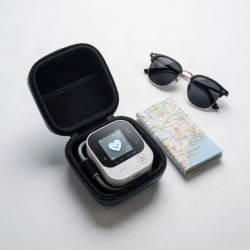
The Top Wrist Blood Pressure Monitors Perfect for Traveling

Introducing Maria, our meticulous planner and talented visual storyteller. She has a knack for discovering those hidden gems, chic boutique spots, and charming little cafes that add a touch of elegance to every journey. With her keen eye for photography and her passion for travel, Maria will transport you to the most enchanting corners of the world, inspiring you to explore new places, one picture-perfect destination at a time.
Traveling? A wrist blood pressure monitor keeps you on track. The Oklar Rechargeable is pocket‑size, voice‑enabled, and reads both metric and imperial. MMIZOO offers a large LCD and adjustable cuff, great for irregular‑beat alerts. OMRON Gold connects wirelessly to your phone, syncing with Apple Health. Digital Wrist stores 90 readings per user and has a clear LCD. HealthSmart boasts 120‑read capacity and a talking guide for easier use. You’ll see how features keep you ahead.
Key Takeaways
- Opt for a compact, rechargeable model – Oklar’s wrist cuff is lightweight, auto‑off after 60 s idle, and supports up to 240 readings per profile, excellent for frequent trips.
- Battery‑independent is a travel win – Digital Wrist uses USB re‑charge only, avoiding extra AAA batteries or external power supplies, ideal for flights or camping.
- Large, clear LCD and voice prompts help – Oklar, Digital, and MMIZOO boast bright displays; Oklar and Digital also provide spoken systolic/diastolic readings for hands‑free use.
- Two‑user memory ensures data goes with you – Oklar and OMRON house 200 recordings for two profiles, keeping all travelers’ readings in one device.
- Avoid models with external power or no battery – MMIZOO requires a constant power source, and many traditional cuff monitors are bulkier, making them less suited for itinerant use.
Oklar Wrist BP Monitor – Rechargeable, Digital, LED

If you’re on the move, the Oklar wrist monitor’s dual‑user mode with 240 readings per profile lets you and a travel companion track your own blood‑pressure history without swapping devices. We designed the cuff to fit arms from 4.92 to 8.46 inches, on flights or trains. Each 35‑second cycle auto‑powers off after 60 seconds of inactivity. The LED screen displays metric or imperial units, and a voice broadcast helps users. Battery life covers days; just plug the Type‑C cable to recharge—no adapters or spare batteries required. With a wristband and case, the monitor stays protected and portable wherever you go.
Best For: travelers, dual‑user households, and those needing a compact, battery‑reliable wrist monitor.
Pros:
- Dual‑user mode with 240 readings per profile, perfect for couples or family tracking.
- 35‑second measurement cycle and auto‑power‑off feature save power and keep the device ready.
- Built‑in rechargeable battery and Type‑C cable eliminate the need for spare batteries or adapters.
Cons:
- Wrist‑mounted design may be less comfortable for those with very large sleeves or arm pockets.
- Voice broadcast is helpful for low‑vision users but may not be needed by others, adding extra bulk.
- Measurement accuracy can vary slightly compared to traditional upper‑arm cuffs.

- Convenient Dual User Mode: Store up to 240 readings for two users, allowing easy tracking and comparison of measurements
- Fast and Accurate Measurements: Our fully automatic wrist blood pressure machine provides fast and precise results, simply press the "START/STOP" button, and the measurement process takes 35 seconds; the device automatically turns off after 60 seconds of inactivity
- Voice Broadcast Design: Our automatic blood pressure cuff features a voice broadcast function, making it ideal for individuals with poor eyesight; you can adjust the volume or turn off the sound using the SET and MEM buttons
- Large LED Backlit Display: The large LED screen of our blood pressure monitor features clear numbers, ensuring easy readability even in low-light conditions, enjoy a hassle-free visual experience
- Portable Rechargeable Blood Pressure Monitor: Equipped with a built-in rechargeable battery and Type-C cable for convenient charging anytime, eliminating the need for battery replacements and ensuring you can easily monitor your health (Note: Charging adapter not included in the packaging)

MMIZOO Wrist BP Monitor, Large LCD, Adjustable Cuff

For travelers needing quick, reliable readings, the MMIZOO Wrist BP Monitor delivers large LCD visuals and voice alerts in 45 seconds. Built from a 100 % plastic housing, it feels sturdy yet lightweight, ideal for packing. The adjustable cuff (5.31‑7.68 in) fits most adults and offers calibration for accurate readings. A high‑blood‑pressure alert warns you if levels exceed normal ranges before prescriptions need adjustment. It supports two users and stores up to 99 readings each, letting you track trends for better health decisions today. The box includes the monitor, instruction manual, and a carrying case, ergonomic. Read at the same time daily.
Best For: travelers, commuters, or anyone needing quick, accurate wrist‑blood‑pressure checks on the go.
Pros:
- Large, clear LCD display with voice alerts for effortless readability.
- Durable 100 % plastic housing and adjustable cuff (5.31‑7.68 in) for a snug fit on most adults.
- Stores up to 99 readings per user across two users, enabling trend tracking over time.
Cons:
- No battery supplied; requires an external power source.
- Wrist‑style monitoring can be less accurate than conventional upper‑arm cuffs.
- Lacks connectivity (Bluetooth/Smartphone app) for automatic data sync.
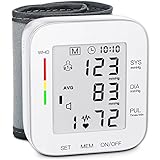
- Easy and Fast Reading: Easy to read with a large LCD display and clear voice broadcast, you can get readings within 45 seconds
- Dual users: Support 2 users and 99 measurements each, allow you to keep track healthy status of your family
- Accurate and Well-made: Each blood pressure cuff wrist has been tested and verified to ensure accurate measurements professionally; high-quality materials provide strength and durability of the blood-pressure monitor
- High Blood Pressure Alerter: If your blood pressure is beyond normal level, the warning symbols will appear
- Package Include: MMIZOO Wrist Blood Pressure Monitor* 1, Instruction Manual* 1, Carrying Case* 1 (Battery not included); Tips: Please take a measurement at the same time each day so that the data can be compared in a valuable way
OMRON Gold Wireless Wrist Blood Pressure Monitor

The OMRON Gold Wireless Wrist Blood Pressure Monitor’s small, cuff‑size‑adjustable design makes it a perfect companion for globe‑trotting health‑watchers who need a reliable, pocket‑friendly device that still offers clinician‑grade accuracy.
You’ll appreciate its 200‑read‑capacity, letting you and a partner log trends without extra devices daily.
The kit includes a cuff, case, manual, and two AAA batteries immediately.
Morning Average Indicator alerts you to early spikes that raise heart risk, nudging daily checks.
Pair it via Bluetooth to OMRON Connect app, where you’ll see charts, reports, irregular‑beat alerts, and sync to Apple Health or Google Fit for a daily holistic view.
Best For: a traveling, health‑conscious individual who needs a compact, clinician‑grade wrist blood‑pressure monitor that supports two users and provides proactive risk alerts.
Pros:
- Clinician‑grade accuracy with Bluetooth sync to the free OMRON Connect app and seamless integration with Apple Health and Google Fit.
- 200‑read capacity and dual‑user support for detailed trend tracking without the need for multiple devices.
- Morning Average Indicator alerts for early‑day spikes, encouraging timely monitoring of cardiovascular risk.
Cons:
- Wrist monitors can be less precise for certain cuff‑size or body‑type variations compared to upper‑arm models.
- Requires AAA batteries and a smartphone for full functionality, which may be inconvenient for some travelers.
- No standalone trend display; insights are only available via the connected app.

- CONFIDENCE IN EVERY READING: Monitor your heart health with the OMRON Gold Wrist Blood Pressure Monitor; Store up to 200 readings each for you and a partner to track progress with dual-user support
- SAFEGUARD YOUR HEART: Detect heartbeat irregularities during routine blood pressure measurements with OMRON's Irregular Heart Beat Detection, helping you and your doctor determine if treatment or further evaluation is needed
- START YOUR DAY WITH CONFIDENCE: Check for morning blood pressure spikes linked to higher cardiovascular risk using the High Morning Average Indicator; Regular monitoring can reveal irregular fluctuations before they lead to serious complications
- TURN NUMBERS INTO INSIGHTS: Connect effortlessly to the free OMRON connect app via Bluetooth to store unlimited blood pressure readings, track trends, and share reports with your doctor; Compatible with Apple Health and Google Fit
- READY OUT OF THE BOX: Includes everything you need to start monitoring your heart health; OMRON monitor with attached wrist cuff (fits wrists 5.3"–8.5″), storage case, instruction manual, quick start guide, and two AAA batteries
Digital Wrist BP Monitor with 2-User Memory, Voice

This compact wrist cuff, with its rechargeable power and 2‑user memory, lets couples or families keep track of their health while on the move. Its large LCD shows clear numbers, and a female voice reads each systolic, diastolic and pulse value as you finish a quick, one‑minute measurement. Supporting two users, it stores 180 readings—90 per person—so you can compare trends effortlessly. You charge it via USB in 2‑3 hours, eliminating batteries, and a single button press in palm‑up mode makes setup painless. Sized 5.3‑7.7 inches, the cuff fits older adults, and the case plus cable guarantee travel‑ready convenience.
Best For: Couples, families, or caregivers who want an easy, travel‑friendly way to monitor blood pressure for multiple users without the hassle of batteries.
Pros:
- Dual‑user memory stores 180 readings, allowing trend comparison.
- Voice read‑out and large LCD make results clear even for older adults.
- USB‑rechargeable, eliminating disposable batteries and simplifying travel packing.
Cons:
- Requires a 2‑3 h charge; not suitable for immediate use after unplugging.
- Limited to only two users; no expansion for larger families or office use.
- Cuff size range may not fit very small wrists comfortably.

- Large LCD display and voice for easy reading: The large LCD screen and digits make it easy to read measurements; A pleasant female voice will tell the measurement readings of high pressure, low pressure, and heartbeats; Ideal for elderly home monitoring
- 180 memory readings for two users: This blood pressure monitor supports dual users and 90 memory storage each; Keep tracking your family's health and compare trends over a period of time
- Rechargeable wrist bp monitor: The wrist cuff is powered by USB charging, No worries about frequent battery replacement; It usually takes 2-3 hours to fully charged through the notebook, power bank, etc; The package includes a storage box and USB charging cable, convenient to carry out
- Reliable and durable measurements: Our Wrist Bp monitor has been tested verified countless times to ensure high-precision
- Easy to operate and fast reading: Our blood pressure monitor is extremely easy to use with one-button operation; You just need to wear it with palm-up and simply press the central button, your measurement readings will show in the LCD display within 1 minute
HealthSmart Digital Wrist BP Monitor 120-Reading Memory

Need a compact, accurate tool to monitor your blood pressure wherever you go? The HealthSmart digital wrist monitor meets that need. Clinically verified with CC‑004 compliance, it aggregates readings on a 4‑oz device that fits any bag. Its high‑contrast LCD and talk‑to‑me guidance keep cuff placement precise, while an automatic three‑read average cuts error. Two users can store up to 120 readings each with date‑time stamps and arrhythmia alerts. Battery power comes from four AA cells it includes, or you can use the optional AC adapter. The bundle includes a cuff, a protective case, and English bilingual instruction guides.
Best For: people who need a lightweight, pocket‑ready device for accurate, quick blood‑pressure monitoring at home, in the office, or while traveling, and can benefit from bilingual audio guidance and arrhythmia alerts.
Pros:
- Clinically validated with CC‑004 compliance and an automatic three‑read averaging feature for reliable results.
- Extremely lightweight (4 oz) and compact, plus dual‑user memory that holds up to 120 readings each with date‑time stamps.
- Built‑in talk‑to‑me guidance, high‑contrast LCD, and bilingual audio (English/Spanish) for intuitive use and arrhythmia detection.
Cons:
- Wrist placement can be less accurate than a traditional arm cuff, especially for certain patients or when arm is used for other activities.
- Requires four AA batteries (included) or an AC adapter, so battery replacement can be inconvenient on the go.
- The single adult cuff size (13–21 cm) may not fit larger wrists, limiting comfort for some users.
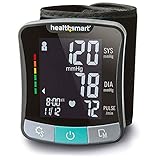
- This clinically accurate talking blood pressure monitor is stylish and compact. Wrist monitor with the most advanced features will help you easily keep track of your blood pressure in the convenience of your home, office or while traveling.
- Digital blood pressure monitor with irregular heartbeat detection to help identify arrhythmias or palpitations by instantly comparing measurements to internationally established standards for home blood pressure use by using the Visual BP Guide
- Understanding Your BP monitor: Provides accurate pulse and pressure readings you can trust. Results could differ slightly from clinical tests—use to track daily trends and consult your provider if needed.
- Easy-to-read LCD stores up to 120 readings for 2 users with date and time stamp, plus oral readout in English or Spanish. If errors persist, replace batteries, check connections, and inspect cuff.
- Product Specs: Includes 1 standard adult wrist blood pressure cuff measuring 5.3”-8.5” and hard protective case. Batteries 4 AA Not Included. Readout available in English or Spanish
Medline Digital Wrist BP Monitor LCD Display

Do you need a cuff that’s lightweight, portable, and delivers quick, dependable readings while you’re on the go? The Medline MDS4003 packs a 13.5–21.4 cm cuff, 2‑year warranty, and runs on two AAAs. Its adjustable Velcro strap and one‑button start make each use effortless, while automatic inflation lets you focus on travel. A clear, large LCD displays systolic, diastolic, pulse, and error alerts, ensuring reliable results. You can store up to 60 consecutive readings, automatically recording pulse rate for accurate long‑term trends. Medline’s 5‑year expiration and 1‑800‑MEDLINE support give you peace of mind while traveling. Your health stays simple today.
Best For: the active individual who needs quick, reliable blood‑pressure readings on the go and values a lightweight, single‑button wrist device.
Pros:
- Lightweight, compact design with adjustable Velcro strap for comfortable wrist wear.
- Large LCD screen displays systolic, diastolic, pulse, and error alerts clearly at a glance.
- Stores up to 60 readings, automatically logging pulse rate for trend monitoring.
Cons:
- Wrist placement can be less accurate than arm cuffs and may vary with wrist size.
- Requires two AAA batteries (not rechargeable).
- Lacks advanced connectivity (Bluetooth, smartphone integration).

- FITS ON WRIST: Adjustable Velcro strap fits comfortably on wrist for convenient use and ease of portability; automatically inflates and deflates for ease of use
- TRACK YOUR HEALTH AT HOME: Monitor your health with easy, accurate blood pressure and pulse rate testing designed for professional results without an office visit
- CLINICAL ACCURACY: Large digital readings of systolic/diastolic blood pressure and pulse rate; display indicates if error is detected to ensure reliable results
- STORES UP TO 60 MEASUREMENTS: Track historical blood pressure and long-term health
- EVERYTHING YOU NEED: Includes monitor device with universal wrist cuff (13.5-21.4 cm, 5.3”-8.4”) and 2 replaceable AAA batteries, 2 year warranty
Oklar Rechargeable Wrist BP Monitor 240-User Memory

Are you a frequent traveler who prioritizes health monitoring on the go? This Oklar wrist monitor fits that need. Its grey, compact design comes with an adjustable cuff (4.92‑8.46 in) and a carrying case, so you’re ready without extra bulk. The fully automatic cuff grabs a reading in 35 seconds, auto‑shuts after a minute of no movement—quick and reliable. A large LED display shines in low light, and the voice broadcast, adjustable or muted, supports low‑vision users. It stores 240 readings—120 for each of two users—making comparisons easy. Recharge via Type‑C, no external batteries needed for your peace of mind.
Best For: Frequent travelers, dual‑user households, and low‑vision or elder patients who need a quick, fully automatic wrist blood‑pressure monitor with a large display and voice alerts.
Pros:
- 35‑second readings with auto‑shutdown provide fast, quiet operation.
- Large LED back‑lit screen plus adjustable voice broadcast offer clear visibility in low‑light settings.
- 240‑reading memory split between two users allows easy comparison and long‑term tracking.
Cons:
- Wrist‑cuff accuracy may be lower than standard cuff‑on‑upper‑arm models.
- Adjustable band is limited to 4.92‑8.46 in; very small or large wrists may need a different device.
- Lacks Bluetooth or smartphone connectivity for remote data sync.
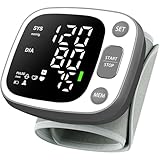
- Color: Grey
- Convenient Dual User Mode: Store up to 240 readings for two users, allowing easy tracking and comparison of measurements
- Fast and Accurate Measurements: Our fully automatic wrist blood pressure machine provides fast and precise results, simply press the "START/STOP" button, and the measurement process takes 35 seconds; the device automatically turns off after 60 seconds of inactivity
- Voice Broadcast Design: Our automatic blood pressure cuff features a voice broadcast function, making it ideal for individuals with poor eyesight; you can adjust the volume or turn off the sound using the SET and MEM buttons
- Large LED Backlit Display: The large LED screen of our blood pressure monitor features clear numbers, ensuring easy readability even in low-light conditions, enjoy a hassle-free visual experience
iHealth Push Wrist Blood Pressure Monitor

When you’re traveling, the iHealth Push gives you a wrist‑mounted blood‑pressure monitor that’s both lightweight and easy to carry. Its display lets you read values in any light. The cuff fits wrists 5 ½″–7 ¾″, and the two included AAA batteries last weeks. A 12‑month warranty and California support give peace of mind. The 4‑step cuff guide—cuff half inch from hand, back supported, arm at heart level—improves accuracy. Advanced inflation cuts puff‑time, and Bluetooth syncs instantly to the free app, which stores unlimited readings and color‑codes the BP indicator for quick interpretation. The set comes with a carrying case, manual, and batteries.
Best For: travelers and busy professionals who need a lightweight, wrist‑mounted blood‑pressure monitor for on‑the‑go health tracking.
Pros:
- Ultra‑compact, lightweight design that fits in any carry‑case.
- Accurate readings supported by a four‑step cuff placement guide and adaptive inflation system.
- Instant Bluetooth sync to a free, color‑coded mobile app that stores unlimited readings.
Cons:
- Cuff size only fits wrists 5 ½″–7 ¾″, limiting use for larger or smaller wrists.
- Requires precise cuff placement; improper positioning may affect accuracy.
- Battery life depends on usage frequency and may need frequent AAA replacement for heavy use.

- Take It Anywhere: This lightweight, compact monitor enables seamless blood pressure tracking whether you're traveling, at the office, or on the go.
- Inflation Technology for Precise, Comfortable Readings: Our advanced inflation system minimizes discomfort and shortens measurement time for a superior experience.
- Effortless Data Syncing: Built-in Bluetooth syncs readings to our free app for easy tracking, storing, and sharing with doctors. Monitor stores 99 readings, app stores unlimited data.
- Precision You Can Trust: Our advanced algorithms deliver improved accuracy by adapting to your unique physiological characteristics.
- Convenient 4-Step Measurement: Our wrist monitor simplifies blood pressure tracking with no arm squeezing or sleeve rolling required. Just follow these easy steps: 1: Put on the cuff, leaving ½” between the cuff and the base of your hand. 2: Sit with your back supported. 3: Keep both feet flat on the floor and your legs uncrossed. 4: Fold your arm across your chest while keeping the cuff at heart level. Then push the Start button for an easy, accurate reading in seconds!
Digital Wrist BP Monitor, 180-User Memory, Voice, USB

If you’re traveling with family, this wrist monitor’s 180‑user memory makes tracking everyone’s blood pressure effortless. The large LCD displays crisp readings while a female voice announces systolic, diastolic, and pulse. With dual‑user memory, you store up to 90 readings per person, letting you compare family trends over time. One‑button, palm‑up cuff delivers results in about a minute, and the USB‑rechargeable cuff tops up in 2‑3 hours using a notebook or power bank. It also includes a USB cable and a protective storage box, ensuring accuracy and reliability wherever you go to keep you healthy no matter where today.
Best For: families traveling together who need a portable, reliable wrist monitor to track blood pressure trends for up to 180 readings across two users.
Pros:
- Large, clear LCD display plus a pleasant female voice announces systolic, diastolic, and pulse for quick, easy reading.
- Dual‑user memory stores 90 readings per person, enabling comprehensive family trend comparison.
- USB‑rechargeable cuff takes 2–3 hours to fully charge, comes with a cable and protective box for convenient travel use.
Cons:
- Wrist‑based readings can be slightly less accurate than traditional arm cuffs for some users.
- Requires a 2–3 hour USB recharge to maintain full battery, which may be inconvenient between trips.
- Bulkier than compact pen‑style monitors, making it a heavier travel accessory.

- Large LCD display and voice for easy reading: The large LCD screen and digits make it easy to read measurements; A pleasant female voice will tell the measurement readings of high pressure, low pressure, and heartbeats; Suitable for the old use at home
- 180 memory readings for two users: This blood pressure monitor supports dual users and 90 memory storage each; Keep tracking your family's health and compare trends over a period of time
- Rechargeable wrist bp monitor: The wrist cuff is powered by USB charging, No worries about frequent battery replacement; It usually takes 2-3 hours to fully charged through the notebook, power bank, etc; The package includes a storage box and USB charging cable, convenient to carry out
- Reliable and durable measurements: Our Wrist Bp monitor has been tested verified countless times to ensure high-precision
- Easy to operate and fast reading: Our blood pressure monitor is extremely easy to use with one-button operation; You just need to wear it with palm-up and simply press the central button, your measurement readings will show in the LCD display within 1 minute
Oklar Wrist BP Monitor with Voice & LED

The Oklar wrist monitor is the perfect companion for travelers who need quick, accurate readings on the go. Its orange, compact design fits snugly on your wrist, while a full‑automatic cuff delivers a reading in just 35 seconds. The bright, back‑lit LED screen and adjustable‑volume voice alerts make it easy to follow in low light, and the auto‑off feature saves battery after 60 seconds of inactivity. With a rechargeable battery and an included case, and you’ll take it anywhere. Dual‑user mode lets each of you store 240 readings, and the easy comparison features help you track your progress every day.
Best For: travelers and busy professionals who need quick, accurate wrist blood‑pressure readings on the go.
Pros:
- 35 s full‑automatic cuff delivers fast readings
- Bright back‑lit LED screen and adjustable‑volume voice alerts for low‑light use
- Dual‑user mode with 240 readings per user and easy comparison
Cons:
- Requires separate charger – Type‑C cable included but charger sold separately
- Limited cuff size range may not fit very large forearms
- Auto‑off after 60 s of inactivity can interrupt longer sessions

- Color: Orange
- Convenient Dual User Mode: Store up to 240 readings for two users, allowing easy tracking and comparison of measurements
- Fast and Accurate Measurements: Our fully automatic wrist blood pressure machine provides fast and precise results, simply press the "START/STOP" button, and the measurement process takes 35 seconds; the device automatically turns off after 60 seconds of inactivity
- Voice Broadcast Design: Our automatic blood pressure cuff features a voice broadcast function, making it ideal for individuals with poor eyesight; you can adjust the volume or turn off the sound using the SET and MEM buttons
- Large LED Backlit Display: The large LED screen of our blood pressure monitor features clear numbers, ensuring easy readability even in low-light conditions, enjoy a hassle-free visual experience
PARAMED Automatic Wrist BP Monitor, Irregular Heartbeat Detector

For anyone who travels extensively, the PARAMED Automatic Wrist BP Monitor delivers quick, reliable readings right at your fingertips.
Its universal cuff fits most arm sizes, and the built‑in irregular heartbeat detector flags any skipped beats during measurement.
The large LCD screen displays systolic/diastolic values, pulse rate, and a clear heart‑beat flag, so you’ll quickly spot anomalies today without extra gadgets.
It remembers up to 90 readings, letting you track daily trends over days or flights without logging each event.
Carry it in the case, remember to pause minutes before checks, keep arm level, avoid caffeine or exercise beforehand.
Best For: travelers and anyone who needs quick, on‑the‑go blood‑pressure monitoring without a clinic.
Pros:
- Wrist‑swing design fits most arm sizes, eliminating bulky cuffs.
- Built‑in irregular heartbeat detector flags skipped beats during measurement.
- 90‑reading memory lets you track trends over multiple days or flights.
Cons:
- Requires frequent AAA battery replacements, which can be inconvenient.
- Accuracy depends on strict resting posture; movement or improper arm position can distort readings.
- Limited to wrist placement, so extreme arm sizes may not fit the universal cuff range.

- Smartly designed to facilitate easy, clear readings: Paramed blood pressure cuff comes in universal size - 5.3-7.6" and features a large LCD display to allow for the most accurate readings
- Do not take measurements after bathing, drinking alcohol, smoking, exercising, or eating. Empty your bladder before measurement.
- Sit in a chair with your back supported. Do not use devices that emit electromagnetic fields near the unit. Take at least 2 minutes apart, before repeated measurements
- Take your blood pressure kit anywhere: comes with a durable carrying case in the set. Manual Instruction. Quick Start Guide, 2 AAA batteries included
- To get accurate measurements, follow the directions in the instructions, quick start guide, and product description page carefully
Wrist Blood Pressure Monitor Rechargeable Curved Screen

Designed around a rechargeable lithium battery and a slim, wide‑band wristcase, this monitor lets you cuff up and read your pressure anywhere—from the airplane seat to a hotel room. Its pink exterior and thicker band fit wide wrists, keeping readings stable. The curved LED screen, 5.31‑9.25 inches wide, shows numbers clearly, and you’ll touch the display to toggle sound or vocal read‑out. One button handles sound, user selection, start, and stop. The built‑in lithium battery delivers 150 uses per charge. A Type‑C cable lets you recharge, and the travel case folds easily into your carry‑case today.
Best For: health‑conscious travelers and anyone with a wider wrist who wants a stylish, portable blood‑pressure monitor that’s easy to operate on the go.
Pros:
- Stylish pink design with a thick, wide band that fits broader wrists and keeps the cuff stable for accurate readings.
- Curved LED screen (5.31‑9.25 in.) combined with touch‑activated sound/vocal toggling and a single‑button interface makes operation intuitive and hands‑free.
- Built‑in lithium battery offers 150 uses per charge, recharged via Type‑C, and comes with a convenient travel case for easy portability.
Cons:
- Battery life of 150 uses per charge may require frequent recharging for heavy‑frequent users.
- Lacks Bluetooth or app connectivity, limiting data sync options for those who prefer digital health tracking.
- Available only in pink, with no alternative colors or customization options.

- Charming Pink with Wristband : Featuring an adorable and cool pink exterior complemented by a pink wristband. Wherever you are, a single glance will inevitably evoke a "So cute!" exclamation from you. Because we believe happiness begins with appearance.
- Visible and Audible Wrist Blood Pressure Monitor : The LED display allows for quick access to blood pressure measurements with just a simple touch on the screen. The voice feature can be turned on or off according to your needs. It is clear and easy to read, providing a more intuitive operational experience, enabling you to easily monitor your health. Tip: The start button is touch-sensitive. To prevent accidental activation, please turn the device OFF (ON→OFF) when not in use.
- “Foolproof Button”Operation Wrist Blood Pressure Monitor : With one-touch controls for toggling sound on/off and switching users, this wrist blood pressure monitor's design is simple and intuitive. We are committed to creating a "foolproof" wrist blood pressure monitors for home use, ensuring that everyone can use it effortlessly and monitor their health at any time. Oh, and by the way, we've made the manual equally easy to understand!
- Portable Blood Pressure Machine Built-in Lithium Battery : Whether at home, in the office, or on the go, you can use it anytime, anywhere. One charge can be used 150 times, coupled with the storage box, allowing you to effortlessly carry it with you and focus on your health wherever you are.
- Upgraded, Thicker, and Longer Wristband Design : Fits more wrist sizes, enhancing comfort and accuracy. This blood pressure monitor thoughtfully consider every detail to provide you with the good wearing experience. No matter your body size, you can feel our considerate care.
Digital Wrist Blood Pressure Monitor, 2-User Memory, Voice

If you value quick, hands‑free readings, this wrist monitor delivers with a large LCD and a clear female voice that announces each systolic, diastolic, and pulse figure. Use it for yourself and someone else—two users are supported, each storing up to 90 readings. The USB‑powered cuff shuns disposable batteries; a quick 2–3‑hour charge from a notebook or power bank keeps it ready for your next read. One‑button operation means you start the cuff with a single press, and the LCD flashes your data within a minute. You’ll see trends over time. Carry it in its case for travel easily.
Best For: Users looking for a quick, hands‑free wrist blood pressure monitor with voice guidance, family members sharing a device, or individuals with visual impairments.
Pros:
- One‑button operation and immediate voice‑readout for fast, hands‑free use.
- Dual‑user memory with 90 readings per profile tracks trends over time.
- USB‑powered cuff eliminates battery waste and charges quickly in 2–3 hours.
Cons:
- Wrist-style cuff may not be as accurate as upper‑arm models for some users.
- Limited to two user profiles may not accommodate larger families.
- Audible announcement can be disruptive in quiet environments.
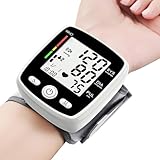
- Large LCD display and voice for easy reading: The large LCD screen and digits make it easy to read measurements; A pleasant female voice will tell the measurement readings of high pressure, low pressure, and heartbeats; Suitable for the old use at home
- 180 memory readings for two users: This blood pressure monitor supports dual users and 90 memory storage each; Keep tracking your family's health and compare trends over a period of time
- Rechargeable wrist bp monitor: The wrist cuff is powered by USB charging, No worries about frequent battery replacement; It usually takes 2-3 hours to fully charged through the notebook, power bank, etc; The package includes a storage box and USB charging cable, convenient to carry out
- Reliable and durable measurements: Our Wrist Bp monitor has been tested verified countless times to ensure high-precision
- Easy to operate and fast reading: Our blood pressure monitor is extremely easy to use with one-button operation; You just need to wear it with palm-up and simply press the central button, your measurement readings will show in the LCD display within 1 minute
Rechargeable Wrist BP Monitor with Voice Broadcast

Need to keep your blood pressure in check while traveling? With a one‑button start, you press START and the cuff takes care of the rest, delivering systolic, diastolic, pulse, and a timestamp on backlit screen. The dual‑user profile lets you switch between two sets of measurements, storing up to 90 readings each for long‑term family tracking. An audible voice read‑out gives you confirmation, while the mute switch keeps it silent when you need privacy. The adjustable wrist cuff fits arm sizes, removing discomfort, and it folds into a carry case. Recharge it via USB—no disposable batteries—so you’ll stay powered.
Best For: Elderly or visually impaired users needing reliable, portable BP readings while traveling.
Pros:
- One‑button automatic measurement delivers full results in under 60 seconds, making it easy to use on the go.
- Dual‑user profiles with up to 90 saved readings per person support long‑term family monitoring.
- USB rechargeable power eliminates disposable batteries and reduces ongoing maintenance costs.
Cons:
- Wrist‑cuff design may slightly compromise precision compared to traditional arm cuffs, especially at high pressures.
- Audible read‑out can drain power faster and may be disruptive in quiet settings.
- Limited connectivity options (e.g., no Bluetooth or mobile app export) may hinder advanced data analysis.
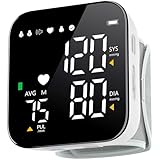
- Easy To Use: One-button Operation, just press the START button, the fully automatic blood pressure machine will show you the readings of your blood pressure within 60 seconds
- Dual User Memory: Users can switch at will, the blood pressure monitor supports dual users and 90 memory storage for each user, which can easily track the health of your family
- Voice Broadcast: The automatic blood pressure monitor with voice announcement function is ideal for elderly people with poor eyesight; the sound can also be turned off if not needed
- 5.3"-7.6" Adjustable Wrist Cuff: Compact and portable, ideal for those who might want to take their device for traveling or use outside the home or who aren’t comfortable applying an upper arm cuff
- Rechargeable Machine: The home blood pressure monitor provides usb charging cable, which can be charged from the mobile power source anytime, anywhere, without the worry of changing the battery frequently
Wrist Blood Pressure Monitor, Voice Alert, LED Display

Travelers who crave seamless health checks will appreciate the wrist blood pressure monitor’s bright LED display and conversational voice alerts, which let you read and hear your readings instantly without fumbling a keyboard. One‑button start triggers blood‑pressure and heart‑rate shots, while the full‑screen LED makes numbers crystal‑clear. The built‑in voice broadcast announces results, and you can mute it in settings. It records 180 readings—90 per user—with timestamps, so history stays handy. Compact, it packs into a carrying case, auto‑shuts off, and buzzes when battery is low. A knitted woolen‑cloth strap fits 5.3–7.7‑inch wrists comfortably. Track daily trends easily today.
Best For: travelers, gym enthusiasts, and health‑conscious individuals who want quick, on‑the‑go blood‑pressure checks.
Pros:
- One‑button operation plus LED display delivers instant, clear readings without needing a screen.
- Built‑in voice alerts give hands‑free feedback and can be muted for quiet environments.
- Dual‑user memory holds 180 entries with timestamps, ideal for tracking personal and partner trends.
Cons:
- Limited to wrist use; may not match the accuracy of traditional arm cuff monitors.
- Battery life is shorter during intensive use, requiring frequent low‑battery alerts.
- Lacks Bluetooth or smartphone sync, restricting advanced data export options.
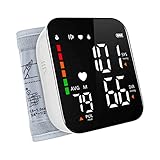
- 【Ease Of Use】This blood pressure monitor wrist features one-button operation, making it very easy to use, simply press a button to start measuring blood pressure and heart rate, equipped with a large full-screen LED display, the results are displayed clearly and are easy to read, making it very convenient to use
- 【Voice Broadcast】The talking wrist bp monitor is equipped with a voice broadcast function, the measurement results and alerts can be clearly read aloud, providing users with timely feedback during the measurement process, if you do not want to use the voice function can be turned off in the settings
- 【180 Memory Slots for Dual Users】The wrist blood pressure monitors for home use support use by two users, with each user able to store up to 90 sets of measurement data, stored data with date and time, making it easy for users to view and compare historical data at any time
- 【Easy to carry】The wrist blood pressure machine is compact, with a portable box, easy to carry, and features an intelligent design with automatic shut-off and low battery reminders, the novel design looks high-end and grand, suitable for giving as a gift to others
- 【Comfortable cuff】This adjustable comfortable wrist bp cuff is made of a skin-friendly knitted woolen-cloth wrist strap, it ranges from 5.3 - 7.7 inches, is suitable for people with different wrist thicknesses, very easy to adjust to a comfortable size
Factors to Consider When Choosing a Wrist Blood Pressure Monitor (Travel)
When you choose a wrist blood pressure monitor for travel, first check its portability and size so it fits easily in your luggage or pocket. Then evaluate battery life, memory capacity, and the device’s accuracy and calibration to verify reliable readings on the go. Finally, consider comfort and cuff range to make sure the cuff stays snug on your arm over long periods.
Portability And Size
If you’re packing for a trip, you’ll appreciate a monitor that fits in your pocket, weighing less than 5 oz and measuring no more than 6.5 × 4.5 × 2.8 inches. A truly portable wrist design keeps its cuff just the right size—between 4.9 and 8.5 inches—to fit most adult wrists while staying compact. You won’t have to lug extra batteries, because many travel‑friendly units charge via USB‑C or micro‑USB, topping up in a few hours from a power bank or laptop. Look for a back‑lit LED or high‑contrast LCD that stays readable in bright sky or dim cabin light. Finally, a snug carrier or protective case lets you slide the monitor into your handbag or travel locker, keeping it safe and easily accessible, always at hand, ready.
Battery Life Efficiency
Battery life is the lifeline of your wrist monitor, dictating how many readings you’ll get before you need to top it up. Think about how long that capacity lasts. A typical lithium‑polymer pack (1.5 Ah) delivers roughly 120–240 readings; each 35‑second measurement pulls 2–3 coulombs. Its auto‑shutdown after 60 seconds trims standby power to 50–80 mA, extending cycles by up to 30 % versus models. Fast USB‑C charging reaches full in 2–3 hours, and a 20 W charger can shave 30 minutes. Pairing with a 10 000‑mAh power bank lets the built‑in battery run an extra 5–7 days if you can charge 2–3 hours daily on a flight or hotel. Disposable AAA packs support only 6–10 readings before replacement, so they’re unsuitable for long trips. And keep that in mind.
User Memory Capacity
Because your travel schedule can be unpredictable, picking a wrist monitor with high memory capacity lets you track your blood pressure without interruption. A model that holds up to 240 readings per user lets you chart trend cycles for several months, even when you’re away from a phone or cloud. Dual‑user profiles that store 120‑180 entries still give plenty of data for couples or caregivers to compare patterns long term. Many travel‑friendly units log at least 90 readings, equating to roughly 15 days of daily fits in an hour‑long break. Beware caps around 120 total entries—clear or transfer data often so you don’t lose entries between flights. More slots mean smoother resumption after layovers, keeping your analysis consistent and your health records stay reliable.
Accuracy And Calibration
When you’re traveling, you’ll find that your wrist monitor’s accuracy hinges on validated standards and proper fit. Devices that meet ISO 81060‑2:2008 stay within ±4 mmHg for systolic and diastolic readings, while unvalidated gear can drift up to ±10 mmHg, especially at high pressures. A cuff that matches your wrist—between 12.5 and 21.5 cm—minimizes mis‑fit; each centimetre off can add roughly 5 mmHg of error. Check calibration within 1–2 days of first use, and repeat it yearly—or every 6–12 months if the sensor is factory‑calibrated. Verify the cuff sits at heart level and that your wrist stays supported; a 5 cm vertical shift changes systolic by about 4 mmHg. Finally, test for sensor drift at high temperatures (>45 °C) or low battery before each journey for consistent, reliable health monitoring worldwide today.
Comfort And Cuff Range
Comfort is key, and a well‑designed cuff should span 13–21 cm (5.3–8.5 in) to fit snugly on most adult wrists. When you strap it on, adjustable widths around 4.92–8.46 in (12.5–21.5 cm) let you cinch it tight enough to inflate properly without squeezing too hard, which could skew the reading. Soft, breathable Velcro or knitted straps keep friction low so your skin stays irritation‑free, even when you’re hopping flights. The cuff’s internal fabric is slightly elastic yet remains non‑stretchy, preserving consistent pressure for each cycle. Keep the cuff perpendicular to the wrist and at heart‑level—you’ll see fewer errors during quick, on‑the‑go checks. A cuff that stays firm during use saves you from constant readjustments, keeping your focus on the reading rather than on re‑tightening straps in dull airports.
Connectivity And Data Sync
The next step is to make sure the monitor’s connectivity works as smoothly as the cuff fits. When you pair the device, it automatically connects via low‑power Bluetooth LE, so you never need cables. It stores 90 to 200 readings on‑board; once you’re re‑connected, the companion app streams the data to the cloud via TLS 1.2 encryption, preserving a seamless record even while offline. Importantly, the data syncs with standard platforms—Apple Health, Google Fit, or other APIs—allowing you to view trends across fitness and medical apps without extra steps. Many models also let you export your history as CSV, PDF, or email attachments to share quickly with health professionals, all without a subscription. This streamlined, secure connectivity lets you focus on travel, not data hassle.
Frequently Asked Questions
How Accurate Are Wrist Monitors Compared to Standard Arm Cuff Devices?
Most wrist monitors aren’t as precise as the gold‑standard arm cuffs. While they can give a quick snapshot, their readings often drift by 10–15 mm Hg due to wrist position and minor motion. Arm cuffs, calibrated to your brachial artery, typically stay within 5 mm Hg of lab measurements. For clinical accuracy, you’ll trust the arm device more. If regular monitoring is critical, consider a arm monitor or calibrate wrist models with arm measurements.
Can Wrist BP Monitors Integrate With Health Tracking Apps?
Did you know that 78% of health‑app users report wrist monitors syncing data automatically? Yes, most high‑end wrist BP meters now pair with Apple Health, Google Fit, or Samsung Health via Bluetooth. You can download the companion app, log readings, and track trends right alongside your steps and heart rate. Just keep firmware updated, and the sync will stay reliable for your on‑the‑go monitoring to keep your health data organized.
What Is the Recommended Calibration Frequency for Wrist Blood Pressure Monitors?
You should calibrate your wrist monitor at least twice a year, or every six months. This keeps readings accurate and guards against drift. Check the manual for your model’s exact schedule. If you travel frequently, a quick calibration before long trips can help. Trusting up-to-date calibration means you’ll trust the numbers you see and stay on track with your health goals, and your overall well‑being regularly, for best results daily.
Do Wrist Monitors Record Heart Rhythm Irregularities in Addition to Blood Pressure?
Yes, many wrist BP monitors can log your heart rate, and some newer models add a rhythm‑check feature that highlights irregular beats. But unless it’s marketed as an ECG or arrhythmia detector, it’s mostly just a basic heart‑rate readout; you’ll need a dedicated monitor for reliable rhythm analysis. So, check the product specs before you assume it flags atrial fibrillation, and you’ll get more accurate data with a medical‑grade device.
What Are Best Practices for Transporting a Wrist BP Monitor During Travel?
When you travel, you’ll keep your wrist blood pressure monitor in a padded, insulated case to protect it from shocks and swings. Remove any batteries before packing if your airline restricts lithium batteries, noting the policy. Pack the monitor in a carried‑on bag to avoid packaging pressure, and store it with your medical documents for daily access. Before long flights, calibrate it and carry a spare cuff your model supports.
Conclusion
Now, as you close the book on cuff monitors, the choice of a wrist companion feels more urgent. Imagine waking up in a hotel, your phone frozen, and the only clinical readout blooming on a small, bright screen—your personal pulse, your path to health. Every model offers a different promise: rechargeable power, dual‑user memory, or instant voice alerts. Still, which wrist cluster will trust you in the sunrise? The answer lingers, waiting for your decision.
Portable BP Tester, Travel Health, Wrist BP Monitor